The Handshake That Cost a Fortune: A Wake-Up Call
I lost $3,000 last year because of a single handshake. I built a whole website for a guy I thought was a good friend, but when payday came, his memory suddenly went blank. If you do freelance work or run a small business, you probably know the exact panic I felt. Let me show you how to bulletproof your income without scaring your clients away with scary legal paperwork.
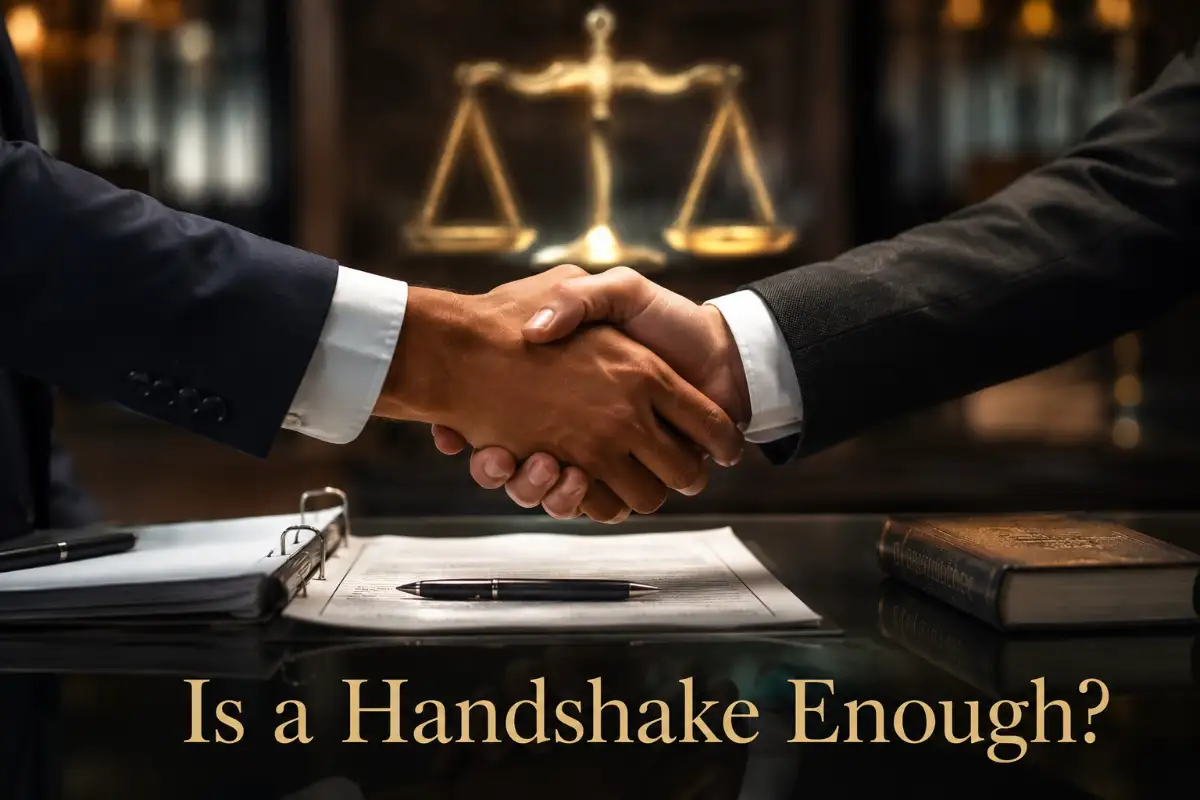
Imagine working tirelessly for months on a brand-new project with someone you consider a close friend. You both sit in a coffee shop, outline the entire business plan on a napkin, and seal the deal with a firm handshake.
You feel incredibly optimistic about the future. After all, trust is the foundation of any good relationship, right?
But then, the unexpected happens. The business starts generating real money, and suddenly, your partner’s memory of that coffee shop conversation becomes completely blurry.
They deny your agreed-upon profit share, claiming it was just a "casual chat." You are left completely paralyzed, feeling a deep sense of betrayal and panic.
How do you prove a conversation actually happened? You spend sleepless nights staring at your ceiling, wondering if your entire business is slipping through your fingers simply because you did not print a piece of paper.
But hold on for a moment. Are you truly out of options just because you do not have a physical contract? The answer might completely surprise you.
Quick Takeaways You Can Use Today:
- Why a simple text message is just as good as a heavy paper contract.
- The exact words to use in a "just confirming" email so you do not sound bossy.
- How to instantly stop clients from demanding extra free work (scope creep).
- The 30-second banking trick that saves you from a massive tax bill at the end of the year.
Shattering the "Paper Only" Illusion
Most people grow up believing a very specific myth about the law. We are taught that if a judge cannot physically touch a piece of paper with your signature on it, your deal does not exist.
This is simply not true. Business law is actually much more flexible than we think. In reality, a verbal agreement can carry the exact same legal weight as a formally written document. The law recognizes that humans communicate and make commitments in many different ways.

If you offer a service, and another person clearly accepts that offer, a legally binding contract is born. It does not matter if the words were spoken in a boardroom or across a noisy dinner table.
However, knowing this fact is only half the battle. The real challenge is proving it.
If you are still wondering how a simple conversation can hold up in a real court, watch this short video breakdown below. It explains the exact moment your spoken words become a real legal deal, which will help you understand the evidence steps in the rest of this guide perfectly!
Myth vs. Reality: What You Actually Need to Know
Let us clear up some common confusion right away. Here is a simple breakdown of what people believe versus how the law actually works.
Common Myth The Legal Reality Spoken deals mean nothing in court. False. Oral contracts are fully enforceable in many situations. You need a lawyer to make a contract. False. An agreement is valid the moment an offer is clearly accepted. Text messages do not count as proof. False. Digital communications are excellent evidence of an oral agreement. A handshake is just a friendly gesture. False. A handshake often symbolizes the formal acceptance of business terms.
This table shows exactly why you should never underestimate the power of your spoken words.
How to Prove an Invisible Agreement Exists
Think of a verbal contract like the wind. You cannot see it directly, but you can definitely see the effects it has on the trees around it.
When a judge tries to determine if a verbal agreement exists, they look for these "effects." We call this circumstantial evidence.
You do not need a recording of the actual conversation to win your case. You just need to show that both parties started acting like a contract was in place.
How exactly do you do that? Let us look at some highly effective ways to prove your invisible deal.
The Undeniable Power of Digital Breadcrumbs
We live in a deeply connected digital age. Even if your main agreement was spoken, you likely sent a text message afterward.
Maybe you sent a quick WhatsApp message saying, "Great meeting today, looking forward to starting the design work on Monday."
If the other person replied with a simple "Sounds good!", you now have solid evidence. That tiny digital exchange heavily supports your claim that a spoken deal took place.
Emails, direct messages on social media, and even voice memos are incredibly powerful tools. Never delete your chat history with a business partner, no matter how casual the conversation seems.
Tracking the Money Trail
Nothing speaks louder than money changing hands. If someone claims they never agreed to hire you, why did they send you a $500 initial payment?
Bank transfers, cleared checks, and digital payment receipts are nearly impossible to argue against.
If you provide a service based on a verbal agreement, always send a formal invoice immediately. When the other party pays that invoice, they are actively confirming the existence of your spoken deal.
Even partial payments are fantastic evidence. They show a clear intent to honor the financial side of your conversation.
The Actions Speak Louder Strategy
Judges carefully examine the behavior of both parties after the supposed agreement. Did you start delivering raw materials to their warehouse? Did they accept those materials and begin using them in their production line?
If a business owner allows you to perform work for them over several weeks, they cannot suddenly claim there was no agreement. Their physical actions strongly indicate that a deal was made.
Always keep logs of your work hours, delivery receipts, and any physical proof that you held up your end of the bargain.
When the Law Demands Ink: The Exceptions
While spoken agreements are generally valid, the law is not blind to human error. There are certain types of deals that are simply too risky to leave up to memory. To prevent massive frauds and misunderstandings, legal systems use something called the Statute of Frauds.
This is a very old legal concept that lists specific situations where a physical, written contract is absolutely mandatory. If your deal falls into one of these categories, a verbal agreement will not save you.
You need to know these exceptions by heart so you do not accidentally put your business in danger.
High-Risk Deals That Require a Signature
First, any agreement involving the sale or transfer of real estate must be in writing. You cannot buy a piece of land or an office building with just a handshake.
The stakes are simply too high, and property lines are too complicated to rely on spoken words. Second, if your business deal takes more than one full year to complete, you need it on paper. Human memory fades quickly.
If you agree to provide consulting services for the next three years, you must write down the terms. Otherwise, nobody will remember the exact payment schedule thirty months from now.
Finally, the sale of expensive goods usually requires a written document. If you are buying thousands of dollars worth of manufacturing equipment, a verbal promise is highly unsafe.
Why These Exceptions Exist
Imagine trying to remember the exact color code, delivery date, and warranty terms of a massive wholesale order from a year ago. It is nearly impossible.
The law requires writing in these situations not to punish you, but to protect both parties from honest mistakes.
When big money or long timeframes are involved, the brain naturally alters memories based on personal bias. A written document acts as a neutral referee.
Protecting Your Business Without Killing the Trust
Many entrepreneurs avoid asking for written contracts because they are afraid of offending the other person. They think asking for a signature means saying, "I do not trust you."
This is a major psychological barrier in business. You want to appear friendly, approachable, and easy to work with.
However, protecting your business does not require you to act like a cold, heartless corporate robot. You can easily secure your legal position while maintaining a highly positive and warm relationship with your clients.
The "Just Confirming" Email Strategy
This is perhaps the most effective trick in the modern business world. It completely removes the awkwardness of demanding a formal contract.
After you finish a highly productive meeting where a verbal agreement was made, open your laptop. Send a very friendly, professional email summarizing what you just talked about.
Write something like: "Hi Sarah, I really enjoyed our chat today! Just to make sure we are on the same page, here is a quick summary of what we agreed on regarding the marketing campaign."
Then, list the key points in simple bullet points. Mention the price, the deadlines, and the specific tasks.
End the email by asking, "Does this look correct to you?" When Sarah replies with a simple "Yes, looks perfect," you just magically transformed a risky verbal agreement into a highly documented, easily provable contract.
I used to feel so nervous asking new clients for a formal signature because I thought it made me look cold and untrusting. Once I started using this easy "just confirming" email trick, my stress completely disappeared. It takes me less than two minutes to write, and having that friendly written proof has already saved me from two major payment arguments this year.
My 3-Minute "Cover My Back" Checklist:
- Did I send a follow-up text summarizing our chat?
- Did the client reply with a clear "Yes" or a thumbs-up emoji?
- Did I save a quick screenshot of that exact message?
- If you can check all three boxes, you basically have a legally binding deal in your pocket!
Pro Tip for Everyday Entrepreneurs
Always follow up important phone calls with a quick text or email. Make it a daily habit. You do not need to use heavy legal words. Just state the facts plainly and kindly. This simple habit will save you thousands of dollars in potential legal disputes.
The Psychological Weight of Spoken Words
Why do we rely so heavily on verbal agreements in the first place? It comes down to basic human psychology.
We are biologically wired to build communities and trust our neighbors. In the early days of human trade, your word was your bond.
If you broke a promise in a small village, your reputation was ruined forever. You would not be able to do business with anyone else.
Today, the business world is massive and highly anonymous. You might be making deals with people halfway across the country whom you have never met in person. Yet, our brains still crave that simple, village-style trust. We want to believe a friendly voice on the phone means well.
While this human connection is a beautiful thing, it is highly dangerous for modern commerce.
Shifting from Casual to Professional
You must consciously train your brain to separate personal trust from business security.
Documenting a deal is not an insult. It is a sign of deep respect.
When you put things in writing, you are actually protecting the friendship. You are removing the possibility of future arguments over misunderstood details.
Clear communication prevents resentment. It ensures that both parties feel valued and properly compensated for their hard work.
Start building a company culture where written summaries are just a normal, boring part of the everyday routine.
When it becomes a standard process, nobody feels targeted or suspected. It just becomes "the way we do things here."
Beyond the Basics: Expert Strategies to Future-Proof Your Income
Now that we have covered the foundational steps, it is time to shift our focus toward long-term sustainability. Many beginners experience a sudden burst of early success, only to see their income drop a few months later. We want to make sure that never happens to you.
Building a resilient online career requires more than just raw talent or motivation. You need predictable systems that work even when you are sleeping or taking a day off. This is where the top earners separate themselves from the amateurs.
To maintain your momentum, you must treat your daily tasks like a highly organized machine. The secret lies in automation, client retention, and upgrading your digital presence. Let us look at how you can implement these pro-level strategies immediately.
Upgrading Your Digital Infrastructure
Your online portfolio is the very first impression you make on potential clients. If your website takes too long to load or crashes during a traffic spike, you will lose high-paying opportunities. Relying on basic, shared hosting might work at the beginning, but professionals always upgrade their backend systems.
You need a secure and blazing-fast environment to host your heavy portfolio files and client testimonials. If you want full control over your website's performance, taking the time to understand virtual private servers and their benefits is an absolute game-changer. This small technical upgrade instantly makes you look more professional and reliable.
When your platform is fast, your bounce rate drops significantly. Clients will naturally spend more time reading your case studies and admiring your past projects. A fast website silently builds trust before you even speak a word.
The "Value-First" Pitching Formula
Most people send cold emails that scream desperation. They talk endlessly about their own needs, their degrees, and their desire for a job. This is the wrong approach entirely.
The most successful professionals use a "Value-First" approach when contacting new prospects. Before you ever ask for money or a contract, you should point out a specific problem the client has and offer a free mini-solution.
For instance, if you are pitching a writing service, do not just send a generic resume. Instead, rewrite one of their poorly performing email newsletters and send it to them as a gift. If you are still struggling with your initial outreach, going back to basics and reviewing how to master freelance writing for beginners will help you craft perfect, engaging pitches.
Mastering the Psychology of Client Retention
Acquiring a new customer is always more expensive and time-consuming than keeping an existing one. Yet, so many beginners abandon their old clients the moment a project is finished. You should always aim to build long-term relationships instead of chasing one-off tasks.
Imagine your favorite local coffee shop. If they only served tourists who never came back, they would go out of business within a month. Your online business works exactly the same way.
You need recurring revenue to survive the slow months. Research published by the American Psychological Association regarding occupational well-being shows that independent workers who maintain stable, long-term client relationships experience significantly less anxiety. Build a follow-up schedule and check in with past clients every few weeks just to say hello.

The Dangerous Pitfalls That Will Cost You Everything
We need to have a very honest conversation about the dark side of working independently. When you are the boss, there is no safety net to catch you if you make a terrible decision. I have seen incredibly talented individuals completely destroy their careers simply because they ignored the warning signs.
The journey to financial freedom is filled with hidden traps. If you are not careful, these mistakes will drain your bank account, ruin your reputation, and completely destroy your mental health. Let us talk about the most common traps and how you can safely avoid them.
The Trap of the "Yes" Syndrome
When you first start out, you are hungry for success and eager to please everyone. This naturally leads to saying "yes" to every single request a client makes, even if it falls outside your original agreement. This is known in the industry as scope creep.
Scope creep is the silent killer of profitability. A client might ask for "just one more tiny edit" or "a quick extra meeting." Before you know it, a project that was supposed to take five hours has now consumed your entire week.
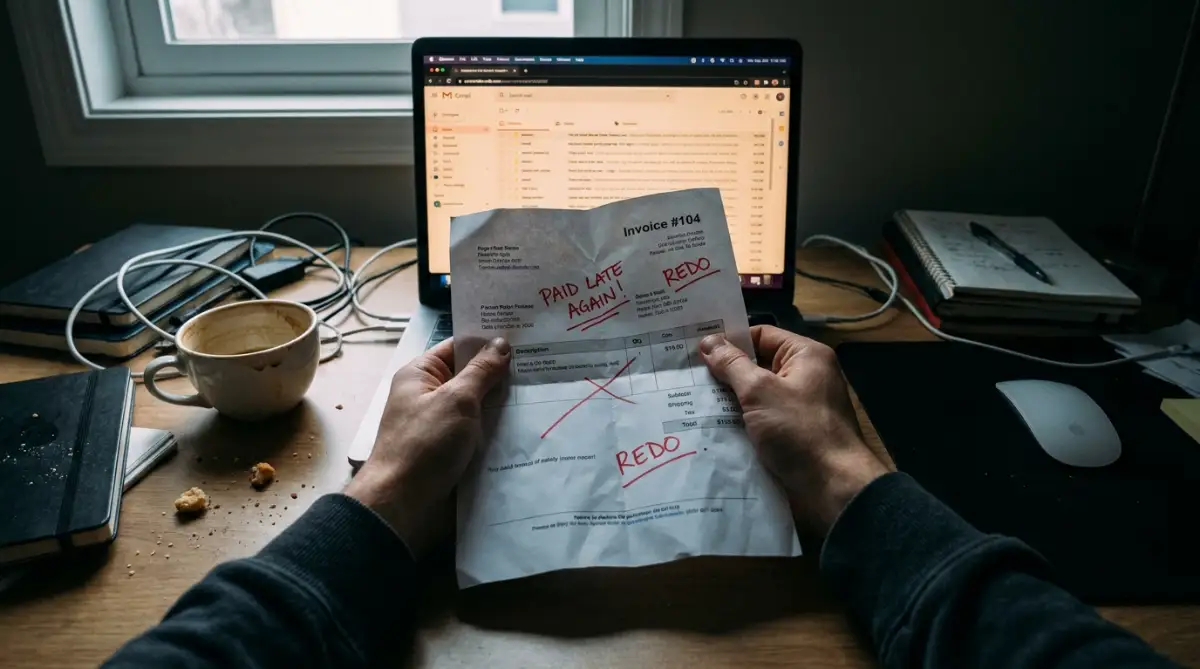
Because you are not charging for these extra hours, your hourly rate drops to pennies. You must learn to set extremely firm boundaries from day one. If a client asks for extra work, smile politely and hand them a new invoice for the additional tasks.
Ignoring the Reality of Taxes and Business Metrics
Working for yourself means you are solely responsible for your own accounting. A terrifying number of beginners spend every dollar they earn, completely forgetting that the government will eventually ask for its share. This single mistake has forced thousands of promising entrepreneurs into massive debt.
You should always treat your income as gross revenue, not personal spending money. Open a separate bank account immediately and transfer a strict percentage of every single payment into a tax savings fund. The Small Business Administration's official guidelines for independent contractors strongly recommend paying estimated quarterly taxes to avoid massive penalties at the end of the year.
Here is a super simple way I split my freelance income the second it hits my bank account:
Furthermore, you need to track your daily numbers. Working without looking at your profit margins is like driving a car blindfolded. You might feel like you are moving fast, but a crash is mathematically guaranteed.
Designing a Workspace Without Considering the Risks
Many people start their journey working from their beds or a cramped living room couch. While this sounds comfortable, it absolutely destroys your posture and your daily productivity. You need a dedicated, professional workspace to signal to your brain that it is time to work.
Some remote workers even take this a step further by embracing the digital nomad lifestyle, traveling the country in customized vans or RVs. If you choose to work while traveling, you must pay close attention to your mobile office's mechanics. Taking the time to identify dangerous engine noises early will ensure you never miss a client deadline because you are stranded on the side of a highway.
On the other hand, if you prefer building a permanent home office, you might want to upgrade your home's energy efficiency to handle running computers all day. Many homeowners switch to renewable energy for their setups. However, you must thoroughly research the hidden dangers of solar panel installation before modifying your roof, as poor wiring can cause severe fire hazards in your workspace.
The Danger of Isolation
Working online is incredibly lonely. You no longer have coworkers chatting by the water cooler or a manager giving you regular feedback. Over time, this extreme isolation can lead to severe depression and a complete loss of creative energy.
Do not let your computer screen become your entire world. You have to actively force yourself to leave the house, join local networking groups, and socialize with real humans. Building a community of like-minded peers is essential for your long-term sanity and happiness.
Your Immediate Action Plan for Tomorrow Morning
Reading this guide is entirely useless if you do not take immediate action. The internet is full of passive readers who consume information all day but never actually change their lives. I want you to be the exception to that rule.
You now possess the exact framework needed to build a highly profitable, sustainable, and enjoyable online career. There are no more secrets left to uncover. The only thing standing between you and your ideal lifestyle is the willingness to do the hard work.
Instead of feeling overwhelmed by all these new concepts, I want you to focus on a few small, manageable steps. Progress is made through tiny, consistent actions, not massive overnight leaps.
The 4-Step Morning Checklist
1. Audit Your Current Workload: Tomorrow morning, look at every project you are currently handling. Are you getting paid what you are truly worth? If not, it is time to respectfully let go of your lowest-paying client to make room for a better one.
2. Open a Business Savings Account: Stop mixing your grocery money with your client payments. Go to your bank's website and open a dedicated tax and savings account. This will take exactly ten minutes but will save you from endless stress later.
3. Send One "Value-First" Pitch: Find a brand or client you genuinely want to work with. Find a flaw in their current system, create a small solution for free, and email it to them. Do not ask for anything in return right now.
4. Protect Your Workspace: Clean your desk, organize your files, and establish physical boundaries. Tell your family or housemates that when you are in your workspace, you are completely off-limits.
A Final Thought Before You Close This Tab
You are fully capable of achieving the freedom you desire. It will not be easy, and there will be days when you want to quit and go back to a traditional job. That feeling is completely normal, but you must push through it.
Every successful person you admire started exactly where you are sitting right now. They were confused, scared, and unsure of their next move. The only difference is that they refused to give up when things got difficult.
Take a deep breath, trust the systems we have discussed today, and start executing. Your future self is depending on the choices you make right now. Go out there and start building something you can truly be proud of.
Looking back, getting burned on that very first verbal deal was the hard push I needed to finally run my business like a true professional. You do not need a fancy law degree to protect your hard work; you just need to start sending those simple follow-up messages. Take a deep breath, set up your smart habits today, and go watch your business grow safely!
Disclaimer: The information provided in this article is for educational and informational purposes only. It does not constitute financial, legal, or professional tax advice. Please consult with a certified professional before making any significant financial or business decisions. Always adhere to local laws and platform policies when building your online business.