The Nightmare Above My Ceiling
You just spent thousands of dollars on a shiny new solar setup, expecting your electric bill to disappear completely. But instead, you are staring at a growing yellow water stain on your living room ceiling. I lived through this exact nightmare. Let me show you why slapping heavy panels on an aging roof is the biggest financial mistake you can make, and exactly how you can avoid it.
My brand-new solar panels were installed over rotting wooden trusses that could not handle the extra weight. I had to pay a massive sum of money just to remove the panels, fix the roof, and then pay the solar company to put everything back up again.
That single mistake cost me an absolute fortune and completely wiped out all the energy savings I had planned for the next five years. I felt so foolish for simply trusting the solar salespeople who told me my roof looked completely fine from the ground.
This is a silent nightmare happening to thousands of well-meaning homeowners right now. You try to do the right thing by switching to green energy, but nobody warns you about the hidden dangers lurking right under those shiny new panels.
The daily stress of wondering if your
It completely destroys your mental peace when your safe haven turns into a constant source of worry and financial drain. The reality is that your house is your biggest financial asset, and putting heavy equipment on a weak foundation is a recipe for absolute disaster.
Smart Homeowner Action Plan
- Inspect First: Always check your attic for moisture or soft wood before talking to any solar sales reps.
- Mind the Weight: Panels add hundreds of pounds of dead weight. Verify your roof can hold it.
- Watch the Flashing: Ensure your installer uses proper metal flashing, not just cheap caulk, to prevent massive rain leaks.
- Avoid the Money Trap: If your roof is over 10 years old, replace it before adding solar to avoid thousands of dollars in removal fees later.
The Heavy Emotional Toll on Homeowners
Most people do not realize how much mental energy is wasted when your home starts falling apart. You go to work thinking about the water dripping into your attic, and you go to sleep wondering how much the repair bill will be.
We often think of home improvements as exciting milestones that increase our property value. But when things go wrong because of ignored roofing issues, that excitement quickly turns into deep frustration and anger.
Myth vs Reality: The Solar Industry Secret
There is a very common myth floating around that solar panels will actually protect an old roof from weather damage. Sales reps often use this exact line to convince you to install panels without replacing your aging shingles first.
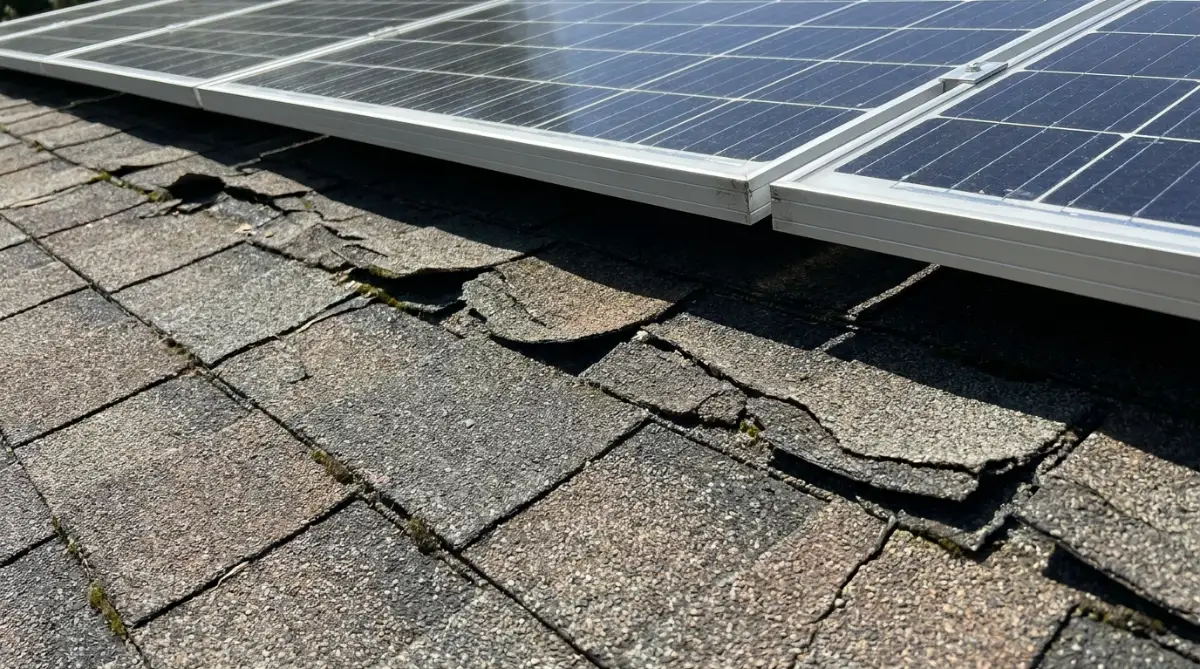
The reality is completely different from this sales pitch. While panels do block the sun and rain from hitting a specific section of your roof, the process of installing them creates dozens of new holes in your roofing material.
If your shingles are already old and brittle, driving massive bolts through them will cause them to crack and shatter immediately. The panels will not protect your old roof; they will actually accelerate its complete destruction.
The Scientific Blueprint for a Bulletproof Solar Foundation
We need to stop treating a solar panel installation like buying a new appliance. It is a massive structural modification to your home that requires proper engineering and scientific evaluation.
You cannot afford to guess when it comes to the safety of your family and the integrity of your property. Let us walk through the highly effective steps you can take today to ensure your roof is actually ready for this heavy upgrade.
Phase 1: The Internal Attic Moisture Test
The biggest mistake homeowners make is only looking at their roof from the outside standing in their driveway. Asphalt shingles can look perfectly fine from a distance while hiding massive amounts of water damage underneath.
You need to grab a strong flashlight and physically climb up into your dark attic during the middle of the day. Turn off the flashlight for a moment and look for any tiny rays of sunlight poking through the wooden boards.
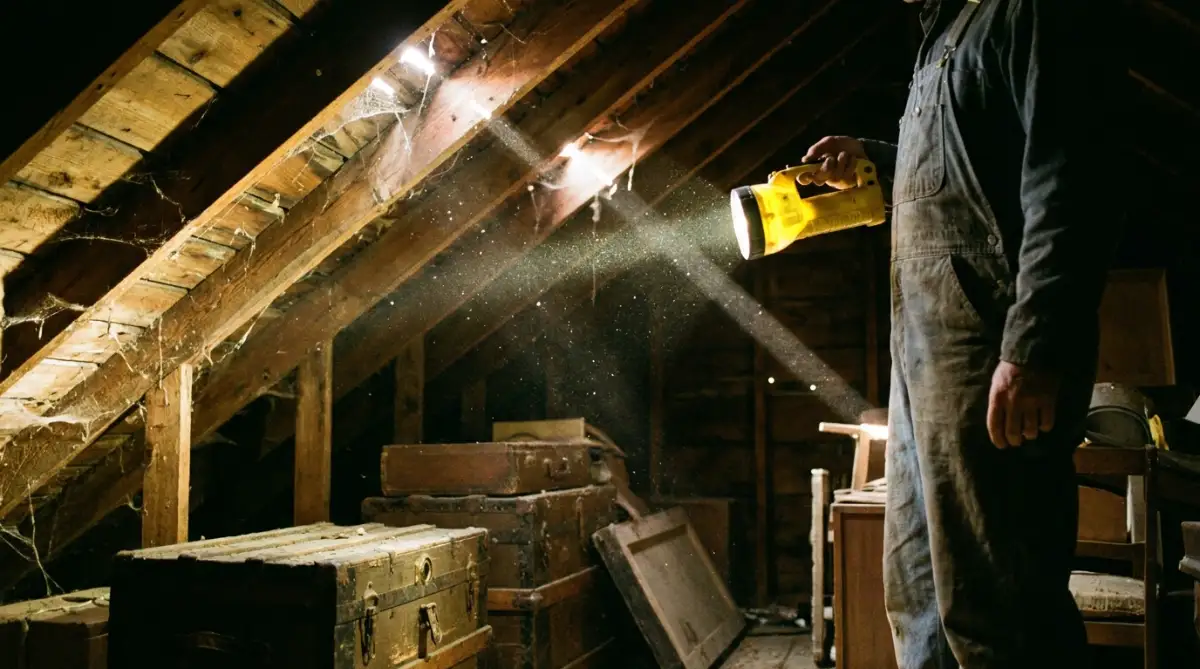
If you see light coming through, water will definitely find its way in during the next big storm. Next, turn your flashlight back on and look closely at the wooden rafters for dark, damp spots or streaks of dried white minerals.
My biggest realization happened when I finally climbed up into my attic with a flashlight to look at the wooden rafters. I saw dark, damp spots on the wood that were completely invisible from the outside of the roof. Always do an internal attic inspection before you ever sign a solar contract, because outside appearances can be incredibly deceiving.
Phase 2: Analyzing the Structural Weight Limit
Solar panels might look sleek and thin, but they are incredibly heavy when you bundle them all together. A standard residential system can easily add several hundred pounds of dead weight to your roof structure.
Your house was originally engineered to support the weight of the roofing materials and heavy snow, not an entire miniature power plant. If your wooden trusses are old, cracked, or slightly sagging, this added weight will cause massive structural issues over time.
You need to hire an independent structural engineer to evaluate your roof before you buy the panels. Do not just rely on the solar company's internal inspector, because their main goal is to sell you a system as fast as possible.
An independent engineer will measure the exact dimensions of your wooden rafters and calculate their exact load-bearing capacity. This simple evaluation will give you the scientific proof you need to know if your house is truly safe.
The DIY Pre-Solar Attic Checklist
Before you spend money on an engineer, do this quick 5-minute check yourself:
- The Sniff Test: Does your attic smell musty or moldy? That means moisture is already trapped up there.
- The Poke Test: Take a screwdriver and gently press it against the wood beams. If the wood feels soft or spongy, you have rot.
- The Daylight Test: Turn off your flashlight. If you see tiny stars of sunlight coming through the wood, rain will get in too.
Before you let anyone drill a single hole into your shingles, you absolutely must watch this eye-opening breakdown of proper roof preparation.
Phase 3: The Danger of Incorrect Flashing and Sealants
When workers attach solar panels to your roof, they have to drill lag bolts directly through your shingles and into the wood below. Every single hole they make is a potential entry point for rain and melted snow.
To prevent leaks, a high-quality installation requires something called metal flashing. Flashing acts like a tiny metal umbrella that slides under your shingles and perfectly covers the hole where the bolt went in.
Unfortunately, many cheap solar installers skip the metal flashing entirely to save time and money. Instead, they just squirt a big glob of cheap black sealant over the hole and hope for the best.
Over a few hot summers, that cheap sealant will dry out, crack, and shrink away from the metal bolt. When the next heavy rainstorm hits, water will pour directly through those cracks and soak into your ceiling insulation.
Phase 4: Understanding Granule Loss on Older Roofs
If you walk up to your gutters and see a thick layer of tiny, rough pebbles sitting inside, you have a massive problem. Those tiny pebbles are the protective granules that shield your asphalt shingles from harmful sun rays.
As a roof ages, these granules naturally wash away during heavy rainstorms, leaving the bare asphalt exposed to the elements. Once the granules are gone, the shingles bake in the sun and become extremely dry and brittle like a cracker.
If a worker steps on a brittle shingle while carrying a heavy solar panel, the shingle will simply snap in half. You cannot safely install a modern solar system on a roof that is already rapidly losing its protective layer.
A Simple Comparison: Healthy vs. Failing Materials
Think about trying to build a heavy brick wall on top of a muddy swamp. No matter how strong the bricks are, the entire wall will eventually sink into the mud and collapse.
Your roof acts exactly like that foundation. A healthy roof has flexible shingles that can handle the weight and movement of the solar workers walking around.
A failing roof will literally crumble under their boots, leaving you with hundreds of broken shingles before the panels are even turned on. It is incredibly important to fix the foundation before you ever worry about generating electricity.
Phase 5: The "Detach and Reset" Financial Trap
Let us imagine you decide to ignore my advice and install panels on a roof that is fifteen years old. Three years later, your roof finally starts leaking and you are forced to replace all the shingles.
You cannot just hire a roofing company to come and rip off the old shingles. You first have to call the solar company and pay them thousands of dollars to safely remove the panels and store them in your garage.
Once the roofers finish their job, you have to pay the solar company a second time to come back and reinstall everything. In the solar industry, this is known as a "detach and reset" fee, and it is incredibly expensive.
The Real Cost of "Detach and Reset"
Here is exactly what nobody tells you about removing panels just to fix your roof later on:
| Service Needed | Average Cost | Why It Hurts Your Wallet |
| :--- | :--- | :--- |
| Panel Removal | $1,500 - $2,500 | Workers must carefully unbolt and disconnect the entire grid. |
| Safe Storage | $300 - $500 | Panels must be stored securely so they do not scratch or break. |
| Reinstallation | $1,500 - $3,000 | Putting them back up and reconnecting the complex wiring. |
Bottom Line: Fix your aging roof first, or you will easily pay an extra $4,000 later.
Homeowners are often shocked when they receive a huge bill just to move their own panels out of the way. By replacing your aging roof before you go solar, you completely avoid this massive financial trap.
Phase 6: Proper Ventilation and Heat Trapping
Your roof needs to breathe to stay healthy over the years. Heat naturally rises from inside your house and gathers right under the wooden decking of your roof.
If that hot air cannot escape through proper attic vents, it essentially bakes your shingles from the inside out. When you add large, dark solar panels on top of the roof, the heat trap becomes even more intense.
Solar panels get incredibly hot during the summer, often reaching temperatures well over one hundred degrees. If the space between the panels and the shingles is too small, that extreme heat will transfer directly into your house.
A smart installer will make sure the panels are mounted high enough to allow fresh air to flow underneath them. This cooling breeze protects your roof materials and actually helps the solar panels generate electricity much more efficiently.
Phase 7: Documenting Everything Before Construction Begins
Before any worker steps foot on your property, you need to document the exact condition of your home. Take your smartphone and record a slow, detailed video of your entire roof, inside and out.
Make sure you get clear shots of your ceilings inside every room to prove there are no existing water stains. If the solar company accidentally damages your roof and causes a massive leak, they will often try to blame it on an existing issue.
When you have clear video evidence timestamped from the day before the installation, they cannot deny their responsibility. This simple ten-minute task is your ultimate insurance policy against bad workmanship.
We always want to trust the people working on our homes, but businesses will naturally try to protect their own profits. By keeping detailed records, you force them to take accountability for their mistakes.
Taking charge of your home improvement projects requires a bit of extra effort upfront, but the peace of mind is entirely worth it. When you understand the science behind your roof, you become an empowered homeowner who cannot be taken advantage of.
Pro-Level Strategies to Protect Your Roof and Solar Investment
We already covered the basic inspections, but now I want to share the exact strategies the professionals use. If you want to sleep peacefully during a massive rainstorm, you need to think a few steps ahead of the average homeowner.
These advanced methods will cost a little extra time and money upfront. However, they will absolutely save you from dealing with catastrophic water damage and expensive removal fees down the road.
Leveraging Thermal Drone Technology
You do not have to rely solely on your own eyesight to find hidden roof damage. Today, smart homeowners are hiring inspectors who use thermal imaging drones to check their property.
A standard visual inspection can easily miss a small, slow leak that is hiding under your top layer of shingles. A thermal drone, on the other hand, detects temperature differences across your entire roof surface.
When water gets trapped under your shingles, it holds onto heat much longer than dry materials do. As the sun goes down, the drone's infrared camera will clearly show these wet spots glowing bright red or orange.
Having this thermal map gives you undeniable proof of where your roof is failing before the panels are attached. It is one of the smartest ways to avoid the hidden dangers of solar panel installation that nobody tells you about.
Exploring Standing Seam Metal Roofs
If you are planning to replace your roof anyway, you should seriously consider upgrading to a standing seam metal roof. This is essentially the holy grail of solar compatibility.
Unlike traditional asphalt shingles, a standing seam metal roof features raised vertical seams running all the way down to the gutters. Solar installers can attach special clamps directly to these raised seams.
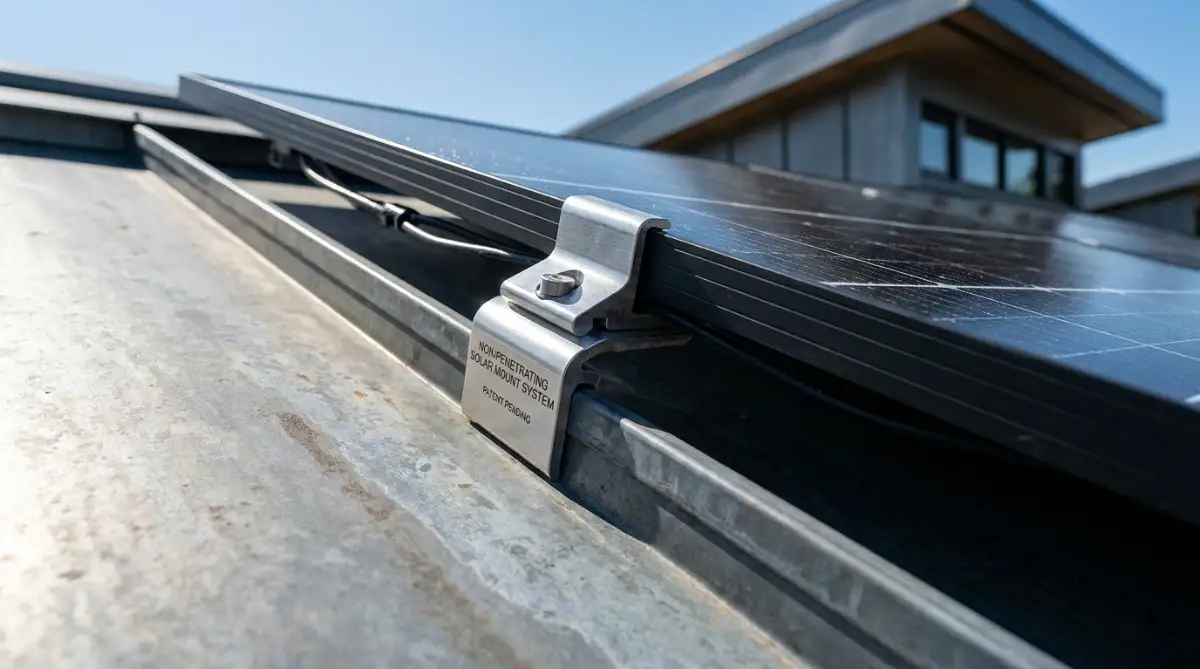
This means they do not have to drill a single hole into your actual roof deck. No holes mean absolutely no chance of rain leaking through the mounting points.
While metal roofs cost more initially, their lifespan perfectly matches or even outlasts the life of the solar equipment. This completely eliminates the nightmare of having to pay thousands of dollars just to remove panels for a roof repair later on.
The Ultimate Secret: Dual-Certified Contractors
The biggest conflict in this industry happens when the roofer blames the solar installer for a leak, and the solar installer blames the roofer. You are left stuck in the middle with a dripping ceiling and a voided warranty.
To completely avoid this trap, you should only hire a company that holds certifications for both roofing and solar installations. When one single company handles the entire project, they take full responsibility for the entire system.
You can ask them if they follow the strict guidelines set by the National Roofing Contractors Association for rooftop panel mounting. If a company does not know what these specific building standards are, you should immediately look for someone else.
By having one unified team, the workers know exactly how to protect the structural integrity of your home while maximizing energy production. They will also understand the exact structural weight limits established by national laboratories, ensuring your wooden trusses will never buckle under the heavy equipment.
Installing High-Quality Critter Guards
People always worry about the rain and wind, but they completely forget about the local wildlife. Pigeons, squirrels, and raccoons absolutely love the cozy, shaded gap between your roof and your new solar array.
Once these animals build their nests under there, they will start chewing on the exposed electrical wires. A single chewed wire can shut down your entire system and create a massive fire hazard on top of your house.
Furthermore, all the twigs and leaves they bring in will block the natural airflow, trapping dangerous heat against your shingles. You must demand that your installer wraps a heavy-duty wire mesh critter guard around the entire perimeter of the panels.
This simple metal barrier keeps the animals out while still letting the cooling wind flow through freely. It is a tiny investment that prevents incredibly annoying and dangerous animal damage.
The Financial Traps and Disasters You Must Avoid
Trying to cut corners on a major home modification is a recipe for disaster. I have seen so many people try to save a few bucks, only to end up with a destroyed living room.
Let us look at some of the most dangerous mistakes people make during this process so you can keep your family and your wallet safe.
Falling for the "Too Good to Be True" Quote
Imagine you get three different quotes for your solar project. Two of them are around the same price, but the third one is thousands of dollars cheaper.
It is incredibly tempting to choose the cheapest option, but you have to ask yourself why their price is so low. Usually, it means they are using inexperienced workers and extremely cheap materials for the actual roof attachments.
As I mentioned earlier, cheap installers will skip the metal flashing and just squirt silicone caulk over the bolts. That cheap caulk will eventually dry up and crack, turning your roof into a giant sponge during the next storm.
Paying a slightly higher price for a premium installer is the best insurance policy you can buy. Quality workmanship means you will actually get to enjoy the truth about home solar power without the constant anxiety of a ceiling collapse.
Ignoring Your Gutter System's Capacity
Here is a major issue that almost nobody thinks about. Solar panels are essentially giant, slippery slides made of smooth glass.
When heavy rain hits a normal shingle roof, the rough texture of the asphalt slows the water down before it reaches the edge. But when rain hits a massive glass solar panel, it accelerates and shoots off the edge with incredible force.
If your home has small or clogged gutters, this sudden wave of fast-moving water will completely overshoot the drain. The water will then splash back against your wooden fascia boards and soak directly into the walls of your house.
Before you install any panels, you need to make sure your gutters are fully cleaned and securely fastened to the house. You might even need to upgrade to wider gutters to handle the aggressive water runoff properly.
Trusting Verbal Promises Without Written Proof
Salespeople are trained to make you feel completely comfortable and relaxed. They will look you right in the eye and promise that their company covers all roof leaks caused by the installation.
But when a leak actually happens three years later, that friendly salesperson is probably working somewhere else. If their promise is not explicitly written down in your contract, it legally does not exist.
You need to read every single line of the warranty agreement before you sign your name on the dotted line. Make sure it specifically states that they cover any internal water damage caused by their mounting hardware.
If the company refuses to put their verbal promises into writing, you should walk away from the deal immediately. Never gamble with the safety of your property just because someone seemed nice over a cup of coffee.
Forgetting the Impact of Solar Batteries
When people go solar, they often want to add a massive battery backup system in their garage. This allows you to store the energy you create during the day to use at night.
People often mistakenly compare this massive home power bank to their cell phones. But just like you might wonder why your phone battery dies so fast, home solar batteries require very specific temperature control and maintenance to survive.
You cannot just bolt a massive, heavy battery unit to a weak garage wall. You need to make sure your garage framing can actually support the extreme weight of these energy storage systems.
You should also educate yourself on the ultimate truth about lithium-ion battery charging myths to ensure you are treating the system properly. Proper planning here will prevent a major electrical hazard inside your home.
Misunderstanding Winter Weather Maintenance
Many homeowners assume that their system will completely shut down during the cold months. However, the reality is that solar panels working on cloudy winter days can still generate plenty of usable electricity.
The real problem in the winter is not the lack of sun, but the accumulation of heavy snow. Snow loves to slide off those smooth glass panels in massive, heavy sheets all at once.
If these heavy snow blocks fall onto your lower roof sections or a patio awning, they can easily smash through the structure. You need to ask your installer to put snow guards at the bottom edge of the panels to break up the falling ice.
This simple addition prevents dangerous avalanches from crushing your landscaping, your pets, or even your family members walking around outside.
Your Next Steps for a Safe, Powerful Home Upgrade
Upgrading your home with renewable energy is an amazing decision that will pay off for decades. You just need to respect the process and treat your roof like the critical foundation it truly is.
We have explored a lot of heavy information today, from understanding structural weight limits to checking your dark attic for water spots. The main lesson here is that a healthy roof is the only way to guarantee a healthy solar system.
When you take the time to bring in an independent structural engineer and a thermal drone inspector, you take back your power as a consumer. You no longer have to blindly trust what a salesperson tells you in your living room.
You should also review official government resources, like the Department of Energy homeowner solar guidelines, to ensure you are fully prepared for the journey. Knowledge is your best defense against bad contractors and cheap materials.
Do not let the fear of a leaky roof stop you from pursuing energy independence. Just do the hard work upfront, fix your aging shingles first, and demand premium mounting hardware from your installers.
My personal advice is to grab a strong flashlight today and poke your head into your attic for just five minutes. Catching a tiny water spot right now will save you from a massive financial headache tomorrow, so take action and protect your home!
Common Questions About Solar Roof Safety
Can solar panels actually cause my roof to collapse?
While a full collapse is rare, the heavy weight of the equipment can cause older wooden trusses to slowly sag and crack over time. This is why you must have an independent engineer calculate your roof's load-bearing capacity before allowing any construction to begin.
Does my current roof warranty cover damage from a solar installation?
No, standard manufacturer roofing warranties usually become completely void if a third party drills holes into the materials. You need to ensure the solar company provides a comprehensive, written warranty that specifically covers any water damage they might cause.
Should I replace my old shingles before getting solar panels?
Yes, absolutely. If your roof is more than ten years old, you should replace the shingles first to avoid the massive cost of removing and reinstalling the panels later. Your roof's remaining lifespan should always match or exceed the twenty-five-year lifespan of the solar hardware.
How do I know if my installer used the right metal flashing?
You can safely observe the workers from the ground using a pair of binoculars, or ask them to provide clear photos of the mounting brackets before they attach the panels. You should clearly see a large metal square sliding underneath the upper shingle to protect the bolt hole from rain.
Do solar panels protect my roof from hail and bad weather?
The panels will block hail from hitting the specific section of the roof they cover, but they do not protect the rest of the house. In fact, if the panels are installed on brittle, aging shingles, the physical vibration from the workers walking around will cause far more damage than normal weather would.
Disclaimer: The information provided in this article is for educational and informational purposes only. Every home has unique structural conditions, and local building codes vary greatly. Always consult with a licensed structural engineer, a certified roofing contractor, and your local permitting office before making any modifications to your home. We are not responsible for any structural damage, water leaks, or financial losses that may occur from improper installations.