
The Hidden Cost of the "Invisible Workload" on Your Mental Health
Have you ever hidden in your driveway for an extra five minutes just to avoid facing the messy kitchen inside? I used to do this almost every Tuesday. Between managing my day job and trying to figure out dinner, laundry, and cleaning, my brain was completely fried. The constant mental checklist of chores—the "invisible workload"—was ruining my peace. But you do not have to live like that. Let me show you how I used a few free apps to automate my home and finally get my weekends back.
But you cannot. The moment you step inside, a second shift immediately begins. The sink is full of dirty dishes. The laundry basket is overflowing with clothes that need washing. You still have to figure out what to cook for dinner.
This refers to the never-ending mental checklist of household management. It is not just doing the physical chores, but constantly remembering that they need to be done. This constant background noise in your head completely destroys your mental peace.
Over time, this endless cycle leads directly to severe burnout. You start spending your weekends cleaning instead of resting or spending time with family. Your home, which should be your personal sanctuary, suddenly feels like a second office where the work simply never stops.
The weight of daily chores slowly steals your joy. It ruins your focus and leaves you feeling completely trapped in a loop of maintenance tasks. But what if I told you that you could permanently delegate a massive portion of this burden?
Your Quick Guide to Winning Back Your Time:
- Stop guessing what is for dinner—use a free app to turn your leftover ingredients into a step-by-step recipe instantly.
- Schedule a robot vacuum to clean your kitchen floor at 2:00 AM so you wake up to a spotless house.
- Turn on smart email filters to automatically hide junk mail, saving your brain from morning decision fatigue.
- Always pick one central smart home system (like Apple or Google) so all your devices talk to each other without needing ten different apps.
Reprogramming Your Home: How Intelligent Systems Take Over the Heavy Lifting
We often think of artificial intelligence as something reserved for tech giants or sci-fi movies. However, the reality is entirely different today. You can easily use simple AI tools to completely transform how your household operates.
Think of AI as your completely free, invisible personal assistant. This assistant never sleeps, never complains, and handles the most boring parts of your day with perfect accuracy. Let us explore exactly how you can set this up.
Erasing Meal Prep Anxiety with Predictive AI Models
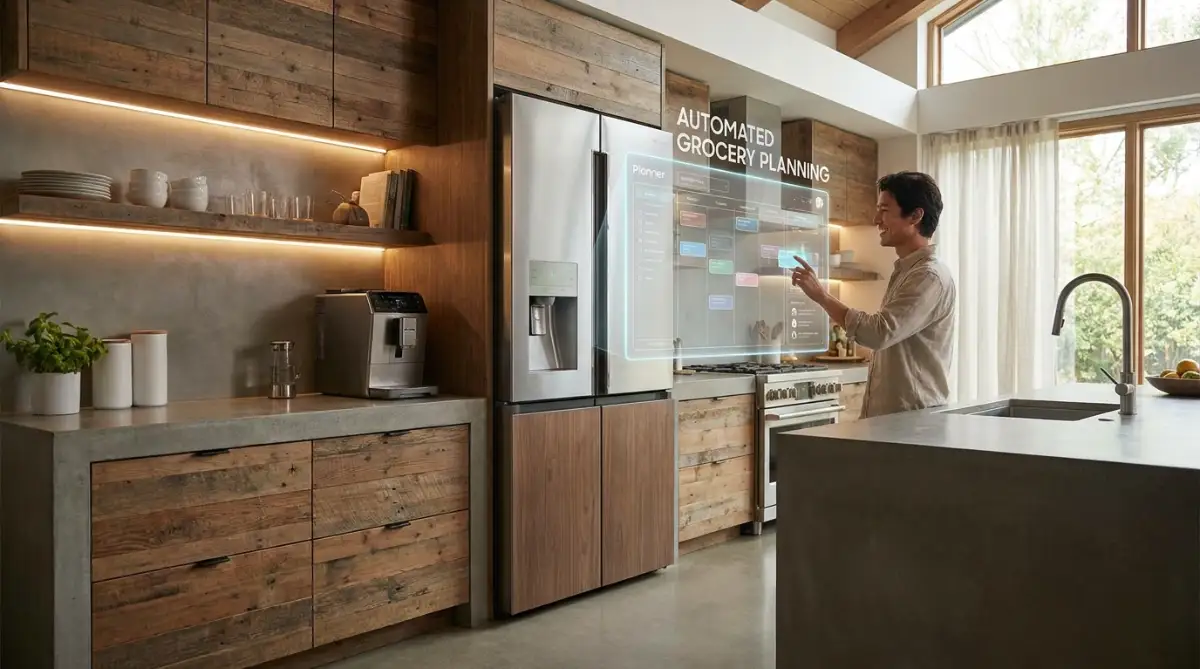
One of the most exhausting daily chores is simply deciding what to eat. The mental energy required to plan meals, check ingredients, and create a grocery list is massive. AI can completely eliminate this daily struggle.
You can easily use free AI language models right from your smartphone to handle this. Instead of staring blankly at your fridge, you can simply tell your digital assistant exactly what ingredients you have on hand.
A Real-Life Scenario: The Sunday Night Kitchen Panic
Imagine opening your fridge and seeing only chicken breast, some wilted spinach, and a jar of pasta sauce. Normally, you might give up and just order expensive takeout.
Instead, you type those exact ingredients into an AI app. Within two seconds, it provides three highly creative, step-by-step recipes. You save money, avoid food waste, and eliminate the stress of decision-making.

Taking Meal Automation One Step Further
You can train these systems over time. You can tell your AI assistant about your specific dietary goals, allergies, and budget limits.
It will then generate a complete weekly meal plan for you. It will even organize the grocery list by supermarket aisles so you can shop twice as fast. You are no longer managing your kitchen; you are just following a simple, optimized system.
Expert Insight: Always ask your AI assistant to create meals that share overlapping ingredients. This simple trick drastically reduces grocery costs and prevents fresh food from spoiling in the back of your fridge.
My Personal Weekly Savings Tracker:
Before I started letting my phone plan my meals, I wasted a lot of food. Here is a realistic look at what happened after I switched to automated planning:
- Time spent staring at the fridge: Dropped from 20 minutes a day to 0 minutes.
- Grocery Bill: Saved about $45 a week because I stopped buying random items.
- Takeout Orders: Went from ordering out three times a week to just once, simply because I already had an easy recipe ready to go.
Automating the Physical Mess: Smart Mapping and Zone Cleaning
Vacuuming and mopping are highly repetitive tasks that steal hours of your free time every single month. Modern robotic cleaners powered by artificial intelligence have completely changed this game.
We are not talking about the old machines that blindly bumped into walls and got stuck under chairs. Today's devices use advanced LIDAR technology and machine learning algorithms. They actually build a highly detailed map of your entire home layout.
Optimizing High-Traffic Areas While You Sleep
You can use smart scheduling to ensure you never have to think about floors again. The AI learns which areas of your house get dirty the fastest.
For example, the kitchen floor and the hallway usually need the most attention. You can program the system to specifically target these high-traffic zones every night at 2:00 AM. When you wake up to make your morning coffee, your floors are already perfectly clean.
Myth vs Reality: AI Automation in Everyday Life
The Myth: You need an incredibly expensive, fully integrated smart home to use AI for daily chores. Many people believe they need to spend thousands of dollars to get started.
The Reality: You can automate over 80% of your mental workload using completely free software on your existing smartphone. Hardware is helpful, but software is the true secret weapon.
The Financial and Energy Savings of Smart Climate and Utility Control
Managing your home's temperature and lighting might not feel like a heavy chore. However, constantly adjusting thermostats and turning off forgotten lights drains both your mental energy and your wallet. AI-driven utility management takes this completely off your plate.
Smart thermostats use artificial intelligence to learn your daily routine. They monitor when you leave for work, when you return, and what temperatures you prefer during different times of the day.
Machine Learning for Your Comfort
Within just a few weeks of use, the system completely adapts to your family’s habits. It automatically lowers the heating or cooling when the house is empty.
This means you are saving a significant amount of money on energy bills without lifting a single finger. The AI does all the complex calculations in the background. You simply enjoy a comfortable home environment automatically.
Conquering the Never-Ending Laundry Cycle
Laundry is the chore that easily frustrates people the most. It requires constant attention over several hours. Sorting, washing, transferring, and folding take up huge blocks of time.
While AI cannot physically fold your clothes just yet, it heavily optimizes the washing process. Smart washing machines use AI sensors to detect the exact weight and fabric type of your clothes.
The Mental Relief of Automated Reminders
They automatically determine the perfect water level, temperature, and detergent amount. This prevents damage to your favorite clothes and ensures a perfect clean every time.
More importantly, your smart system connects directly to your phone. It sends you a highly specific reminder exactly when the load finishes. You will never again accidentally leave wet clothes in the machine overnight, completely avoiding that terrible musty smell.
Building Your First AI Command Center
Setting up all these automations might sound highly technical. In reality, you only need one central application on your phone to control everything easily.
Both Apple and Android devices have built-in automation software that acts as the brain of your home. You can link your calendar, your smart plugs, your speakers, and your task lists together.
Comparison: Traditional Household vs. AI-Assisted Household
Daily Chore Traditional Manual Method AI-Assisted Automated Method Time Saved Daily Grocery Planning Writing lists, checking cupboards, searching recipe books.App generates list based on inventory and dietary preferences.25 Minutes Floor Cleaning Sweeping and vacuuming manually after work. Scheduled robot cleans high-traffic zones overnight.20 Minutes Climate Control djusting thermostat constantly throughout the day.AI learns routine and adjusts temperature automatically.5 Minutes Schedule Management Trying to remember appointments and family tasks. Voice assistant organizes calendar and sets smart reminders.15 Minutes
As you can clearly see from this table, combining these small actions saves you over an hour every single day. That equals almost an entire extra working day of free time given back to you every week.
Managing Digital Clutter as a Daily Chore
When we think about chores, we usually focus on physical cleaning. However, managing our digital lives has become a massive daily chore as well. Sorting through hundreds of promotional emails and organizing files takes serious time.
Artificial intelligence excels at organizing digital messes. You can set up smart filters in your email provider that use machine learning to identify what is actually important.
Training Your Digital Assistant
The system quickly learns which emails you always read and which ones you immediately delete. It auto-sorts the junk into specific folders before you even open your inbox.
When you sit down to check your messages, you only see the important communications from family, friends, or work. This instantly removes the heavy burden of digital decision fatigue from your morning routine.
Quick Myth vs. Fact: Digital Automation
- The Myth: Setting up smart email filters and routines takes a computer degree and weeks of free time.
- The Fact: It actually takes about ten minutes on a Sunday afternoon. You just type "Move emails with the word 'Sale' to the Promotions folder," and the system does the rest forever. It is that easy.
Overcoming the Initial Learning Curve
It is completely normal to feel a little hesitant about handing over control to digital systems. The initial setup process does require an investment of your time.
You might spend a weekend programming your smart plugs, connecting your accounts, and setting up your voice assistants. During this setup phase, it might feel like more work than just doing the chores manually.
Trusting the Process
You have to look at this as an investment in your future peace of mind. Once the rules and routines are firmly established, the system runs itself entirely on autopilot.
Start very small so you do not overwhelm yourself. Begin by automating just one single task, like your morning coffee routine or your grocery list generation.
Once you successfully experience the joy of waking up to a task already completed, your entire mindset will shift. You will actively look for new parts of your day to delegate to your new intelligent systems.
You truly deserve to spend your free time doing things you actually love. By embracing these simple automated solutions, you finally take back control of your schedule and your mental health.
Now that you have the basic foundation, we can look at the truly powerful stuff. Setting up one smart plug is great, but connecting multiple devices together changes everything. This is exactly where you move from simple tricks to complete lifestyle automation.
Let me share how you can chain your daily tasks together for maximum efficiency. Tech experts usually call these "routines," and they are absolute game-changers for busy families. Instead of commanding one device at a time, you create a single automated trigger.
The Magic of Morning Sequences
Imagine waking up and simply saying "Good morning" to the empty room. Instantly, your smart blinds slowly open to let in the fresh natural light. Your coffee maker downstairs immediately starts brewing your favorite dark roast.

At the very same time, your bathroom heater automatically warms up the cold floor. You do not have to walk around half-asleep pressing tiny buttons or flipping physical switches. Your house perfectly anticipates exactly what you need before you even have to ask.
This simple setup completely removes the terrible morning rush stress. When you start your day calmly, your overall mental health drastically improves throughout the afternoon. If you often feel completely tired by 6 PM and experience evening fatigue, simplifying your heavy morning routine is a brilliant first step.
Using NFC Tags for Instant Restocking
Here is a brilliantly simple trick that most regular people never use. You can buy cheap NFC stickers online for just a few pennies and place them inside your pantry doors. These tiny, invisible stickers communicate wirelessly with your smartphone when you tap them together.
Whenever you finish a bottle of olive oil or a bag of rice, you simply tap your phone directly to the sticker. The system instantly adds that exact grocery item to your shared family digital list. You never have to hunt for a pen or forget an important ingredient at the supermarket again.
This exact same logic applies beautifully to organizing other parts of your busy life. Just like you can easily stop overpacking and manage travel logistics using smart digital lists, you can perfectly control your kitchen inventory. It keeps your brain highly organized without requiring any extra mental effort.
Automating Maintenance and Service Reminders
Your physical home needs regular maintenance, but remembering to change air filters or check smoke alarms is incredibly annoying. You can program your digital voice assistant to silently track the lifespans of your household items. The intelligent system will send a quiet notification to your phone only when real action is required.
You can even link this directly to external calendars for scheduling professional help. For example, setting up a seamless system for automating your regular service appointments ensures your home appliances never break down unexpectedly. You stay completely ahead of costly repairs while doing absolutely nothing manually.
Energy Monitoring for Serious Financial Savings
Many affordable smart outlets now come heavily equipped with built-in energy monitoring tools. You can clearly see exactly which specific appliances drain the most electricity while sitting quietly in standby mode. You can then program those specific power outlets to shut down completely while your family sleeps.
Recent consumer studies from the Department of Energy clearly show that stopping these hidden power drains saves families significant money annually. This turns your smart home setup from a fun weekend toy into a genuine financial asset. You are automatically saving money while completely ignoring the electrical system.
Creating Calm with Smart Lighting Schedules
Managing the mood of your home is an invisible chore that heavily impacts your family's stress levels. Constantly walking around dimming lights as the evening approaches takes away from your relaxation time. Smart lighting systems handle this environmental shift entirely on autopilot.
You can program your hallway and living room bulbs to slowly shift to a warm, orange glow as the sun sets. This mimics natural firelight and naturally tells your brain that the workday is officially over. By the time you are ready for bed, the house has already prepared your mind for deep sleep.

The Hidden Traps of Building an Automated Home
I have personally seen hundreds of smart people give up on home automation because they fell into avoidable traps. The daily frustration of dealing with broken software systems is often worse than just doing the chores manually. We desperately need to talk about the mistakes that will cause you serious headaches later on.
Falling for the "Frankenstein" Ecosystem
The absolute biggest mistake beginners make is buying random smart devices simply because they are cheap or on sale. They buy a discounted lightbulb from one brand, a smart plug from another, and a robot vacuum from a third company. None of these different brands actually speak the same digital language out of the box.
You eventually end up needing eight different slow apps on your phone just to turn off your living room. This creates ten times more physical work than simply flipping a traditional light switch on the wall. It completely defeats the entire core purpose of trying to automate your daily life.
How to Avoid the Compatibility Trap
Before you buy a single piece of new hardware, you must firmly choose your central hub. Decide right now if you want to use Google Home, Apple Home Kit, or Amazon Alexa as your main house brain. Every single item you purchase going forward must clearly display the logo of your chosen hub on the box.
My absolute biggest mistake when I started was buying random, cheap smart plugs on sale without checking if they actually worked together. I ended up needing six different apps on my phone just to turn off my downstairs lights, which honestly caused me even more daily stress! Save yourself the headache and pick one main system right from the start so everything talks to each other perfectly.
Want to see exactly how to avoid the biggest smart home mistakes before you spend a single penny? Watch this quick video below to see how a proper setup actually looks in real life, and then keep reading to learn the exact step-by-step plan for a stress-free transition!
Ignoring Basic Digital Security Protocols
Bringing highly intelligent, internet-connected devices into your most private space requires some basic common sense regarding security. Many eager people connect indoor cameras and smart door locks to their home network without ever changing the default passwords. This is the exact digital equivalent of leaving your physical front door wide open at night.
Bad actors and hackers actively scan the internet for completely unsecured household devices. If someone gains remote access to your network, they can easily monitor your daily habits or steal your personal data. You must always use extremely strong, unique passwords for every single smart home account you create.
I highly recommend creating a totally separate "Guest" Wi-Fi network purely for your connected appliances. The experts at the Cybersecurity & Infrastructure Security Agency frequently advise everyday users to separate smart devices from personal working computers. If a cheap smart bulb accidentally gets hacked, your private laptop remains completely safe on an entirely different internet network.
Trying to Automate Everything on Day One
Newfound enthusiasm is great, but trying to transform your entire house in one single weekend leads straight to heavy burnout. When you change too many family routines at once, your partner and kids will get confused and deeply frustrated. Your spouse might accidentally delete an important routine, or your children might mess up the specific voice commands.
This massive sudden change usually ends with angry family members unplugging the smart devices and going back to the old ways. You have to introduce technology slowly so people can comfortably adapt to the new normal.
Do's and Don'ts for a Smooth Transition
- Do start with just one single room, like the family living room or the kitchen.
- Do patiently teach your family members how to use the most basic voice commands first.
- Don't remove the physical light switches right away; always keep manual backup options easily available.
- Don't buy highly expensive automated door locks until you fully understand how the basic security software works.
Overcomplicating Simple Tasks
Just because you can automate something does not mean you actually should. Setting up a highly complex motion sensor system just to turn on a closet light might take three hours of programming. If you only open that specific closet once a week, you have just wasted precious time.
Always weigh the setup time against the actual time saved over the next few months. Stick to automating the heavily repetitive tasks that truly drain your daily energy. Keep your systems clean, highly functional, and extremely easy to troubleshoot if the internet goes down.
Your Personal Blueprint for a Stress-Free Tomorrow
We have successfully covered a massive amount of ground today, from smart grocery lists to securing your private Wi-Fi networks. The main goal here is absolutely not to become a professional computer programmer or a tech genius. The true goal is simply to win back your limited free time and actively protect your mental peace.
Every single hour you save on vacuuming floors or daily meal planning is an hour you get back. You can finally sit down and read that dusty book sitting on your bedroom nightstand. You can comfortably play with your kids on the floor without feeling completely exhausted from household chores.
Psychological researchers at places like the American Psychological Association frequently note that removing small daily friction points drastically reduces long-term burnout. You are not being lazy by digitally delegating these heavy tasks to a machine. You are actually being incredibly smart with your highly limited daily energy reserves.
A Quick Word from the Expert
It is completely normal to feel a little overwhelmed by all this new technology right now. Your brain is trying to process a totally new way of running your household. Please take a deep breath and realize that you have absolute control over the pacing of this transition.
Nobody is forcing you to turn your home into a futuristic spaceship overnight. You hold the steering wheel, and you get to decide exactly which annoying chores get handled by the machine. Treat this entire process as a highly rewarding personal experiment rather than a strict daily homework assignment.
Your 24-Hour Action Plan
I strongly want you to take one tiny, totally free step forward today before you go to sleep. Do not worry about buying any expensive hardware right now. Just pick up your smartphone and set up one recurring automated reminder.
Maybe ask your digital assistant to loudly remind you to take the heavy trash out every single Tuesday evening. Or download a totally free meal planning app and let the software generate tomorrow's dinner idea for you. Experience that amazing tiny rush of sweet relief when the technology actually works perfectly for you.
Once you genuinely feel that first small daily victory, your inner confidence will grow completely naturally. You will automatically start seeing amazing opportunities for simplification in every single corner of your house. I am incredibly excited for you to start this wonderful journey toward a much calmer, cleaner, and happier home environment.
Once I let go of trying to do everything perfectly by myself and let these simple tools help me, my weekends finally felt like real weekends again. You truly deserve to rest on your couch without a running checklist haunting your mind, so take that tiny first step tonight. Trust me, waking up to a coffee maker that already started itself will completely change how you feel about your mornings!
Disclaimer: The information provided in this article is for educational and informational purposes only. Always ensure you are following the manufacturer's official safety guidelines when installing new electrical devices or home automation hardware. We are not responsible for any technical issues or network security breaches.

