The Night I Thought My Electric Car Was Doomed
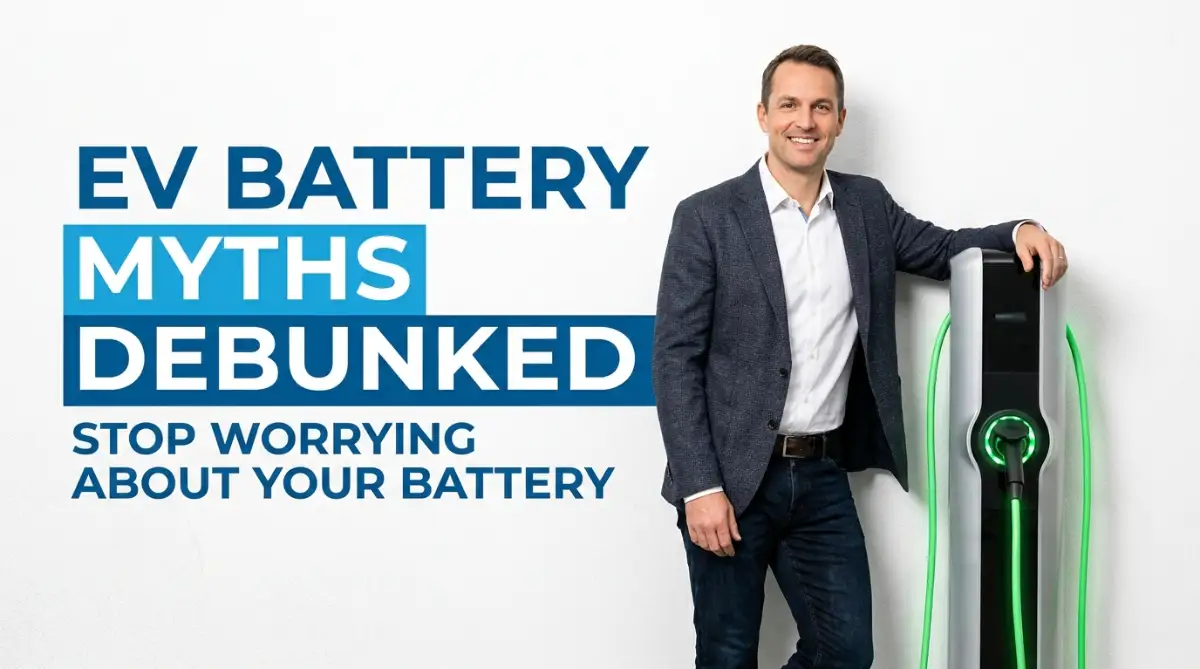
You finally plug in your new electric car for the night, but a nagging thought keeps you awake. What if this battery dies in a few years and costs a fortune to replace? I used to panic over every little drop in my driving range, thanks to those scary internet rumors. Let me show you why your car is actually built to outlast those fears, saving you a ton of money and stress along the way.
My heart sank deeply as I imagined a massive repair bill completely ruining my family savings. I honestly felt like I had made a terrible mistake buying this new technology instead of a traditional gas vehicle. It took me weeks of endless research and speaking to mechanics to realize I was losing sleep over completely false internet rumors.
Ordinary people face this exact same anxiety every single day when thinking about making the switch to electric driving. We read angry comments on social media from people who boldly claim these cars become expensive junk after just a short time. This constant fear completely destroys the mental peace that should naturally come with owning a quiet, smooth, and clean vehicle.
Actionable EV Battery Tips for Smart Owners
- Forget the 100% Rule: Keep your daily charge between 20% and 80% to give the internal cells a long, stress-free life.
- Trust the Coolant: Your car actively cools itself. Parking in the shade helps, but the built-in system always does the heavy lifting.
- Fast Chargers are Safe: Road trip fast charging will not melt your car. The software automatically slows down the power flow to protect the battery.
- Long-Term Parking: If you go on vacation, leave the car sitting at around a 50% charge to prevent chemical stress while you are away.
Why We Misunderstand Modern Battery Technology
To truly put your mind at ease, we have to explore where these scary rumors actually come from. The biggest mistake we make is comparing our cars to the devices we carry in our pockets. We all know the frustration of a smartphone that cannot hold a charge after a few months of heavy use.
Because both your phone and your car use lithium-ion technology, people naturally assume they will die at the exact same speed. This simple assumption is the root cause of almost every single myth on the internet today.
Your car is not a giant mobile phone on wheels. It is a highly advanced piece of engineering designed specifically to protect its own energy source. Let us break down exactly how your vehicle works tirelessly behind the scenes to keep you safe and moving forward.

The Magic of Thermal Management Systems
Have you ever left your smartphone in the hot sun and watched it completely shut down with a temperature warning? Small electronics have absolutely no active way to cool themselves down when things get uncomfortably hot. Heat is the ultimate enemy of battery health, and small devices are completely defenseless against it.
Electric vehicles handle this problem in a completely different and brilliant way. They are built with massive, complex liquid cooling systems that constantly flow around the battery cells.

When you drive on a scorching hot summer day, your car is secretly running a powerful air conditioning system just for the battery. If you park in the freezing snow, built-in heaters gently warm the cells to keep them at the perfect operating temperature.
This active temperature control means your vehicle never experiences the harsh extremes that destroy small consumer electronics. The battery lives in a perfectly comfortable, climate-controlled bubble every single day of its long life.
Quick Fact Check: The Phone vs. Car Battery
- Your Phone: Sits in your hot pocket all day, charges to a pure 100%, and has zero cooling fans. It degrades quickly because of trapped heat.
- Your EV: Uses massive amounts of liquid coolant to keep its cells at a perfect 70°F (21°C). It acts more like a high-end climate-controlled refrigerator than a basic smartphone.
The Hidden Buffer Zones Protecting Your Investment
Another major reason we worry too much is that we do not understand how charging actually works in a vehicle. When your dashboard screen says you have reached a hundred percent charge, it is actually lying to you.
Car manufacturers know that charging a battery to its absolute maximum physical limit causes heavy stress on the internal chemistry. To prevent you from doing this, they lock away a hidden section of the battery that you can never access.
This is known as the gross capacity versus the usable net capacity of the pack. When your screen shows a completely full charge, the physical battery is actually only resting at around ninety percent.
Watch this simple explanation to see exactly how your car protects its own battery health every single day.
I used to plug my car in every single time I parked because I was terrified of waking up to a dead battery. My constant obsession with keeping it at a perfect hundred percent was actually causing unnecessary stress on my own mind. Once I learned to just let it sit comfortably in the middle range, my anxiety completely disappeared and the car ran perfectly.
Because of these hidden software buffers, it is nearly impossible for a normal driver to accidentally damage their vehicle through daily charging. The car is simply much smarter than we give it credit for.
The Honest Truth About Capacity Degradation
One of the scariest myths is the idea that an electric car battery will suddenly "die" and stop working completely. People imagine driving down the highway and having the car shut off forever without warning.
In reality, these power packs do not die suddenly like a lightbulb burning out in your kitchen. Instead, they experience something called gradual degradation over a very long period of time.
Think of degradation like a professional marathon runner getting a little bit older. They might not be able to sprint as fast as they did in their twenties, but they can still easily finish the long race. Your car simply loses a tiny fraction of its total driving range over many thousands of miles.
Most modern electric vehicles only lose about ten to fifteen percent of their total range after driving well over a hundred thousand miles. Let us look at what that actually means for your daily driving habits.
A Real-Life Commuter Scenario
Imagine you drive thirty miles a day to get to your office, drop the kids at school, and get back home. If your new car starts with three hundred miles of total range, you are only using a tiny fraction of its potential.
Even if the battery loses ten percent of its capacity after ten long years of heavy driving, you still have two hundred and seventy miles left. Your daily office trip remains completely unaffected by this minor drop in total capacity.
You will likely decide to sell the car and upgrade to a newer model long before the degraded range ever becomes a real problem for you. The battery will outlast your actual ownership of the vehicle in almost every normal situation.
Real-World Battery Health Over Time
If you are still worried about range loss, let us look at what actual drivers report after years on the road:
| Years Driven | Average Mileage | Remaining Battery Health |
| :--- | :--- | :--- |
| 3 Years | 40,000 miles | 94% - 96% |
| 6 Years | 80,000 miles | 89% - 92% |
| 10 Years | 120,000+ miles | 82% - 85% |
Smartphone vs. Electric Vehicle Reality Check
When you look at this simple comparison, the difference becomes incredibly obvious. Stop letting the bad experience of a cheap cell phone dictate how you feel about a highly engineered machine.
Debunking the Fast Charging Danger Myth
Many new owners are terrified to use public fast chargers because they heard it will melt their internal battery components. They stick to slow home charging even when traveling, turning a fun road trip into a stressful, slow nightmare.
It is absolutely true that shoving massive amounts of electricity into a battery creates a lot of excess heat. However, we already learned that your vehicle has an incredible liquid cooling system waiting to handle exactly this situation.
Furthermore, your car actively communicates with the public charging station to control the exact flow of electricity. It never accepts more power than it can safely handle at any given moment.
When the battery is nearly empty, it pulls power extremely fast because there is plenty of room to store it. As the battery fills up past eighty percent, the car intentionally slows down the charging speed to protect the internal chemistry from overheating.
This smart charging curve means you can safely use fast chargers on your long family road trips without feeling guilty. The machine is doing all the complex math for you, ensuring everything stays safe and healthy.
Exploring the Myth of the Landfill Crisis
You have probably seen scary pictures online showing giant piles of car batteries supposedly rotting away in open landfills. Critics love to share these images to claim that electric vehicles are actually terrible for the local environment.
This is a complete misunderstanding of how the recycling industry works today. These massive power packs are filled with highly valuable metals like lithium, cobalt, and nickel that companies desperately want to recover.
When a battery eventually degrades too much for highway driving, it does not go into a garbage dump. It is simply removed and given a brilliant second life in other less demanding industries.
The Second Life Solution
A battery that can only hold seventy percent of its charge is no longer great for a fast sports car. However, it is absolutely perfect for storing stationary solar energy attached to a house or a commercial office building.

These older packs are stacked together in massive warehouses to store excess wind and solar power for entire city grids. They sit quietly in a temperature-controlled room, slowly releasing energy when the sun goes down.
They can easily serve in this stationary storage role for another decade before they are finally sent to a specialized recycling facility. At the recycling plant, up to ninety-five percent of the rare metals are safely extracted and used to build brand new cars.
There is a massive financial incentive to recycle every single part of these units. Nobody is throwing thousands of dollars of rare metals into the local trash dump.
Understanding the True Value of the Warranty
If you are still feeling a bit nervous about the long-term health of your vehicle, you need to look at the manufacturer guarantees. Car companies employ thousands of brilliant engineers who know exactly how long these machines are designed to last.
Automakers would instantly go bankrupt if they had to replace every single battery they sold to the public. They only offer long guarantees because their internal testing proves failures are extremely rare.
Most new vehicles come with incredibly strong, long-term manufacturer warranties that specifically cover the battery pack. These guarantees usually protect you against complete failures and heavy capacity loss for many long miles of driving.
If your vehicle drops below a certain health percentage within that massive timeframe, the manufacturer will repair or replace it for free. You have a massive corporate safety net standing between you and a shocking repair bill.
When you finally understand the advanced science, the smart software, and the solid guarantees protecting you, the fear completely disappears. You realize that modern engineering has completely solved the problems that internet rumors are still complaining about.
You can finally stop staring at your dashboard in panic and start enjoying the smooth, quiet, and incredible ride. Taking the time to educate yourself turns a stressful ownership experience into a deeply satisfying daily adventure.
Mastering Daily Habits for Maximum Energy Health
Now that we understand the incredible technology hiding inside these modern vehicles, we can focus on how to treat them perfectly. You do not need an advanced engineering degree to keep your energy pack in flawless condition for decades. You just need to adjust a few simple habits that will quickly become second nature in your daily routine.
Think of your vehicle exactly like a human body trying to stay healthy over a long lifetime. If you constantly eat until your stomach is completely stuffed, you will eventually feel sick and tired. Your car feels exactly the same way when you force it to hold a maximum electrical charge every single day.
The absolute smartest thing you can do is keep your daily charge level comfortably in the middle. Most automotive experts agree that keeping the power level between twenty and eighty percent is the perfect sweet spot for long-term health. When you stay in this relaxed zone, the internal chemistry experiences almost zero physical stress.
The Secret of Strategic Home Charging
Many new owners make the honest mistake of plugging their vehicle in and instantly telling it to fill up as fast as possible. This aggressive approach is completely unnecessary if your car is just going to sit in the garage all night.
Instead, you should take advantage of the smart scheduling features built right into your dashboard screen or mobile app. You can tell your car to pull electricity very slowly during the late night hours when the power grid is quiet. This slow, gentle trickle of electricity generates almost no heat, which is absolutely wonderful for the internal components.
If you are planning a massive cross-country drive, you will obviously need more power. When you actually need that hundred percent capacity, simply schedule the car to finish filling up right before you leave the driveway. Learning the ultimate strategy for extending your EV battery life on long trips will completely change how you plan your family vacations.
Why Parking Location Changes Everything
We already talked about the amazing liquid cooling systems that protect your vehicle while you drive. However, you can make your car's job much easier just by being mindful of where you park during extreme weather.
If you live in a place with brutally hot summers, simply parking in the shade can extend the lifespan of your vehicle significantly. When you park directly under the baking sun, the car has to constantly wake up and run its cooling pumps just to protect itself. This wastes your driving range and puts extra miles on the cooling system hardware.
The same logic applies when the winter snow begins to fall and the temperatures drop below freezing. Leaving your car outside in the bitter cold forces the internal heaters to work overtime just to keep the system safe. Understanding the truth about charging your electric car in freezing temps will save you a massive amount of frustration on cold winter mornings.
Whenever possible, try to keep your vehicle plugged into a wall outlet if it must sit in extreme weather for many days. When it is plugged in, the car can pull energy directly from your house to run its heating and cooling pumps. This means it never has to sacrifice its own internal energy just to stay comfortable.
The Power of Over-the-Air Software Updates
One of the most amazing benefits of modern electric vehicles is that they constantly learn and improve while they sit in your driveway. Manufacturers regularly send out digital updates through your home Wi-Fi connection, completely automatically.
These digital updates are not just for fixing the radio or making the navigation screen look pretty. They often include brilliant improvements to the thermal management software that controls how your power pack operates.
Engineers at the factory constantly analyze real-world driving data to find safer, more efficient ways to manage electricity flow. By simply tapping "update" on your screen, you are essentially getting a brand new, highly optimized brain for your car. Independent research from the National Renewable Energy Laboratory shows that intelligent software management is a primary factor in preventing premature capacity loss.

Dangerous Ownership Habits That Actually Cause Harm
While these modern machines are incredibly tough, they are not completely indestructible if you actively abuse them. Many drivers accidentally cause permanent damage simply because they treat their new high-tech vehicle exactly like an old gas-powered truck.
When you ignore the basic rules of electrical chemistry, the financial consequences can be completely devastating. Let us look at the painful mistakes that lead to expensive repairs, so you can easily avoid them.
The Deep Discharge Nightmare
The absolute worst thing you can ever do to your vehicle is drive it until the screen shows zero percent, and then leave it sitting there. We call this a deep discharge, and it is the fastest way to completely destroy the internal cells.
When a lithium-ion pack drops to absolute zero, the chemical structure inside begins to physically break down. If you leave it completely empty in a hot parking lot for a few days, those cells will literally die and never hold power again.
Imagine ignoring the warning lights on an old gas car until the engine completely seizes up on the highway. Just like a driver must quickly identify dangerous engine noises to avoid engine failure, you must always respect your low-power warnings. Never let your vehicle sit with a completely empty tank.
Ignoring the Daily Commute Reality
Another massive mistake people make is obsessing over public fast chargers for their daily driving needs. They treat public charging stations exactly like gas stations, waiting until the car is empty and then rushing to fill it up quickly.
Using a massive DC fast charger every single day throws an incredible amount of aggressive heat into the system. While the car can handle this on occasional road trips, doing it every single day will slowly bake the internal components over time.
You should treat charging more like plugging in your smartphone when you go to sleep at night. Relying on slow, steady AC power at your house is always the safest and most gentle way to maintain perfect health.
Falling for False Advertising and Cheap Accessories
In the rush to save money, many owners buy cheap, unbranded charging cables from random websites online. They plug these questionable wires into their expensive cars, hoping for the best.
A cheap charging cable can easily overheat, melt, or send unstable electrical currents directly into your vehicle's computer system. This is a terrifying risk that can instantly void your official manufacturer warranty.
This situation is very similar to web developers buying cheap hosting packages without reading the fine print. Just like understanding what shared hosting providers hide from you protects your website, buying official charging equipment protects your car. Always buy certified, high-quality charging stations that are specifically approved by your automaker.
The Long-Term Storage Mistake
Sometimes life happens, and you might need to leave your car sitting in a garage for several months while you travel. Many people mistakenly charge the car to a full hundred percent, thinking it will slowly drain down to a safe level over time.
Leaving a lithium-ion pack sitting at maximum capacity for weeks on end causes severe swelling and chemical stress inside the modules. The battery feels exactly like a tightly stretched rubber band that is waiting to snap.
If you are going away on a long trip, you should discharge the vehicle down to roughly fifty percent before parking it. This resting state completely relaxes the chemistry, allowing the car to sleep peacefully for months without taking any damage.
Extensive field studies on vehicle energy storage by the Department of Energy constantly warn owners about the severe dangers of improper long-term parking habits. If you forget to prepare your vehicle for storage, the capacity loss is permanent and irreversible.
You can think of this exactly like neglecting your digital business assets until it is too late. Understanding what really happens when a domain name expires teaches you that missing a critical maintenance window causes permanent loss. The same absolute rule applies to taking care of your physical vehicle.
Your Action Plan for a Stress-Free Driving Future
You now have a massive advantage over the average driver who simply listens to scary rumors on social media. You understand the brilliant engineering that works behind the scenes to keep your family safe on the road. The fear of a sudden, catastrophic failure should be completely erased from your mind.
Taking care of this modern technology is actually much easier than dealing with oil changes, broken transmission belts, and leaky radiators. You simply need to plug it in, keep the charge in the middle range, and let the computer handle the heavy lifting.
Starting today, I want you to change how you look at your daily driving routine. Go into your car's digital menu tonight and set your maximum daily charge limit to eighty percent. Next, set a schedule so it only pulls power during the cool, quiet hours of the night.
These tiny, effortless changes will add years of healthy life to your vehicle and keep its resale value incredibly high. You took a brilliant step toward the future by adopting this clean technology, and you deserve to enjoy every single mile of it.
I personally spent way too much time worrying about my dashboard range gauge when I first bought my car. Once I finally trusted the built-in safety systems and stopped overthinking every percentage drop, driving became a pure joy again. Take a deep breath, trust the advanced science, and get ready to enjoy the smoothest driving experience of your life!
Clear Answers to Your Biggest Electric Vehicle Worries
Does charging my car every single night ruin the health?
No, plugging your vehicle in every night is actually highly recommended by most manufacturers. The car is smart enough to stop pulling electricity once it reaches your chosen limit. Keeping it plugged in allows the car to use wall power to warm or cool itself, which deeply protects the internal chemistry.
How much does it actually cost to replace the energy pack?
While full replacements can cost thousands of dollars, regular drivers almost never have to pay this out of pocket. Modern vehicles come with massive eight-to-ten-year warranties that completely cover early degradation or sudden failures. By the time the warranty completely expires, you will likely be ready to buy a completely different car anyway.
Will my vehicle permanently lose its driving range in cold weather?
Cold weather definitely causes a temporary drop in your driving range, but this loss is not permanent. The cold temperatures simply make the chemical reactions move slower, temporarily hiding some of your available power. Once the spring weather returns and the air warms up, your full normal range will magically return.
Should I occasionally drain my car to zero to reset the computer?
You should absolutely never purposefully drain a modern electric vehicle to zero percent just to test it. Older laptop and phone technologies used to require this "resetting" process, but modern automotive chemistry is completely different. Draining the car to zero will actively damage the cells and permanently reduce your future driving distance.
Is it safe to drive my electric vehicle through heavy rain storms?
Yes, it is completely safe to drive through terrible weather and heavy rainstorms. The high-voltage components underneath the car are heavily sealed and armored to protect them from all water and debris. According to strict safety testing by global engineering organizations like SAE International, there is zero risk of electrocution during normal wet weather driving.
Disclaimer: This article is strictly for educational and informational purposes. Automotive technology and manufacturer guidelines change frequently. Always consult your specific vehicle owner's manual and speak directly with certified dealership technicians before making any permanent changes to your charging or maintenance routines.