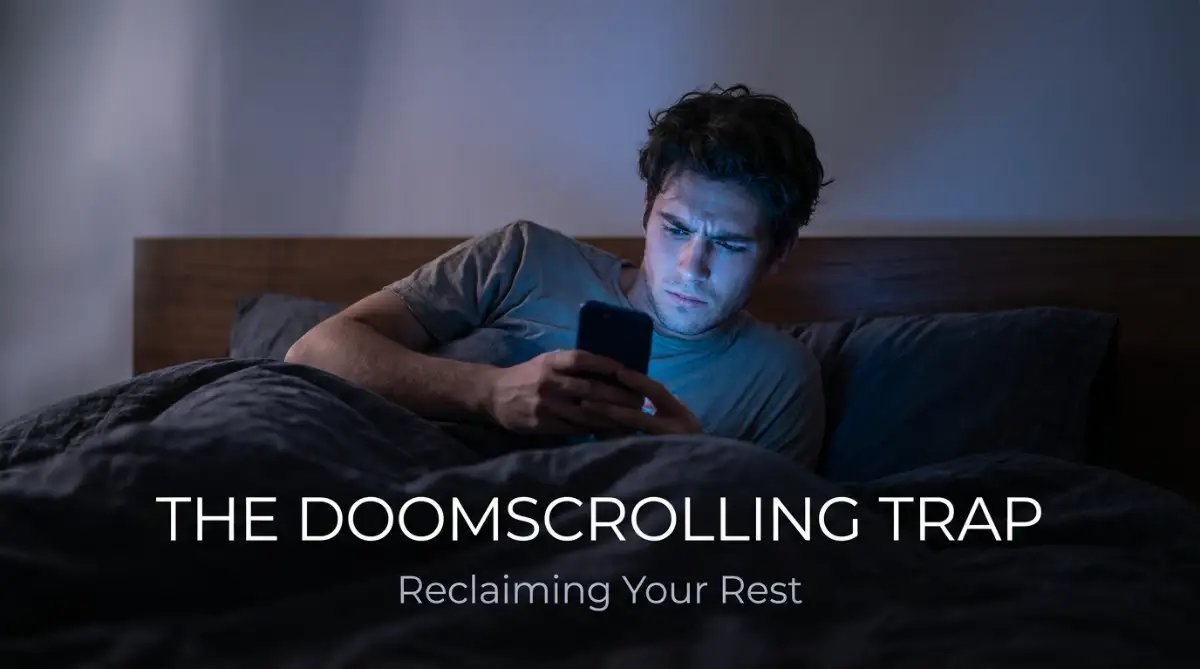
The Exhausting Trap of Trying to Do Everything at Once
You know that heavy, brain-fog feeling you get around 3 PM? I used to think I was just working too hard, juggling emails, texts, and spreadsheets all at once. Turns out, I wasn't being productive at all—I was just burning out my battery. Let me share what actually happens when we try to do a million things at once, and how you can fix it without losing your mind.
Imagine it is 2:00 PM on a standard Tuesday. You have eight tabs open on your web browser.
Your phone lights up with a new text message. At the exact same time, you are trying to write an important email to your boss.
You stop typing, check the message, and then switch over to a completely different browser tab to check a quick fact. Suddenly, you realize thirty minutes have passed.
Your email is still unfinished. Your brain feels incredibly foggy, and you feel completely exhausted despite not actually completing a single task.
Does this sound familiar? You are definitely not alone.
Most of us have been taught that juggling multiple things at once makes us highly efficient. We wear our ability to do everything at the same time like a badge of honor.
But behind closed doors, this habit is silently destroying our mental peace.
Quick Takeaways: How to Save Your Brain Today
- Multitasking is a myth; your brain is just rapidly switching tasks and burning 20% more energy.
- Keep only one browser tab open for your main project to instantly kill digital distractions.
- Put your smartphone in another room while working—just seeing it drains your focus.
- Try single-tasking for just 15 minutes today to rebuild your attention span.
The Heavy Toll on Your Mental Health
Every day, everyday people are drowning in an ocean of partial attention. We are physically present at our desks, but our minds are scattered across a dozen different places.
This constant shifting creates a low-level sense of panic in the background of our minds. You feel like you are running on a treadmill that keeps speeding up, yet you never actually move forward.
At the end of the day, you look at your to-do list. Only a fraction of the work is actually crossed off.
The answer is simple but hard to accept. The human brain was never built to process multiple heavy tasks at the exact same time.
By forcing our minds to split focus, we are not doubling our output. We are simply halving our actual attention span and doubling our daily stress.
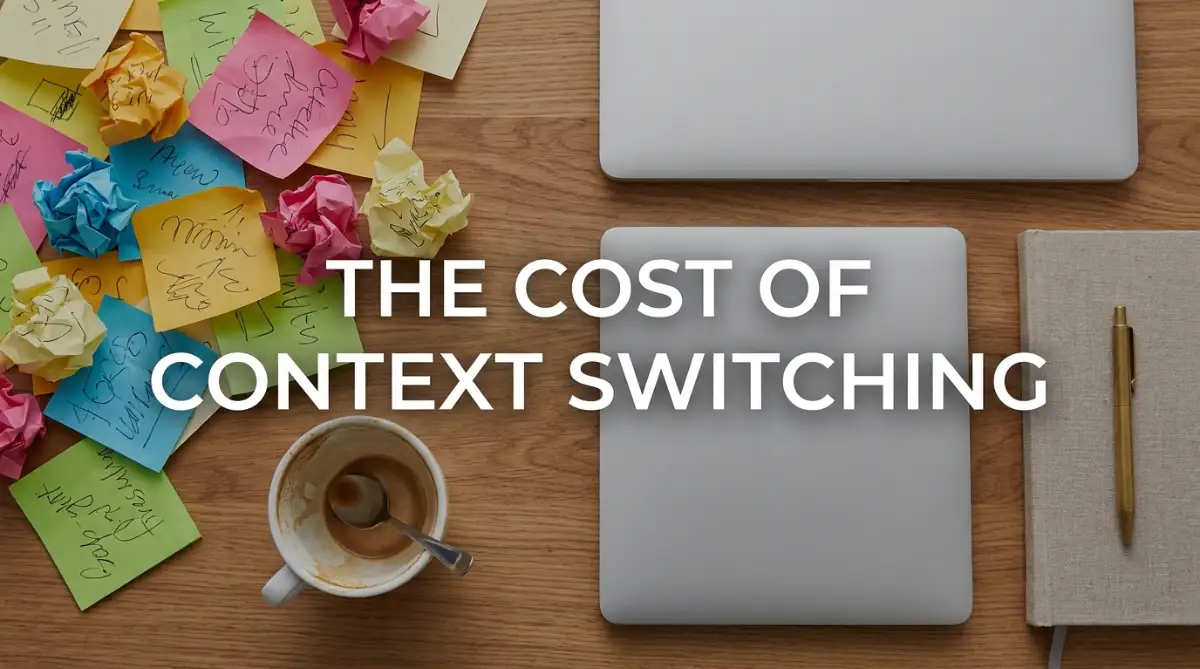
The Hidden Tax You Pay Every Time You Switch Tasks
Let us break down exactly what happens inside your head when you try to juggle your daily duties.
Many people think their brain operates like a dual-core computer processor. They believe they can run a spreadsheet program on one side and hold a complex phone conversation on the other.
Science completely disagrees with this assumption. Your brain does not multitask.
Instead, it engages in something researchers call "rapid task-switching."
You are not doing two things at once. You are simply bouncing back and forth between them at high speed.
Understanding the Concept of Context Switching
Think of your brain like a car driving down a busy city street.
Every time you switch from writing a report to checking a social media notification, you are slamming on the brakes. Your brain has to stop, figure out the new environment, and then slowly accelerate again.
This process burns a massive amount of mental energy.
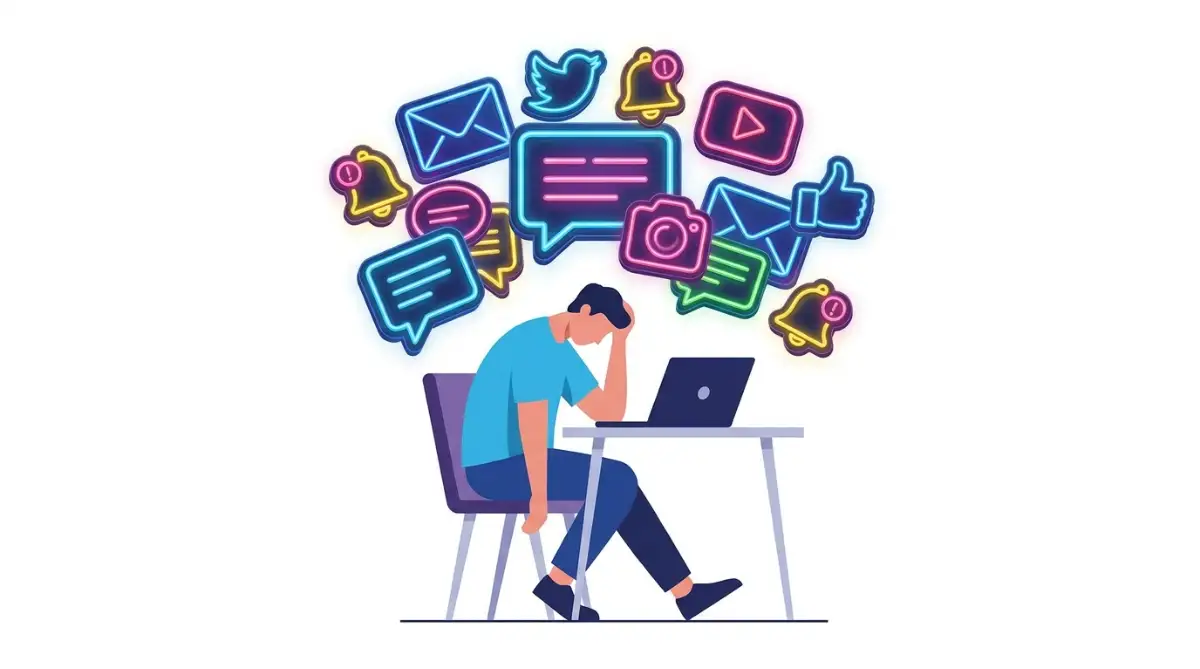
Experts estimate that every time you get distracted by a new task, it takes your brain nearly 23 minutes to fully regain its original focus.
The Real Math of Task Switching:
- 1 Quick Text Message Check: Costs you 1 minute of reading + 23 minutes of brain re-focusing.
- Checking Email 5 Times an Hour: You are essentially operating with only 20% of your actual brainpower for the rest of the day.
- The Fix: Batch your emails to just twice a day. You easily buy back at least two hours of deep work time.
Imagine paying a 20% tax on your energy every single time you click a different browser tab. By noon, your mental bank account is completely empty.
If you are a visual learner, check out this short video that perfectly explains exactly how much mental energy we lose every single time we switch tasks. Give it a quick watch to see the science behind the brain fog, and then keep reading below to discover how to easily fix this exhausting habit!
Myth vs. Reality: What You Need to Know
Here is a simple breakdown of what we believe versus what actually happens.
Looking at this chart, it becomes obvious that our favorite working method is actually our biggest enemy.
We are sacrificing the quality of our work just to feel the temporary rush of being "busy."
Real-Life Proof: A Tale of Two Workdays
To truly understand how damaging this habit is, let us look at a practical scenario. Let us compare two different approaches to the exact same workload.
Meet John. John is a proud defender of doing everything simultaneously.
He starts his morning by opening his email, putting on a podcast, and starting a financial report. His phone is resting right next to his keyboard, fully unmuted.
As he calculates numbers, he stops every three minutes to reply to an email. He hears a joke on the podcast and loses his train of thought on the report.
By 4:00 PM, John has sent 15 poorly written emails and his financial report is full of tiny mathematical errors. He feels completely drained and highly irritated.
The Power of the Single-Tasking Approach
Now, let us look at a different approach. Meet David.
David uses the exact same tools but approaches his day differently. He mutes his phone and puts it inside a desk drawer.
He closes his email tab. He opens only the financial report and sets a timer for 45 solid minutes.
During those 45 minutes, he does absolutely nothing else. If a random thought pops into his head, he quickly writes it down on a piece of scrap paper to remember for later.
When the timer rings, his report is 100% complete and entirely error-free. He then takes a short break, opens his email, and spends 15 minutes replying to everyone with full focus.
David finishes his core work by 2:00 PM. He feels energetic, calm, and fully in control of his schedule.
Actionable Steps to Train Your Brain for Deep Focus
Now that we understand the problem, how do we actually fix it? Breaking a bad habit takes time, but you can start making changes today.
You do not need to completely change your entire personality. You just need to create better boundaries for your attention.
Here are highly practical, science-backed methods you can apply immediately.
The One-Tab Rule for Digital Work
Our web browsers are massive traps for our attention. Seeing a tiny notification dot on a hidden tab is enough to break your concentration.
Start practicing the "One-Tab Rule" during your most important work hours.
If you are writing a document, that is the only tab allowed to be open. Close your email.
Close your messaging apps. If you need to research a fact, open a new window, find the answer, and immediately close it again.
Pro Tip: If you struggle with this, use free browser extensions that temporarily block access to specific websites while you are trying to work.
The Art of Time Boxing Your Day
Instead of writing a massive to-do list that scares you, start blocking your time.
Time boxing means you assign a specific block of the day to just one specific type of task.
For example, you might decide that 9:00 AM to 10:00 AM is purely for writing. No emails, no phone calls, and no meetings.
Then, you might box 10:00 AM to 10:30 AM exclusively for answering messages.
When you group similar tasks together, your brain does not have to shift gears constantly. You stay in the same mental zone, which makes the work feel much easier.
Quarantining Your Mobile Device
Let us be completely honest with ourselves. Our smartphones are the biggest enemies of single-tasking.
Just having your phone sitting on your desk heavily reduces your cognitive capacity. Even if the screen is dark, part of your brain is secretly waiting for it to buzz.
If you truly want to get things done quickly, you need to quarantine your phone.
Place it in a different room or entirely out of your physical reach. Tell yourself you can check it freely once you finish your current project.
The first few times you try this, you will feel a strange sense of anxiety. This is completely normal.
It is just your brain craving the cheap dopamine hits it usually gets from random notifications. Push through that initial discomfort, and you will find a deep sense of relief on the other side.

I used to make the silly mistake of keeping my phone face down on my desk, thinking I was ignoring it just fine. The realization hit me hard when I noticed my eyes automatically checking that blank screen every two minutes, just waiting for it to vibrate. Now, I actually lock my phone in a drawer in the next room while I do my main work, and it has easily doubled how much I get done.
Rebuilding Your Attention Span from Scratch
If you have spent years juggling tasks, your ability to focus deeply has probably weakened. It is like a muscle that has not been exercised in a very long time.
You cannot expect to suddenly focus for four hours straight on your first try.
Start very small. Try single-tasking for just 15 minutes at a time.
Set a kitchen timer. Promise yourself that for those 15 minutes, you will not look away from the single job in front of you.
When the timer goes off, give yourself a reward. Stand up, stretch, or grab a glass of water.
Over the next few weeks, slowly increase the timer to 20 minutes, then 30 minutes, and eventually 45 minutes.
You will slowly retrain your brain to enjoy deep work. You will discover that finishing one thing completely feels much better than starting five things and leaving them all messy.
By removing the noise of competing tasks, you are giving your mind the clear space it needs to be genuinely creative and highly efficient.
Mastering the Art of Deep Focus in a Noisy Environment
Now that we understand why splitting our attention is a terrible idea, it is time to build a solid defense system. You already know the basics of single-tasking, but let us look at some expert-level strategies.
These are the exact methods used by top performers to protect their mental energy. Implementing these habits will completely change how you experience your workday.
Let us break down a few highly effective strategies that go far beyond just turning off your phone.
The Laundry Strategy for Digital Communication
Think about how you wash your clothes at home. You do not wash a single pair of socks, dry them, and then immediately wash a single t-shirt.
Doing laundry that way would take up your entire weekend and waste massive amounts of energy. Instead, you wait until you have a full basket of dirty clothes and wash them all together.
You need to treat your emails and messages exactly like dirty laundry.
Most people leave their email inbox open all day long. They reply to every single message the exact second it arrives.
This creates a constant state of interruption. Every single notification pulls your brain away from your primary goal.
Instead, practice a method called "Task Batching." Choose only two or three specific times during the day to check your messages.
You might process all your emails at 9:00 AM, check them again at 1:00 PM, and do a final sweep at 4:30 PM. When you group all these tiny tasks together, you handle them much faster and protect your deep focus hours.
Designing Your Environment for Guaranteed Success
Your brain is incredibly sensitive to visual cues in your environment. If your desk is covered in random papers, dirty coffee cups, and unread mail, your brain feels overwhelmed before you even sit down.
Professional writers and highly effective managers know that physical clutter creates mental clutter. You cannot achieve deep concentration in a highly chaotic space.
Take ten minutes at the end of every single workday to clear your workspace. Put the pens away, organize your notes, and close all the unnecessary tabs on your computer.
When you sit down the next morning, you will be greeted by a blank canvas. A clean desk sends a very powerful signal to your brain that it is time to focus on just one thing.
My 5-Minute Desk Reset Routine:
- Put pens and loose papers inside a drawer (out of sight).
- Move the phone charger to another room.
- Keep only one water bottle and your main computer on the surface.
- If your eyes don't see extra stuff, your brain won't think about extra tasks.
This rule is especially important for business owners. When you are trying to scale your company, especially if you are growing a profitable business with zero investors, splitting your attention across a messy desk is the fastest way to experience extreme burnout.
Expert Insight: The Power of the "Brain Dump"
One of the biggest reasons we try to do multiple things at once is the fear of forgetting something important.
You might be typing a highly important document when you suddenly remember you need to buy milk. Because you are afraid of forgetting the milk, you stop typing, open a new tab, and order groceries.
This single interruption just cost you 20 minutes of lost focus.
To solve this, keep a small, physical notepad right next to your keyboard.
Whenever a random thought or urgent reminder pops into your head, quickly write it down on the paper. Do not take any action on it.
Simply dump the thought out of your brain and onto the paper. This allows you to immediately return to your main task with zero anxiety.
According to cognitive researchers, doing multiple things at once can actually cause a temporary drop in your functional intelligence. In fact, comprehensive studies on cognitive control and media multitasking show that heavy multitaskers struggle significantly more with organizing their thoughts and filtering out irrelevant information.

The Hidden Productivity Traps You Keep Falling Into
Even with the best intentions, it is incredibly easy to slip back into old habits. Our modern society constantly rewards people who look busy, even if they are not actually accomplishing anything.
Many people try to fix their work habits but end up making things worse by falling for clever traps. Let us expose some of the most dangerous mistakes people make when trying to reclaim their focus.
These are the silent traps that quietly steal your energy and leave you feeling completely exhausted at the end of the day.
Trap 1: Believing the "Just Five Minutes" Lie
We have all told ourselves this very common lie. You are working on a hard project, you feel slightly bored, and you think, "I will just check social media for five minutes to relax."
This is the single most destructive thought you can have during a work session.
Those five minutes almost always turn into thirty minutes of mindless scrolling. But the real damage is not just the lost time.
The real damage is the massive amount of unrelated information you just dumped into your brain. You just looked at funny videos, angry political posts, and pictures of your friends' vacations.
When you try to return to your work, your brain is completely scrambled. It takes an incredible amount of willpower to refocus, and your work quality drops instantly.
Just like you might waste hours trying to find the perfect travel deal by endlessly researching incognito mode and flight prices, bouncing between distraction tabs looking for a quick break actually wastes your most precious mental resources.
Trap 2: Treating All Tasks as Equal Priorities
Another huge mistake is treating every single item on your to-do list with the exact same level of urgency.
Not all tasks require your best mental energy. Replying to a simple text message does not require the same brainpower as designing a new product.
When people try to juggle tasks, they often mix high-energy jobs with low-energy busywork. They try to balance writing a highly technical report with organizing their computer folders.
This creates massive friction inside your mind.
You end up wasting your best morning energy on meaningless tasks. By the time you finally focus on the hard work, your brain is already tired.
Students often fall into this exact trap during exam season. They try to watch entertainment videos while preparing for their exams. But true university application success requires unbroken concentration on the hardest subjects first, leaving the easy tasks for later in the evening.
The Emotional Cost of the Urgency Illusion
We often believe popular lies about our brains, very similar to how people believe outdated health advice. For instance, just as debunking cholesterol myths completely changes how we eat, breaking focus myths must change how we work.
One of the biggest myths is the illusion of constant urgency. We feel a deep sense of panic when we see unread notifications.
We act as if every single email is a life-or-death emergency. Because we feel anxious, we drop everything to respond instantly.
This constant state of high alert completely ruins our mental peace. It spikes our stress hormones and makes us highly irritable with our friends and family.
Medical experts constantly warn about the physical dangers of this lifestyle. Research published by leading health authorities, such as the impact of chronic stress on the body, clearly shows that remaining in a constant state of high alert can lead to severe physical burnout and sleep disorders.
A Quick Reality Check: Do's and Don'ts of Deep Work
To keep things perfectly clear, here is a quick guide on what you should immediately stop doing, and what you should start doing instead.
Do Not:
- Keep your phone on your desk with the screen facing up.
- Eat your lunch while typing with one hand.
- Tell yourself you work better under extreme last-minute pressure.
- Open more than three browser tabs unless absolutely necessary for your current job.
- Do:
- Take a genuine five-minute break where you look at a window, not a screen.
- Tell your coworkers or family members when you need an hour of silent focus.
- Drink plenty of water, as mild dehydration heavily impacts your ability to concentrate.
- Forgive yourself when you make a mistake and get distracted.
Building a new habit is a messy journey. You will have days where you slip up and open twenty tabs again.
When that happens, simply take a deep breath, close everything, and start fresh.
Your Personal Blueprint for a Calmer, More Productive Day
We have covered a massive amount of ground today. You now know exactly why the human brain fails when it tries to do everything at once.
More importantly, you now have the exact tools needed to take back control of your precious time and energy.
You no longer have to end your day feeling deeply exhausted and guilty about your unfinished to-do list. By choosing to do less at any given moment, you are actually setting yourself up to achieve so much more.
I know that making these changes might feel slightly uncomfortable at first. Your brain is used to the constant noise and the cheap dopamine hits from endless notifications.
But I promise you, the peace of mind waiting for you on the other side is completely worth the effort.
A Final Challenge for Tomorrow Morning
I want you to test this theory for yourself. Do not just read this article and move on with your regular day.
Tomorrow morning, I want you to pick the single most important task on your list.
Before you open your email, and before you look at your phone, commit to working on that one task for just 45 minutes. Turn off every single notification.
Put your phone in a drawer. Focus entirely on the work in front of you.
Notice how different your mind feels. Notice how much faster the work gets done when you are not constantly fighting off distractions.
Once you experience the calm, clear power of true single-tasking, you will never want to go back to the chaotic juggling act again. You have the power to protect your attention.
Start small, build the habit slowly, and watch your daily output naturally skyrocket.
Getting my focus back was not an overnight magic trick, but taking that first step completely changed my daily routine for the better. If I can train my highly distracted brain to actually enjoy doing just one thing at a time, I am absolutely certain you can do it too. Take a deep breath, close all those extra browser tabs, and give yourself the amazing gift of a calm mind today.
Disclaimer: The information provided in this article is for educational and informational purposes only. It should not be considered as professional medical or psychological advice. While we strive to provide highly accurate and science-backed information regarding productivity and mental habits, individual results may vary. If you are experiencing severe chronic stress, extreme burnout, or clinical anxiety related to your work habits, please consult with a certified medical professional or therapist. We follow all standard content policies set by Google and leading social media platforms to ensure a safe, spam-free reading experience.