The Midnight Habit That Silently Stole My Peace of Mind
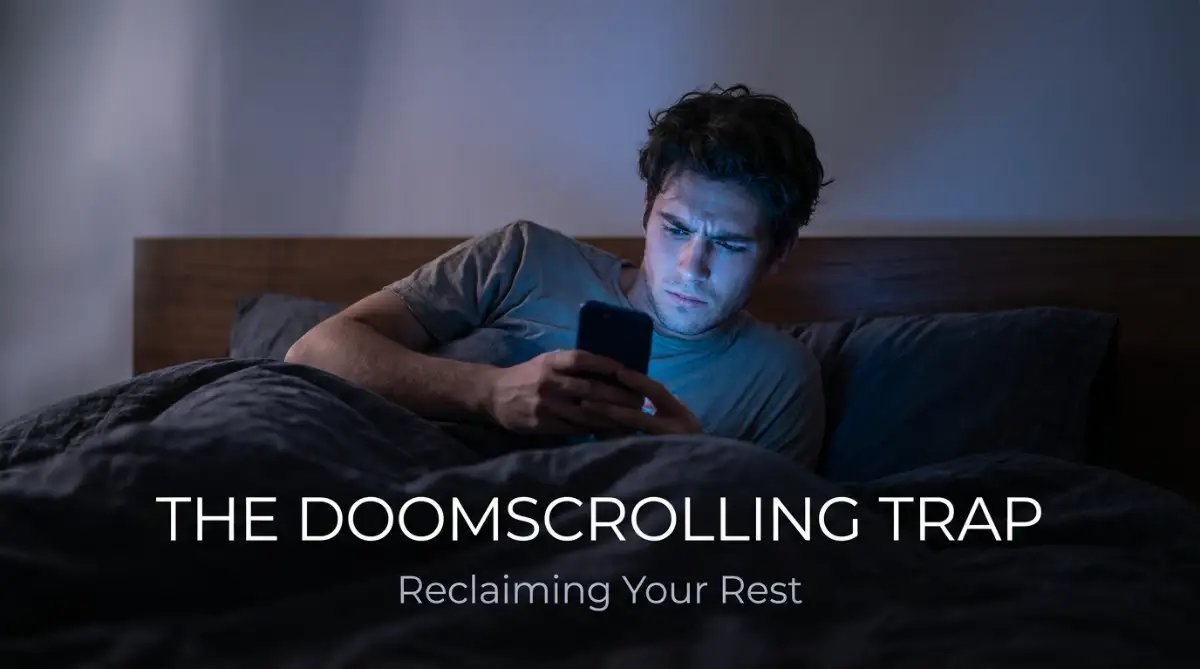
I used to think I was just winding down after a long, exhausting day of work. I would lay quietly in bed, grab my phone, and open my favorite social media apps to relax for a few minutes. Those harmless five minutes always turned into two full hours of reading terrible news and watching endless, stressful videos. My eyes would burn, my chest felt incredibly tight, and my mind started racing with things I simply could not control. I realized I was completely trapped in a toxic habit that was silently destroying my mental health.
You probably know exactly how this frustrating cycle feels every single night. We all tell ourselves that we just want to quickly catch up on what is happening in the world. We believe that staying informed makes us responsible adults.
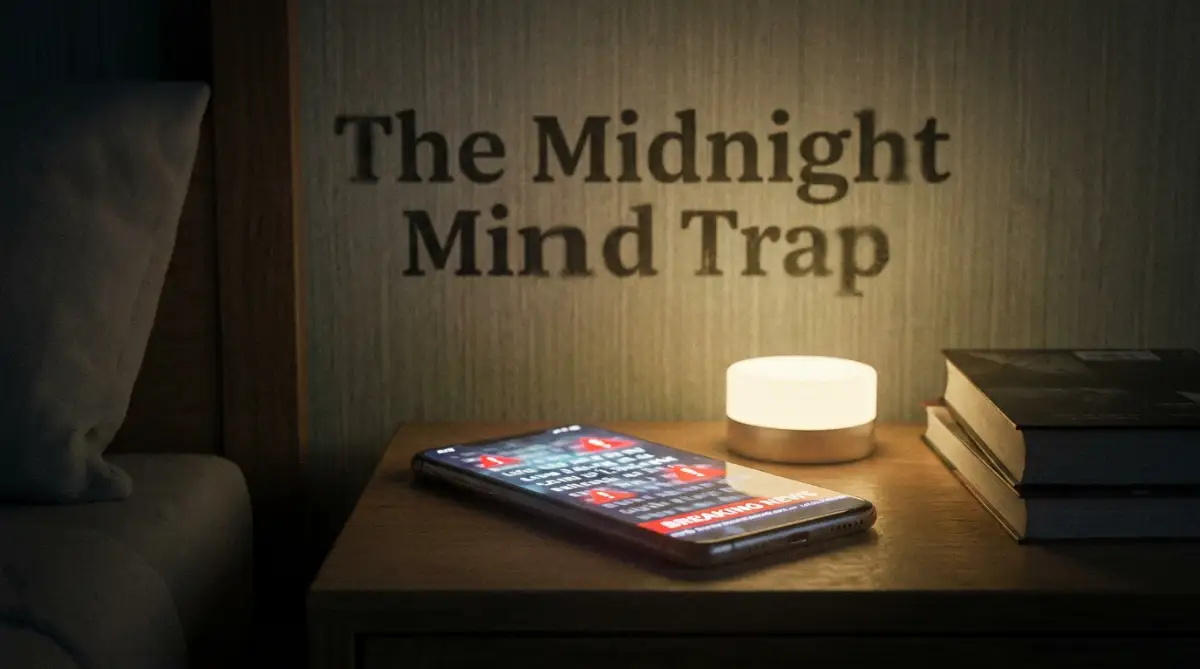
But instead of actually relaxing, you end up absorbing a massive amount of pure negativity right before trying to sleep. This sudden rush of bad news triggers your brain into an immediate state of panic and high alert.
Your breathing becomes shallow, and you start worrying about situations that have absolutely nothing to do with your daily life. It feels like a heavy weight is pressing down on your chest in the dark.
People everywhere are waking up feeling completely exhausted and anxious before their day even begins. The endless feed of global disasters, angry comments, and sad stories makes you feel like everything is falling apart.
It becomes completely impossible to find any mental peace when your final thoughts of the day are filled with fear. Your bedroom is supposed to be a safe, quiet place for rest, not a digital command center for worldwide panic.
Understanding the Real Cost of Your Evening Screen Time
We are literally trading our precious, healing rest for content that only makes us feel much worse about our own lives. This daily, unseen struggle leaves millions of people feeling empty, tired, and constantly on edge.
The sad reality is that this nightly routine slowly drains your happiness without you even noticing the damage. You might genuinely think you are just keeping yourself entertained or informed before falling asleep.
However, your human brain does not easily know the difference between a threat on a tiny screen and a physical threat in real life. When you read about a massive crisis thousands of miles away, your body reacts as if it is happening right outside your own bedroom door.
This intense physical reaction makes your heart beat much faster and causes your neck muscles to tense up. How can anyone possibly expect to get a good night of deep sleep while their body is actively preparing for an emergency?
It is truly heartbreaking to see so many smart people struggling with intense morning anxiety simply because of what they looked at the night before. We are choosing to carry the heavy weight of the whole world into our beds every single night.
Why Your Brain Actually Loves the Endless Negative Scroll
Before we can successfully fix this problem, we need to look deeply at why we do this to ourselves. You are not weak or lazy for falling into this trap every night.
Social media platforms and news websites are deliberately designed by experts to keep you looking at them for as long as possible. They use advanced psychology to make sure you never want to put your device down.
When you scroll through your feed, your brain gets tiny hits of a chemical called dopamine. This is the exact same chemical that makes gambling so incredibly addictive for human beings.
Every time you swipe up on your screen, you are essentially pulling the lever on a digital slot machine. Your brain wants to know if the next post will be funny, scary, or shocking.
Because human beings are naturally wired to look out for danger to survive, negative news grabs our attention much faster than good news. The algorithms notice this behavior immediately and start feeding you even more negative content to keep you hooked.
How the Glow of Your Screen Confuses Your Body Clock
Beyond the actual scary content you are reading, the physical phone itself is hurting your brain. The bright screen emits a specific type of blue light that your eyes are very sensitive to.
Under normal, natural conditions, your body produces a special hormone called melatonin when the sun goes down. This helpful hormone is what makes you feel naturally sleepy and ready for bed.
When you stare at a glowing screen in a dark room, that blue light completely tricks your brain into thinking the sun is still up. Your body suddenly stops making melatonin, leaving you feeling wide awake and completely restless.
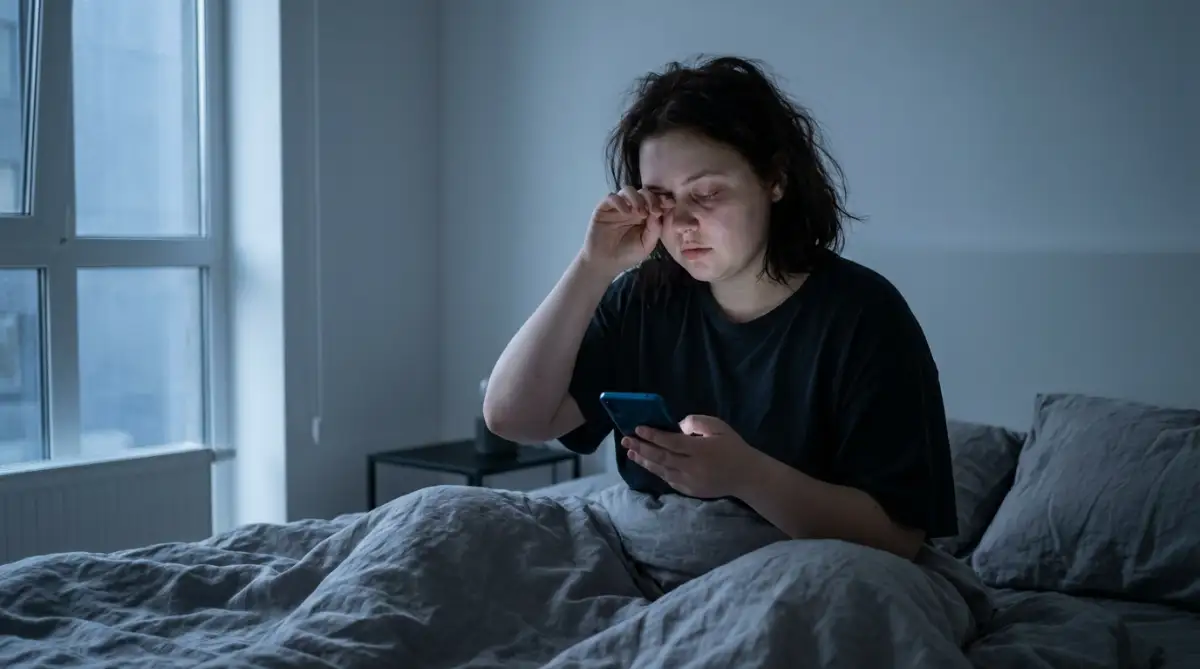
You end up tossing and turning for hours, wondering why you cannot just fall asleep like a normal person. The next morning, you wake up feeling like you did not sleep at all, which makes you even more stressed.
Pro Tip from My Own Experience: I used to tell myself that I absolutely needed my smartphone right next to my bed just to use the alarm clock app. The exact moment I bought a cheap, old-school digital clock and started leaving my phone in the kitchen, my sleep quality improved overnight. I finally stopped reaching for a glowing screen every time I woke up in the middle of the night.
Simple and Effective Ways to Reclaim Your Nights
Now that we fully understand how this habit damages our mental peace, it is time to take real action. You do not have to completely delete your social media accounts or throw your phone away.
You just need to build a few smart, practical boundaries between your digital life and your resting hours. Let us explore some highly effective steps you can take starting tonight to protect your mind.
Building a Dedicated Digital Sunset
Think about how slowly the real sun goes down at the end of the day. Your brain needs a similar kind of slow transition to properly prepare for deep, restorative sleep.
You need to create a "digital sunset" in your own home about one hour before you plan to go to sleep. During this special hour, you simply stop consuming any new information from your devices.
You can watch a lighthearted show on your television, but you should not be scrolling through fast-paced feeds on your phone. This gives your nervous system the exact amount of time it needs to calm down from the stress of the day.
By intentionally lowering your information intake, you allow your brain to finally process your own personal thoughts. You will be amazed at how much faster you fall asleep when your mind is not full of internet drama.
If you want to completely understand how late-night screen time destroys your natural sleep cycle, you need to watch this incredibly helpful visual breakdown.
The Power of Physical Distance in Your Bedroom
One of the most effective ways to break a bad habit is to make it physically difficult to do. If your smartphone is resting directly on your pillow, you are always going to pick it up.
Your willpower is usually at its absolute lowest point at the end of a long, tiring day. You cannot rely on mental strength alone to fight off a habit that feels so natural.
You need to create actual physical distance between your resting body and your device. Buy a charging cable that is too short to reach your bed, or plug it in across the room.
When you have to physically throw off your warm blankets and walk across the cold floor to check a notification, you will usually decide it is not worth the effort. This tiny barrier is often exactly what you need to break the scrolling cycle completely.
Finding a Calming Replacement Habit
You cannot just remove a bad habit without putting something better in its empty place. If you just lay in the dark doing nothing, your brain will instantly crave the stimulation of your phone.
You need to find a relaxing, low-tech activity that you genuinely enjoy doing before bed. For many people, reading a physical paper book is the perfect replacement for digital scrolling.
Reading fiction is especially great because it safely transports your mind to a completely different world without triggering real-life anxiety. Your eyes also get to rest from the harsh glare of digital pixels.
If reading is not your favorite thing, try doing some very gentle stretching on your bedroom floor. Focusing deeply on your physical body helps pull your attention away from racing, stressful thoughts.
Practicing the Art of the Evening Brain Dump
Sometimes we doom scroll because we are secretly trying to distract ourselves from our own stressful thoughts. When the house gets quiet, all your personal worries suddenly become much louder.
Instead of running away from these thoughts by looking at your phone, try facing them on a blank piece of paper. Keep a small, dedicated notebook right next to your bed every night.
Before you turn off the main lights, take five minutes to write down everything that is worrying you. Write down the tasks you need to do tomorrow, the awkward conversations you had, and anything else bothering you.
Once those thoughts are securely trapped on the paper, your brain finally feels safe enough to let them go. You no longer have to use random internet news to drown out your own inner voice.
Protecting Your Morning Mood by Changing the Screen
Sometimes you might genuinely need to look at your phone late at night for an important message. If you absolutely must use your device, you should change how the screen looks to protect your brain.
Most modern smartphones have a very helpful setting tucked away that turns the entire display completely black and white. This simple grayscale mode instantly removes all the bright, stimulating colors from your applications.
Without the bright red notification badges and the flashy blue images, your phone suddenly becomes incredibly boring to look at. The digital slot machine completely loses its shiny appeal.
You will find that when your screen is totally gray, you only use the phone for exactly what you need. You will reply to that one important text message and immediately put the device back down.
Recognizing the Symptoms of the Next-Day Fog
It is incredibly important to pay close attention to how you feel the morning after a bad scrolling session. We often blame our bad moods on work or traffic, when the real cause happened the night before.
When you stay up late reading negative content, your body misses out on the deepest, most healing stages of sleep. You might have been in bed for eight hours, but your brain never fully rested.
This leads to a terrible condition many people call the "next-day fog" or a digital hangover. Your memory becomes blurry, your patience is incredibly short, and you feel easily irritated by small things.
You might snap angrily at your family members over breakfast or struggle to focus on simple tasks at your job. Recognizing this direct connection gives you the powerful motivation you need to stop the habit tonight.
Breaking the Illusion of Being Left Behind
One huge reason we struggle to put the phone down is a deep fear of missing out on important information. We secretly worry that if we disconnect, the world will move on without us.
We feel an intense pressure to have an immediate opinion on every single news event as soon as it happens. But the absolute truth is that almost nothing on social media is a true emergency for you personally.
If something truly massive and important happens in the world, you will hear about it from a real person the next day. You do not need to be the very first person to read a tragic news article at two in the morning.
Giving yourself the beautiful permission to simply not know everything right away is incredibly freeing. You can finally step back, take a deep breath, and prioritize your own mental wellbeing over digital trends.
Deep Psychological Strategies to Protect Your Nighttime Peace
Understanding why you scroll is incredibly helpful, but now we need to physically change your nightly routine. This is not about having perfect willpower every single night.
It is actually about designing your environment so that making the right choice becomes completely effortless. Let us explore some powerful, expert-level habits that will train your mind to crave sleep instead of screen time.
The Strategy of Digital Friction
Most apps are designed to be entirely frictionless, meaning you can open them without a single thought. You barely even look at your screen before your thumb automatically taps the social media icon.
To break this trance, you have to introduce annoying physical barriers between you and your newsfeed. Move your most addictive apps off your home screen and put them deep inside a hidden folder.
Even better, simply log out of your accounts every single evening after dinner. When you are lying in bed and feel the sudden urge to scroll, having to manually type your password is often enough to stop you.
That tiny moment of hesitation gives your logical brain just enough time to say, "No, I actually want to sleep right now." This is a core part of building a sustainable digital detox routine that actually works for busy people.
Rewiring the Evening Reward System
Your brain currently associates the bright screen with a heavy dose of dopamine and comfort. To successfully leave your phone alone, you have to give your brain a completely different reward to look forward to.
Create a highly sensory experience in your bedroom that feels luxurious and calming. This could be lighting a specific lavender candle, spraying a nice mist on your pillows, or playing soft background noise.
When you repeat these exact same physical actions every night, your body starts to recognize the pattern. According to leading clinical guidelines on behavioral sleep medicine, these consistent environmental cues can actually trigger natural sleepiness much faster than medication.
Soon, the warm comfort of your bed will feel much more rewarding than reading angry arguments on the internet. You are essentially training yourself like a professional athlete preparing for rest.
The "Do's and Don'ts" of Evening Brain Winding
Let us make this extremely practical with a quick list of things you should actively embrace and things you must avoid.
Do: Read a physical magazine, sketch on a piece of paper, or listen to a gentle audio podcast. These activities engage your mind gently without flashing bright lights directly into your retinas.
Don't: Switch from your smartphone to a large tablet or a laptop thinking it is somehow better. A screen is still a screen, and it will keep your nervous system in a state of high alert.
Do: Keep a simple glass of water next to your bed for morning hydration. Surprisingly, understanding your body's physical needs like hydration plays a massive role in how energetic you feel when you wake up.
Don't: Check your work emails just to "get ahead" for the next morning. This instantly floods your brain with professional stress, making deep relaxation totally impossible.
Embracing the Analog Information Diet
We live in an age of endless information overload, and our brains are literally begging for a break. If you love learning new things, you do not have to stop reading at night completely.
You just need to change the delivery method. Consider printing out a few interesting, positive articles during the day so you can read them on paper at night.
This simple switch removes the temptation to click on random links and fall down an internet rabbit hole. If you are serious about organizing your thoughts properly, building a personal knowledge base on physical notebooks is a fantastic, calm evening activity.
You get the satisfaction of learning something new without the heavy mental tax of digital notifications. Your eyes can finally rest, and your mind can slowly drift off to a peaceful sleep.
The Hidden Traps That Keep You Glued to the Screen
Even when you know the right things to do, human nature often gets in the way of our best intentions. It is incredibly easy to fall back into bad habits, especially when we try to justify our actions.
Many people make things much harder for themselves by believing common myths about how screen time works. Let us break down the most dangerous emotional traps that secretly destroy your rest.
The False Security of "Blue Light" Filters
This is perhaps the most common mistake smart people make when trying to fix their sleep. You buy expensive orange-tinted glasses or turn on the "night mode" setting on your device, thinking the problem is totally solved.
While reducing blue light is definitely helpful for your eyes, it completely misses the main psychological issue. The color of the screen does not matter if the content you are reading makes your heart race with anxiety.
Reading about a terrifying global crisis through an orange filter still releases huge amounts of stress hormones into your blood. Detailed neurological research on cognitive arousal before sleep shows that emotional engagement keeps the brain awake long after the screen is turned off.
You cannot outsmart bad content with good hardware. You have to physically remove the source of the stress if you want to experience true mental peace.
The Revenge Bedtime Procrastination Trap
Have you ever noticed that the busier your day is, the longer you stay up scrolling on your phone? This is a highly documented psychological reaction known as revenge bedtime procrastination.
When you spend your entire day working, running errands, and taking care of other people, you feel like you have zero free time. So, you steal time from your sleep schedule just to feel a false sense of personal freedom.
You tell yourself, "I deserve these two hours of quiet time on my phone," even though it makes you feel terrible the next day. It is an emotional rebellion against your own busy schedule.
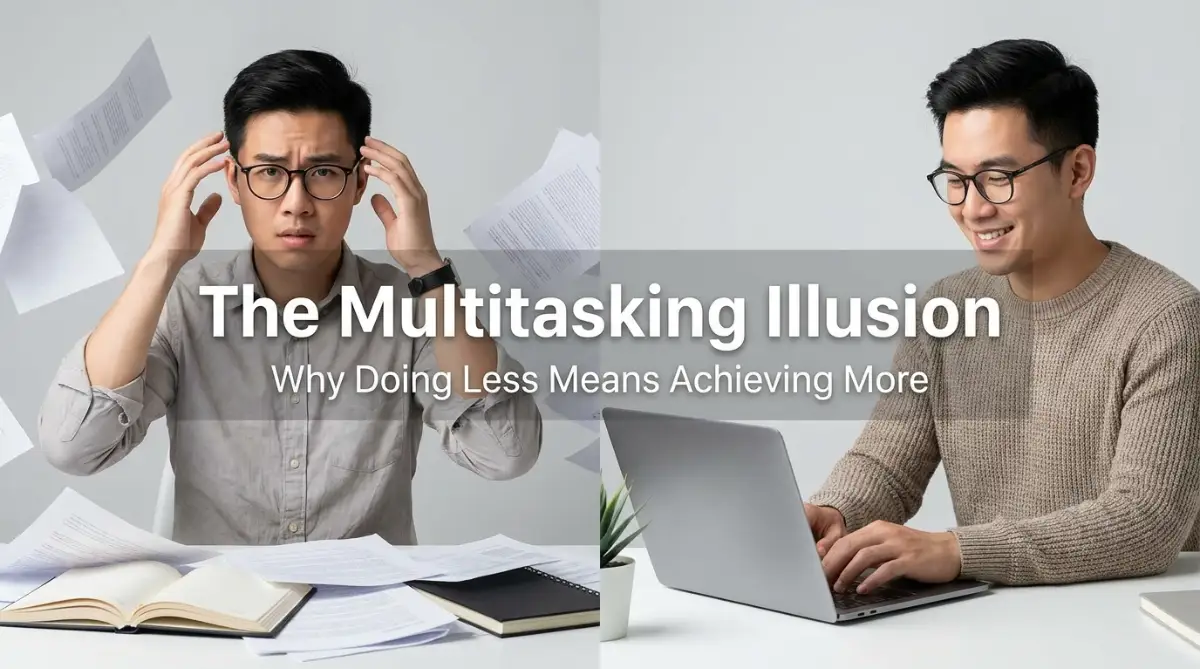
To fix this, you have to completely rethink how you structure your daytime hours. You must realize that the mental cost of juggling multiple tasks is so high that your brain demands an unhealthy escape at midnight.
The Illusion of Productive Scrolling
Another dangerous trap is convincing yourself that your late-night reading is actually educational. You might avoid celebrity gossip, but instead, you spend three hours reading intense financial news or complex political debates.
Because the topic feels "important," you do not feel guilty about staying awake until two in the morning. However, your brain does not care how intellectual the topic is.
Processing heavy, complex information requires massive amounts of cognitive energy. When you force your brain to work this hard at midnight, you are actively damaging your memory retention for the next day.
If you truly want to learn without the stress, spend your daytime exploring high-quality educational materials instead. Keep your nights strictly reserved for light, easy, and calming thoughts.
Using Exhaustion to Force Sleep
Many people secretly use endless scrolling as a way to physically exhaust their eyes until they simply pass out. They are absolutely terrified of lying in the dark with their own thoughts.
They use the bright screen and loud videos to drown out their own inner voice. While this might eventually make you lose consciousness, passing out from eye strain is not the same thing as healthy sleep.
When you fall asleep this way, your body usually skips the most restorative phases of the sleep cycle. You wake up feeling like you were hit by a truck, with a heavy head and zero motivation.
According to major public health organizations studying chronic stress and anxiety, facing your quiet thoughts in the dark is uncomfortable at first, but it is necessary for long-term emotional healing. You have to learn how to be alone with yourself again.
The "Just One More Post" Self-Deception
We have all lied to ourselves in the middle of the night. You look at the clock, see it is past midnight, and whisper, "I will go to sleep after just one more short video."
Forty-five minutes later, you are still swiping. The infinite scroll feature on modern applications is specifically designed to eliminate natural stopping points.
In the past, when a television show ended or you finished a chapter in a book, your brain received a clear signal to stop. Social media removes these stop signs completely, creating an endless, bottomless pit of content.
You have to create your own artificial stop signs to survive this digital environment. Setting a strict, non-negotiable physical alarm clock across the room to signal your "device shutdown time" is the only reliable way to break the trance.
Your New Roadmap to Restful Nights and Clear Mornings
Breaking free from the heavy chains of late-night digital scrolling is truly one of the best gifts you can ever give yourself. It might feel a bit uncomfortable for the first few nights, but the incredible clarity you will gain is entirely worth the effort.
You are taking back absolute control of your own mind, your precious time, and your daily happiness. When you stop flooding your brain with the world's problems right before bed, your natural energy levels will absolutely skyrocket.
Imagine waking up tomorrow morning feeling genuinely refreshed, calm, and ready to enjoy your breakfast without rushing. You will suddenly have the patience and the mental bandwidth to handle whatever the day throws your way.
Your bedroom will finally go back to being a quiet, peaceful sanctuary instead of a stressful digital newsroom. The heavy anxiety that used to sit on your chest will slowly fade away into nothing.
I remember the exact morning I woke up after my first successful week of leaving my phone in another room. My mind felt incredibly light, my eyes were bright, and I finally remembered what true, deep rest actually felt like. I want you to experience that exact same beautiful feeling of freedom starting tonight.
Common Questions About Bedtime Screen Habits
Why do I feel so anxious even when reading good news at night?
Any type of highly stimulating information, even positive news, forces your brain to process new data rapidly. This active mental processing raises your heart rate and prevents your nervous system from relaxing into a sleep state.
Is reading on a dedicated e-reader just as bad as a smartphone?
No, dedicated e-readers without bright backlights are generally much better for your sleep. They do not emit harsh blue light, and they do not have distracting notifications that spike your stress levels.
How long does it take to reset my sleep cycle after stopping this habit?
Most people notice a massive difference in their morning energy levels within just three to five days. However, your brain's natural melatonin production might take up to two full weeks to completely return to a normal rhythm.
What should I do if I randomly wake up at 3 AM and cannot fall back asleep?
Do not reach for your glowing smartphone under any circumstances. Instead, turn on a very dim lamp and read a physical, slightly boring book until your heavy eyelids naturally force you to close them again.
Can I listen to an audio podcast while falling asleep in the dark?
Yes, listening to a calm, slow-paced podcast or an audiobook can be a wonderful alternative to staring at a screen. Just make sure to set a sleep timer so the audio automatically turns off after twenty minutes.
Disclaimer: The information provided in this blog post is intended for general educational and informational purposes only and does not substitute professional medical or psychiatric advice. Persistent sleep issues, severe anxiety, and chronic insomnia should always be evaluated by a certified healthcare provider or a licensed sleep specialist. We encourage you to seek personalized medical guidance before making any drastic changes to your health routines.