When Your Dream Hits a Brick Wall: The Reality of Pitching
I remember sitting in a small, cold waiting room a few years ago. My hands were sweating. I had my pitch deck ready on my laptop. I thought my idea was the next big thing that would change the world. I walked into the room, saw three angel investors looking at me, and I started talking. Ten minutes later, I could tell I lost them. They weren't looking at my slides. They were looking at their watches.
That day was one of the hardest days of my life. I felt like a total failure. I had spent months building my product, but I couldn't even get someone to listen for fifteen minutes. My heart sank when I got the rejection email later that evening. It wasn't just a "no." It felt like they were saying my dream was worthless. I stayed awake all night wondering what I did wrong.
If you are a founder, you probably know this feeling. You put your heart and soul into your business. You work late nights and skip weekends. Then, when it’s time to get the money you need to grow, everything falls apart. It is not just about the money. It is about the feeling of being misunderstood. It hurts when you know your business is good, but you can’t prove it to the people who have the cash.
Most new founders think that having a great product is enough. I thought the same thing. But the truth is, investors don't just buy products. They buy into a vision, a team, and a clear path to making money. When we fail to show that, we feel a deep sense of shame. We start doubting ourselves. We wonder if we should just quit and go back to a normal job.
The stress of pitching can ruin your mental peace. You start losing sleep. You get snappy with your friends and family. Every "no" feels like a punch in the stomach. I have seen so many talented people give up because they couldn't handle the constant rejection. They didn't realize that their mistakes were small and fixable.
You are not alone in this struggle. Every big founder you see today has faced these same walls. The difference is they learned how to stop making the errors that scare investors away. My goal is to help you see those traps before you fall into them. I want to make sure your next pitch is the one that changes everything for you.
Why Most Pitches End Before They Even Start
The biggest problem I see is that founders treat a pitch like a school project. They think if they show all their work, they will get an 'A'. But angel investors are not teachers. They are busy people looking for a way to grow their own wealth. If you don't respect their time and their goals, you will fail every single time.
Focus on the Problem, Not Just Your Features
I once spent twenty minutes talking about the "buttons" on my app. I thought the design was so cool. The investors didn't care at all. They wanted to know why people needed the app in the first place. This is a classic mistake. You love your product, so you talk about it too much.
Instead, you need to talk about the "pain." What is the big problem in the world that you are fixing? If you can't make the investor feel the problem, they won't care about your solution. Think of it like this: if someone is not hungry, you can't sell them the best burger in the world. You have to show them they are starving first.
Pro Tip:
I used to think my product was the star of the show. I was wrong. The problem you solve is the real star. Now, I always spend the first three minutes of any talk making sure the audience understands how bad the current situation is for my customers. It changes the whole mood of the room.
The Math Must Make Sense
Investors love numbers. You might hate them, but you need to know them. If an angel asks about your "customer acquisition cost" and you look like a deer in headlights, the meeting is over. You don't need to be a math genius, but you must know how you will make money.
A common error is being too optimistic. Founders often say, "If we just get 1% of the market, we will be rich." Investors hate that line. It shows you don't have a real plan. They want to see a logical path from zero to a million. They want to see that you understand the costs of doing business.
To understand how successful founders talk about their numbers, watch this helpful breakdown:
Your Story is Your Secret Weapon
People remember stories, not spreadsheets. I used to show slide after slide of data. It was boring. When I started telling stories about real people using my service, the investors started leaning in. They wanted to hear more.
A pitch should be a journey. You start with a problem, introduce a hero (your customer), and show how your business helps them win. If your pitch feels like a lecture, you are doing it wrong. It should feel like a conversation about a bright future.
Don't Ignore the Competition
I used to say, "We have no competition." I thought it made my business look unique. In reality, it made me look like I didn't do my homework. Investors know that there is always competition. If there truly is no one else doing what you do, there might not be a market for it.
Admitting who your competitors are shows you are smart. It shows you know the area well. The trick is to show why you are different. Why will a customer choose you over the big guys? If you can't answer that simply, you are not ready to pitch.
How to Build Real Trust with Investors
Angel investors are putting their own personal money into your hands. That is a big deal. They need to trust you. If you seem like you are hiding something, they will walk away. Being honest about your risks is actually a great way to build trust.
The Power of a Great Team
Sometimes, investors care more about the people than the idea. Ideas change all the time. But a good team can handle any change. I made the mistake of not talking about my co-founder enough. I thought it was all about me.
You need to show why your team is the "dream team" for this specific problem. Do you have the right skills? Do you have the grit to stay when things get tough? Investors look for signs that you won't quit the moment things go wrong. Show them your history of working hard and winning.
Keeping Your Pitch Deck Simple
If your slides are full of text, people will read the slides and stop listening to you. I used to put every single detail on my slides. It was a mess. Now, I follow the rule of "one idea per slide."
Use big pictures and very few words. Your slides are there to support you, not to replace you. If the power goes out, you should still be able to give your pitch. If you rely too much on your deck, you look like you don't know your business well enough.
The "So What?" Test
Every time you say something in a pitch, ask yourself: "So what?"
"We have a patented algorithm." So what?
"It makes the process 10 times faster." Okay, now that matters.
Always connect your facts to a benefit. Don't just list what you have. Explain why it helps the business grow or makes the customer's life better. This keeps the investor engaged and shows them the real value of your work.
Mastering the Art of the Ask
At the end of your pitch, you have to ask for the money. It sounds simple, but many founders get nervous here. They mumble or they are not clear about how much they need. This makes you look unprofessional.
Be Specific with Your Numbers
Don't say, "We are looking for around five hundred thousand." Say, "We are raising five hundred thousand dollars to reach ten thousand users in twelve months." See the difference? The second one shows you have a plan for every dollar.
Investors want to see that their money is the "fuel" for your "engine." They don't want to pay for your mistakes. They want to pay for your growth. Show them exactly where the money goes. Will you hire more developers? Will you spend it on ads? Be clear and be bold.
Handling the Q&A Session
The pitch doesn't end when the slides stop. The Q&A is often the most important part. I used to get defensive when investors asked hard questions. I felt like they were attacking my "baby." This was a huge mistake.
Hard questions are a sign of interest. If they didn't care, they wouldn't ask. Treat every question as an opportunity to show how much you know. If you don't know an answer, don't lie. Say, "That’s a great question. I don't have the exact data on that right now, but I will get back to you by tomorrow." This shows you are honest and reliable.
Follow Up Like a Pro
The pitch is just the beginning of the relationship. Most deals are closed in the follow-up. I used to wait for the investor to call me. I thought if they liked me, they would reach out. That almost never happens. They are busy and talk to dozens of founders.
Send a thank-you email within two hours of your meeting. Include any extra info they asked for. Keep them updated on your progress every few weeks. Even if they said "no" this time, they might say "yes" for your next round if they see you are making progress.
Understanding the Investor Mindset
To win at pitching, you have to think like an angel. They are looking for a "return on investment." This means they want to see how their $50,000 becomes $500,000. If you only talk about "social impact" or "changing the world," you might lose them.
The Risk vs. Reward Balance
Every investor is weighing risk against reward. Your job is to lower the risk in their eyes. You do this by showing "traction." Traction is proof that people actually want what you are selling. It could be sales, sign-ups, or even letters of intent from big companies.
The more proof you have, the less risky you look. Even small proof is better than no proof. If you have ten paying customers, talk about them! It shows that you are not just dreaming; you are doing.
Building a Relationship, Not Just a Transaction
Think of a pitch like a first date. You don't ask someone to marry you in the first five minutes. You want to see if there is a good fit. Some investors are great for tech startups but bad for food startups. Do your research on them before you walk in the room.
If you know what they usually invest in, you can tailor your talk to them. Mention their past successes. It shows you care about who they are, not just their bank account. People like to work with people who respect them.
Staying Resilient Through the Rejections
I won't lie to you. You will probably get more "no's" than "yes'es." It is part of the game. The mistake I made was taking every "no" personally. I let it ruin my week.
Now, I look at every "no" as a free lesson. I ask for feedback. "Thank you for your time. Could you tell me one thing I could improve for my next pitch?" Sometimes they give you gold. Use that advice to make your pitch better for the next investor. Every pitch is a chance to practice and get stronger.
Remember, it only takes one "yes" to change your life. You can get fifty "no's," but that fifty-first person might be the one who believes in you. Keep your head up and keep refining your story. You have something valuable to offer the world. Don't let a few bad meetings stop you from sharing it.
Moving Beyond the Basics of Your Startup Pitch
I spent a long time thinking that a good idea was the only thing I needed. I thought that if I walked into a room with a brilliant plan, investors would throw money at me. I was wrong. The reality is that pitching is an art form that requires more than just a good slide deck.
Once you understand the basic mistakes, you need to step up your game. You have to start thinking like a seasoned pro who has done this a hundred times. This part of the journey is about fine-tuning your message and showing that you are ready for the big leagues.
It is about moving from "hoping for a check" to "building a partnership." When you change your mindset, the way you talk to investors changes too. You stop sounding desperate and start sounding like a leader who knows exactly where they are going.
Pro Secrets to Winning Over Any Investor
One of the best things you can do is build what I call "investor momentum." This means you don't just talk to one investor and wait for an answer. You want to talk to many people at the same time. This creates a sense that your deal is moving fast and others might miss out.
Investors are humans, and they have a fear of missing out. If they think they are the only person looking at your business, they will take their time. But if they see that you are busy and other people are asking questions, they will move much faster. This is how you take control of the timeline.
I used to wait weeks for a reply. Now, I make sure I have a schedule that keeps the pressure on. This doesn't mean being rude. It means being professional and showing that your time is valuable. If you want to learn more about managing your time effectively as a busy founder, check out this stress-free guide to automating your service appointments.
Creating a "Data Room" That Shines
When an investor gets interested, they will want to see the "guts" of your business. This is called due diligence. Most first-time founders are not ready for this. They scramble to find documents and spreadsheets at the last minute. This makes you look disorganized.
A pro founder has a "data room" ready before the first pitch. This is just a folder in the cloud with all your legal papers, financial plans, and team contracts. Having this ready shows that you are serious. It shows that you have nothing to hide and that you are ready to take their money and put it to work immediately.
I learned this the hard way when a big investor asked for my cap table and I didn't have a clean version. I felt so embarrassed. It took me three days to fix it, and by then, their interest had cooled down. Don't let that happen to you. Be ready before they even ask.
The Art of Interviewing the Investor
Remember, you are giving away a piece of your company. This is a long-term relationship, almost like a marriage. You shouldn't take money from just anyone. You need to ask them questions too. What do they bring to the table besides money?
Do they have contacts in your industry? Have they helped other startups grow? If an investor only brings cash and no advice or help, they might not be the right fit. You want "smart money." This is money that comes with a phone call to a big client or a hint on how to fix a technical problem.
I always ask investors, "How do you help your founders when things go wrong?" Their answer tells me everything I need to know. If they say they stay away and just wait for reports, I might keep looking. You need someone who will be in the trenches with you. Sometimes, you might even decide that growing a profitable business with zero investors is a better path if the fit isn't right.
Building a Narrative of Growth
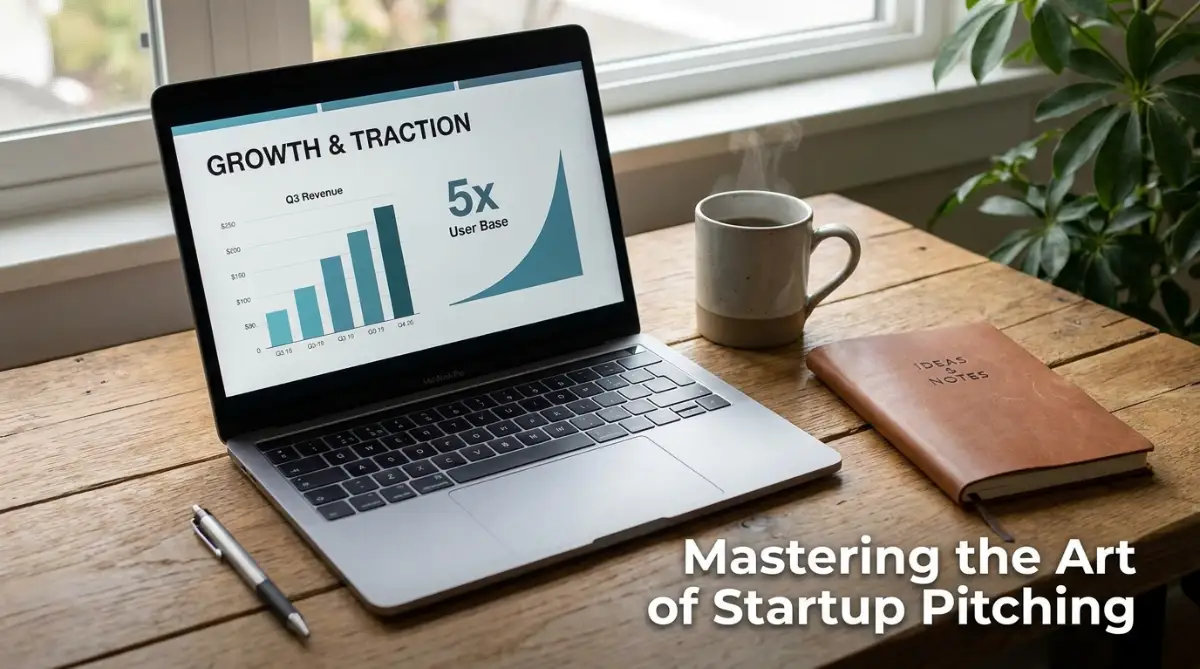
Your pitch shouldn't just be about today. It should be a story of where you were yesterday and where you will be tomorrow. Investors love to see a "growth curve." Even if the numbers are small, showing that you are growing every month is key.
This is why tracking your data is so important. You need to show that you understand why you are growing. Is it because of your marketing? Is it because people are telling their friends? If you can explain the "why" behind your growth, investors will trust that you can do it again with their money.
I like to use analogies to explain my growth. I tell them that my business is like a small fire that just needs more wood to become a bonfire. The money is the wood. It makes the story easy to visualize and hard to forget. To see how experts value different assets and apply logic to growth, you can read about how appraisers calculate true value, which offers a great perspective on valuation.

Dangerous Traps That Can Kill Your Startup Dream
Even if you have a great pitch, there are some traps that can ruin everything. These are often things that happen after the meeting or during the quiet moments. You have to be careful because one wrong move can label you as "un-investable" in the small world of angel investors.
One major trap is being too defensive about your valuation. Every founder thinks their company is worth millions. But if you ask for too much money for too little equity, you look greedy or disconnected from reality. It is better to have a smaller piece of a big pie than 100% of a pie that never gets baked.
I have seen founders walk away from great deals because they argued over a 2% difference in equity. That is a mistake. An angel investor's goal is to help you reach the next level. If you fight them on every small point, they will worry that you will be hard to work with later on.
The Silent Killer: Not Following Through
If you tell an investor you will send them a document by Tuesday, send it by Monday night. Many founders fail because they are slow to reply. This signals to the investor that you are overwhelmed or that you don't care.
In the startup world, speed is everything. If you are slow now, the investor will assume you will be slow when running the business. I always make it a rule to reply to investor emails within a few hours. It shows that I am on top of my game.
Communication is a skill you must master. If you struggle with keeping people on track or making sure they remember what you discussed, you might find these tips on how to stop clients from forgetting appointments very useful for your investor relations too.
Ignoring Your Own Well-being
I know it sounds strange, but your health affects your pitch. If you walk into a room looking exhausted and stressed, investors see a risk. They wonder if you will burn out in six months. They want to invest in founders who have the energy to go the distance.
I used to stay up until 4 AM working on slides. The next day, I would be grumpy and forget my words. I didn't realize that my lack of sleep was hurting my business. Now, I prioritize my rest so I can show up with a clear mind and a smile. If you find yourself hitting a wall every afternoon, it might be worth checking the hidden reasons behind evening fatigue to keep your energy high for those big meetings.
Investors are looking for "stamina." They know the startup journey is a marathon, not a sprint. Show them that you are a person who can handle the pressure without breaking. This builds a level of confidence that no spreadsheet can match.
Overselling the Future and Under-delivering on the Present
It is tempting to make big promises. You want to tell them you will be the next billion-dollar company. But if you promise the moon and only deliver a rock, you lose all trust. It is always better to "under-promise and over-deliver."
If you tell an investor you will have five new clients by next month, try to get seven. When you beat your own goals, you look like a hero. When you miss them, you look like a dreamer who can't execute. Stay grounded in what you can actually do right now.
According to research from the Angel Capital Association, trust is one of the most important factors in a successful investment. Once you break that trust by over-hyping your progress, it is almost impossible to get it back. Be honest about your struggles and your wins.
Turning Your Vision into a Reality
At the end of the day, pitching is about sharing your passion with someone who has the power to help you. It is a nervous, exciting, and sometimes scary process. But it is also a huge opportunity to grow as a person and a leader.
Don't let the fear of making mistakes stop you. Every founder you admire has messed up a pitch at some point. They have all felt the sting of rejection. What made them successful was their ability to get back up, fix their mistakes, and try again with a better plan.
You have an idea that you believe in. That is a powerful thing. Use the tips we talked about to protect that idea and give it the best chance to grow. Take the time to build your data room, vet your investors, and take care of your own energy. When you do these things, you are not just pitching; you are building a foundation for a real business.
I truly believe that if you put in the work to avoid these common traps, you will find the right partner for your journey. It won't happen overnight, but it will happen if you stay focused and keep learning. I have seen it happen for others, and I know it can happen for you too.
The path of a founder is long and full of ups and downs. But every "no" is just a step closer to the "yes" that will change your life. Keep pushing, keep refining your story, and most importantly, keep believing in yourself. You have the tools, you have the knowledge, and now it is time to take action.
I want you to take one small step today. Look at your pitch deck and find one slide that is too crowded. Fix it. Then, send one email to a person who can help you. Your dream is waiting for you to go get it. I know you can do this, so go out there and show them what you are made of!
Common Questions About Pitching to Angels
How long should my pitch deck actually be?
Most experts suggest keeping your deck between 10 and 12 slides. You want to be able to finish your main talk in about 10 minutes so there is plenty of time for questions. If you have too many slides, people will get bored and lose focus on your main message.
Should I sign an NDA before pitching to an angel investor?
In almost all cases, no. Most angel investors and venture capitalists will not sign a Non-Disclosure Agreement (NDA) just to hear a pitch. They see hundreds of ideas, and signing an NDA would create too many legal problems for them. Trust that your execution is what matters more than the secret idea itself.
What is a "reasonable" valuation for a first-time startup?
There is no single answer, but you should look at what other similar startups in your industry are valued at. Don't just guess a high number. Be ready to explain your math based on your current sales, your team's experience, and the size of the market you are entering.
What if an investor asks a question I can't answer?
Don't panic and definitely don't make up an answer. Simply say, "That is a very good point, and I want to give you the most accurate data on that. Let me check my records and send you a detailed answer this afternoon." This shows you are honest and careful with your facts.
Disclaimer: The information provided in this article is for educational and informational purposes only. It does not constitute legal, financial, or investment advice. Business startups involve significant risk, and you should consult with a professional advisor before making any major financial decisions or entering into investment agreements. We are not responsible for any losses or damages resulting from the use of this information.