The Heavy Burden of Chasing College Dreams Alone
Getting accepted into your dream college should be the best day of your life. But when your parents cannot cosign your student loans because of bad credit or financial struggles, that excitement quickly turns into pure panic. If you are staring at a massive tuition bill with zero family financial support, don't throw away your acceptance letter just yet. You can actually fund your entire degree on your own, and I am going to show you exactly how to do it without relying on anyone else's credit score.
Quick Survival Guide: Funding College Alone
- Submit your FAFSA on day one to grab first-come, first-served federal grant money.
- Build your own credit score immediately using a beginner student credit card.
- Talk directly to your financial aid office about an emergency dependency override.
- Skip the strict big banks and look into Income Share Agreements (ISAs) or corporate tuition assistance programs.
Building Your Independent Funding Strategy
The exact path to securing educational money without a safety net requires you to think quite differently than the average student. You cannot just walk into a random bank and ask for cash when you are young and have zero credit history. Instead, we have to look closely at government programs and specific financial strategies designed perfectly for solo borrowers. Let us break down exactly how you can fund your education without relying on anyone else's credit score.

Unlocking the Power of Federal Direct Loans
Your absolute first line of defense is the federal government, specifically through the Free Application for Federal Student Aid (FAFSA). The beauty of federal student loans is that they usually do not require any kind of credit check or a family cosigner. The government expects you to be a completely broke student, so they base their lending solely on your future potential. This makes federal aid the safest and most highly accessible option for someone in your exact situation.
There are two main types of federal loans you need to clearly understand right now. Direct Subsidized Loans are the absolute best option because the government pays the interest fees while you are actively taking classes. Direct Unsubsidized Loans are also great, but the interest starts adding up the moment the cash hits your school account. Both of these powerful options are given strictly based on your enrollment status and financial need, not your personal credit score.
Mastering the FAFSA Application Process
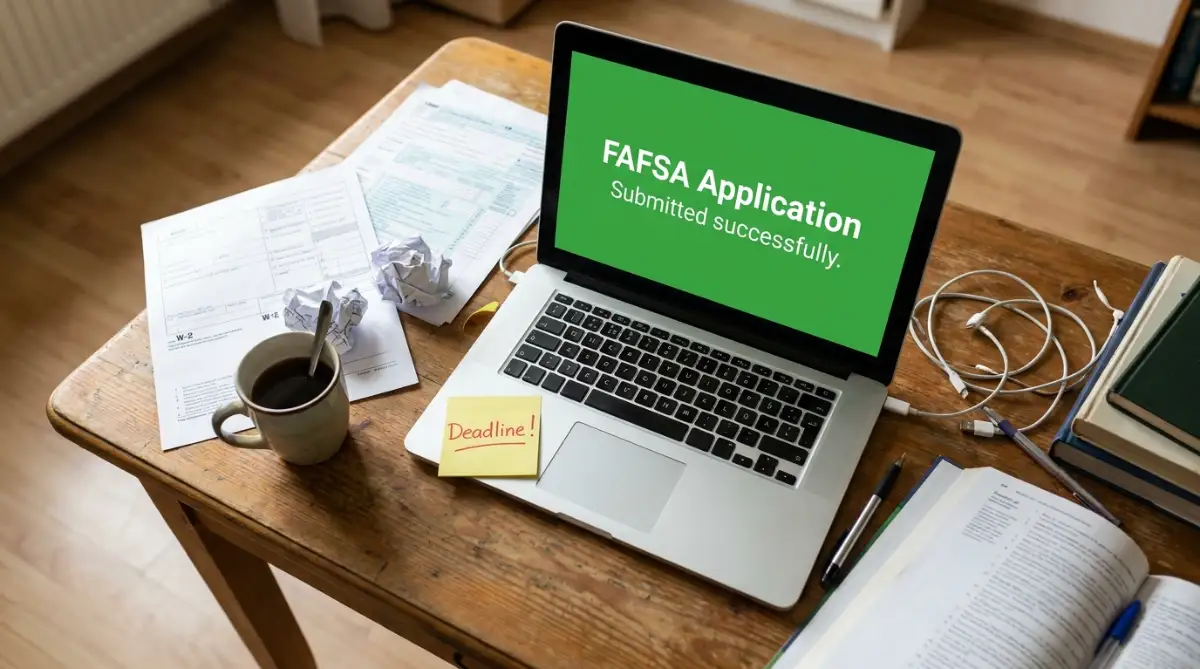
Filling out the official FAFSA form can initially feel like learning a foreign language, but it is your golden ticket to independent funding. You need to gather your personal tax documents carefully and follow the on-screen instructions to submit the form early. The free grant money runs out very quickly, so applying on the very first day the application window opens gives you a massive advantage.
Pro Tip from My Own Experience: I almost lost out on thousands of dollars of free money because I waited until the absolute last minute to submit my FAFSA during my freshman year. My biggest realization was that government financial aid operates strictly on a first-come, first-served basis. Now, I always set a loud calendar alarm for the exact day the application period opens, ensuring I easily get to the front of the money line.
Navigating the Independent Student Status Loophole
The federal financial aid system naturally assumes your parents are helping you pay for school until you reach a specific adult age. If you are under that specific age limit, the application will forcefully demand your parents' financial information anyway. However, you can legally claim 'independent status' if you perfectly meet certain strict conditions. If you are legally married, actively serving in the military, or an orphan, the system automatically treats you as an independent borrower.
Watch This Quick Guide on FAFSA Independent Status:
If you are struggling to prove you are completely on your own financially, this short video breaks down the exact rules. Watch it carefully to see if you qualify for an automatic dependency override.
Myth vs. Fact: The Independent Student Status
- Myth: If I pay for my own rent, buy my own groceries, and file my own taxes, FAFSA automatically considers me an independent student.
- Fact: FAFSA really does not care if you live alone. Unless you are 24 years old, married, a military veteran, or have strict legal documentation of family estrangement, the government still demands your parents' tax info.
What actually happens if you do not meet those automatic legal conditions for independence? You can directly request a special 'dependency override' from your chosen college financial aid office. This requires you to prove with written documents that you have zero contact with your parents due to extreme family circumstances. You will need formal letters from high school teachers, local counselors, or religious leaders to back up your personal story.
Exploring State-Sponsored Educational Programs
Do not just stop at federal government aid when looking for cosigner-free money to fund your classes. Many local state governments have their own hidden pots of money reserved specifically for local residents attending local schools. These state-level lending programs often have much lower interest rates than private banks and far more forgiving approval rules. You just have to spend a quiet weekend researching the specific educational grants available in your home state.
Think of state aid exactly like a local community garden that most people completely forget to harvest. Everyone instantly rushes to the massive federal government for help, leaving plenty of valuable state resources untouched. A quick visit to your state's department of education website can easily reveal massive funding opportunities that do not require any credit history at all.
Appealing Your Financial Aid Package
Let us closely imagine a very common scenario: you finally receive your financial aid award letter, and it is terribly short of what you actually need. Most regular students just accept this sad news and give up on attending that specific university entirely. However, you have the total right to write a formal appeal letter to the financial aid office asking for more funds. You just need to patiently explain your unique lack of family support clearly and highly professionally.
Financial aid officers are real human beings who actually want to see you succeed on their college campus. If you can clearly show them that a lack of a cosigner is the only thing stopping you, they might adjust your federal loan limits. They can sometimes unlock extra institutional grants that the school keeps quietly hidden for special emergency cases exactly like yours. Never be afraid to politely ask for a second, much closer review of your financial file.
Building Your Own Credit Profile Early
Sometimes, federal and state aid combined will not cover the entire heavy cost of your tuition and campus housing. You might eventually have to turn to private lenders, but they will aggressively demand a good credit score if you do not have a cosigner. This directly means you need to start building your own solid credit profile the very moment you step foot on campus. It is a slow, methodical process, but it is entirely possible to do it completely by yourself.
Start by applying for a simple student credit card with a very low, safe spending limit. Use it strictly to buy small things like your monthly streaming subscription or a few cheap groceries. The magic secret is to pay off the entire balance in full every single month without fail. This creates a highly positive payment history that private educational lenders absolutely love to see on paper.
Within just six to eight months of perfect, on-time payments, you will generate a surprisingly strong credit score. By the time your sophomore or junior year rolls around, you will easily look like a highly responsible borrower to major private banks. You will finally be able to successfully apply for private student loans using only your own good name. This small daily habit of paying a tiny credit card bill completely changes your overall financial future.
Alternative Private Lenders for High-Achieving Students
Traditional big banks are incredibly strict, but the modern financial market is changing very rapidly right now. A totally new wave of modern lenders is starting to look past traditional credit scores when evaluating college students. These highly innovative companies care much more about your academic major, your current college grades, and your future earning potential. They fully understand that a regular college freshman does not have a twenty-year credit history yet.
For example, if you are actively studying a high-paying field like engineering, medicine, or computer science, some specialty lenders will happily fund you alone. They use heavily researched algorithms to accurately predict how easily you will be able to repay the debt after your graduation day. You just need to shop around online for lenders that specifically advertise 'no cosigner' loans for high-achieving university students. Just warmly remember to read their fine print very carefully to easily understand their specific interest rates.
Securing Grants and Scholarships to Reduce Debt
The absolute best way to handle a total lack of borrowing power is to simply need less borrowed money in the first place. You should seriously treat applying for university scholarships exactly like a part-time job during your senior year of high school. Grants and scholarships are essentially free money that you never, ever have to pay back to any bank or government. Every single dollar you win is one less dollar you have to desperately worry about borrowing by yourself.
Do not just look for massive national scholarships where you are constantly competing against a million other smart kids. Focus deeply on highly specific local scholarships offered by community businesses, religious groups, and small foundations right in your hometown. These smaller cash awards might only be five hundred dollars each, but winning a few of them quickly adds up to cover your heavy textbooks.
Your school's individual academic departments also have highly special funds reserved closely for dedicated, hardworking students. If you always show up to class, participate often, and build strong professional relationships with your professors, they will notice you. When departmental grant money magically becomes available, these professors will happily recommend you for the funding directly. Being a genuinely good, attentive student is often the secret key to successfully unlocking hidden financial support on any campus.
Master-Level Strategies for Independent College Funding
Securing your initial financial aid package is a huge victory, but keeping that money flowing for four straight years requires serious planning. You cannot just rely on basic government grants forever, especially as university tuition continues to rise every single semester. True financial independence means building a bulletproof strategy that completely bypasses the need for a wealthy family backer.
Let us deeply explore some highly effective, outside-the-box funding secrets that most average students never even consider. These expert tactics will keep you fully funded and heavily reduce your stress while you focus on your classes.
The Magic of Income Share Agreements
A relatively new and highly exciting option for independent students is the Income Share Agreement (ISA). This is entirely different from a standard bank loan because there is no traditional interest rate involved at all. Instead, the school or a private company covers your tuition upfront, and you agree to pay them a fixed percentage of your future salary after graduation.
This means if you get a highly paying job, you pay a bit more back to the program over a set amount of time. However, if you struggle to find work right away, your required payments immediately drop down to zero until you get back on your feet. It takes the heavy financial risk completely off your young shoulders and puts it directly onto the university. They are literally investing in your specific potential, completely ignoring your current lack of credit history.
Quick Comparison: Traditional Private Loans vs. ISAs
| Feature | Traditional Private Loan | Income Share Agreement (ISA) |
| :--- | :--- | :--- |
| Cosigner Needed? | Almost always yes | No |
| Interest Rate | Fixed or variable (adds up fast) | No interest (takes a set % of your income) |
| If You Lose Your Job| You still owe full monthly payments | Your required payments drop to $0 |
Leveraging Employer Tuition Assistance Programs
If you are already planning to work a part-time job to pay for your groceries, you need to pick your employer very strategically. Stop applying to random local restaurants and start looking closely at massive national corporations that offer day-one tuition coverage. Major companies absolutely love hiring college students, and many offer completely free money for your classes as a standard employee benefit.
You can literally walk into a job, work a basic twenty-hour week, and have your employer send a check directly to your college. They do not care about your credit score, and they certainly do not ask for a cosigner to give you these educational benefits. You are simply trading a few hours of your time for massive, debt-free financial support. You can read more about how these corporate benefits protect your finances through trusted resources like the Consumer Financial Protection Bureau's guide on paying for college.
The Authorized User Credit Hack
We already discussed how building your own credit score is the ultimate ticket to unlocking private funding without a cosigner. However, starting completely from scratch takes a lot of time that you might not actually have right now. There is a completely legal shortcut known in the financial world as becoming an "authorized user" on someone else's account.
You might have an older sibling, a trusted aunt, or a mentor who flat-out refuses to cosign a massive student loan for you. That completely makes sense because cosigning is a huge legal risk for them. Instead, you can politely ask them to just add your name as an authorized user to their oldest, perfectly paid credit card.
They do not even have to give you the physical plastic card to use for shopping. The moment your name is attached to their account, their long history of perfect payments magically copies over to your blank credit report. This sudden boost makes improving your credit score safely happen in a matter of weeks instead of years. When you finally apply for your own solo educational funding, the banks will see a highly mature credit profile.
Real-Life Scenario: The Departmental Secret
Let me share a quick story about a friend who almost dropped out during her junior year because her solo funding ran dry. She was terrified of taking out private loans, so she finally walked into the head office of her specific academic major in tears.
What Happened Next:
She discovered that the biology department had a private alumni fund strictly reserved for juniors and seniors who lost their funding. Because she had a great relationship with her professors, the department head quietly wrote her a check from this hidden fund. These secret departmental grants are rarely advertised on the main university website, and they never require a credit check. You simply have to be brave enough to walk in and honestly explain your financial hardship to the faculty.

Dangerous Blunders That Will Wreck Your Solo Funding Plan
When you are desperately trying to pay for school without family help, the heavy pressure can easily push you into making panicked decisions. You might feel backed into a corner and willingly sign documents that totally destroy your financial future. Let us look closely at the most common, heartbreaking mistakes independent students make so you can easily avoid them.
Ignoring Your Satisfactory Academic Progress (SAP)
The government and your university are happy to give you funding without a cosigner, but they demand one specific thing in return. You must maintain what they officially call Satisfactory Academic Progress, which usually means keeping your grades above a strict minimum average. If you get overwhelmed by your part-time job and start failing your classes, you will trigger a massive financial disaster.
The moment your grades slip below the required line, the financial aid office will instantly freeze all of your grants and federal loans. You will suddenly receive a massive tuition bill with absolutely zero way to pay it. Always remember that your study time is literally tied to your bank account, so you must protect your grades fiercely. You can learn exactly how these strict grading rules work directly from the Federal Student Aid guidelines on maintaining eligibility.
Falling for Variable Interest Rate Traps
When independent students finally build enough credit to apply for a private loan alone, they often rush through the final paperwork. Private lenders love to offer a heavily discounted "variable" interest rate to make the loan look incredibly cheap on day one. A variable rate means the interest percentage can easily change every single month based on the national economy.
You might sign the paper thinking your monthly payment will be a tiny hundred dollars for the rest of your life. However, if the national financial market shifts, that tiny payment can violently double or triple before you even graduate. This highly unpredictable debt easily traps smart students who did not fully understand what they were signing.
Always demand a fixed interest rate when borrowing money independently, so your payment never changes. If you are struggling to understand how confusing terms ruin normal borrowers, you need to study up on unexpected credit score traps to protect yourself.
Using High-Interest Credit Cards for Tuition
It is a terrifying feeling when the semester is about to start and you are exactly two thousand dollars short on your tuition bill. In a moment of pure panic, many solo students pull out their beginner credit cards and just swipe them at the cashier's office. They foolishly tell themselves they will just work extra weekend shifts to pay off the massive card balance slowly.
Standard credit cards easily charge twenty-five percent interest, which is absolutely devastating to a broke college student. The interest grows so fast that you end up paying double the original tuition cost by the time the year ends. It is always better to negotiate a late payment plan directly with your school than to put tuition on plastic.
If you are facing a true emergency eviction or a sudden massive expense, do not just swipe a card blindly. You should instead look safely into finding an emergency personal loan with bad credit if you have literally zero other choices.
Destroying Your Credit History Length
As an independent student, the sheer age of your credit history is your most valuable asset when applying for future loans. When you open your very first beginner credit card, that specific account becomes the absolute foundation of your financial reputation. However, many students get annoyed by a small yearly fee and suddenly decide to close their oldest account.
When you close that first account, you instantly wipe out years of good financial history from your active credit report. Your credit score will plummet overnight, making it impossible to get your senior year funded without a family member stepping in. This is exactly why closing that first beginner credit card is a terrible mistake you must avoid at all costs.
Always keep your oldest accounts perfectly open and active by simply buying one cheap cup of coffee on them every single month. This small, continuous activity proves to lenders that you are highly responsible over long periods of time. Even if you secure a great internship and start making good money, remember why even steady earners face sudden denials if they heavily mismanage their open accounts.
Your Ultimate Action Plan for Tomorrow Morning
You now possess the exact knowledge required to fund your educational dreams completely on your own terms. We have deeply covered how to legally claim your independent status, secure federal grants, and carefully build a profile that private banks completely trust. You no longer have to feel ashamed or stuck just because your parents cannot sign a piece of paper for you.
The hardest part of this journey is simply taking that very first scary step toward financial independence. Your path will require heavy organization, setting loud calendar reminders for deadlines, and having brave conversations with campus financial officers. If you ever hit a total roadblock, remember there are always smart ways of qualifying for funding with a low score if you know where to look.
To stay highly motivated, I strongly suggest building a quiet support system with other independent students on your specific campus. You can easily share scholarship leads, proofread each other's appeal letters, and celebrate the small financial victories together. You can totally rely on highly trusted organizations like the National Foundation for Credit Counseling if you ever need free advice on managing your new responsibilities.
I know exactly how heavy that acceptance letter feels when your bank account is totally empty and your family cannot help. My own journey through college without a cosigner was incredibly tough, but walking across that graduation stage completely debt-independent was my proudest moment. I promise you that if you strictly follow these protective steps and fiercely advocate for yourself, you will absolutely turn your college dream into a beautiful reality.
Real Questions From Independent Students
Can I actually get a private student loan if my credit score is currently zero?
It is incredibly difficult to get a standard private loan with literally zero credit history and no cosigner. Most major banks want to see at least a short history of you managing small payments successfully. However, some modern specialty lenders will occasionally approve you based purely on your academic major and expected future salary.
Will getting a heavy part-time job completely ruin my federal financial aid package?
It depends heavily on exactly how much money you earn during the tax year. Federal aid is based on your total financial need, so if you suddenly start earning forty thousand dollars a year, your free grants will definitely decrease. Always talk to your campus financial advisor before accepting a massive promotion at your part-time job.
What exactly happens if my dependency override request gets completely denied?
If the financial aid office denies your request, you are unfortunately still considered a dependent student by the government. This means you will strictly only qualify for federal unsubsidized loans in your own name, which have slightly lower borrowing limits. You can always politely appeal the decision again next semester if you gather stronger written evidence from local counselors.
Are international students allowed to get university loans without an American cosigner?
The rules are much stricter for international students studying abroad, as they do not qualify for standard federal aid. Most traditional American banks will heavily demand a US citizen to cosign any educational paperwork to prevent financial flight risk. You should fiercely look for dedicated international student loans from specialized companies that only look at your academic visa status.
Should I accept every single federal loan they offer me in my award package?
Absolutely not, you should only ever accept the exact dollar amount you strictly need to cover tuition and basic living costs. Every single extra dollar you take just to buy nice clothes or eat out will heavily haunt you with interest after graduation. Always do the math carefully and manually reduce your accepted loan amount in your student portal before the semester begins.
Disclaimer: The information provided in this educational guide is for informational purposes only and does not constitute professional financial, tax, or legal advice. Financial aid rules, federal regulations, and lender policies change frequently. Always consult directly with your university’s official financial aid office or a certified financial planner before signing legal loan documents or making major educational funding decisions.