The Exhausting Reality of Guessing Your Customers' Needs
You know that awful feeling of staring at a giant spreadsheet until your eyes blur? I spent weeks collecting every single click, email open, and page view from my customers. I thought all this tracking would hand me a secret map to more sales. Instead, I just ended up with a giant, messy headache and zero extra dollars in my pocket. If you are tired of guessing what your buyers want, I am going to show you how to finally make your numbers work for you, without needing a math degree.
It felt like trying to read a thick book in a language I did not understand at all. I was literally losing sleep over this massive pile of messy information. We had set up all these tracking tools on our website, collecting clicks, locations, and time spent on pages. But none of that raw information actually told me what to do next.
If you run a business or manage marketing campaigns, you probably face this exact nightmare every single day. You collect all this information from your website visitors, but it just sits there doing absolutely nothing. You see the names and the click rates, but none of it explains why someone abandoned their shopping cart.
Teams argue in meeting rooms over which direction to take the company. One person thinks you should lower prices, while another insists on changing the website design. Without clear facts, every single business decision feels like a dangerous gamble with your hard-earned money.
We rely on these invisible digital footprints to guide our marketing, yet most of us have no idea how to read them. The amazing news is that you do not need to be a math genius to fix this problem. By using smart software correctly, you can turn that massive headache into a clear roadmap.

Let us break down exactly how modern systems make sense of this chaos for you.
The "Too Long, Didn't Read" Cheat Sheet
- Hoarding millions of random data points hurts your business more than it helps.
- Smart software looks at past buyer habits to tell you exactly what they will buy next week.
- You must regularly clean your customer lists to remove fake emails, or your software will learn the wrong lessons.
- Let the machine do the heavy math, but always use your own human gut feeling before changing your actual business strategy.
Making Sense of the Digital Chaos
Imagine trying to predict tomorrow's weather just by looking out your window right now. You might guess it will rain because it looks cloudy, but you cannot be totally sure. Now imagine having a supercomputer that analyzes ten years of weather patterns in your exact city. That computer can tell you exactly what time the rain will start with incredible accuracy.
This is exactly how predictive analytics works for your daily business operations. Instead of just looking at what happened yesterday, the software uses past behaviors to forecast the future. It takes that giant, terrifying spreadsheet of numbers and turns it into simple, actionable advice.
When a customer visits your website, they leave behind tiny clues about what they like. They might hover over a red shirt, read a specific blog post, or add an item to their cart on a Tuesday. To a human eye, these tiny actions look like random, disconnected events.
But to a smart software program, these actions form a very clear psychological profile. The system learns the habits of your buyers faster than any human ever could. Understanding this shift from guessing to knowing changes how you run your entire company.
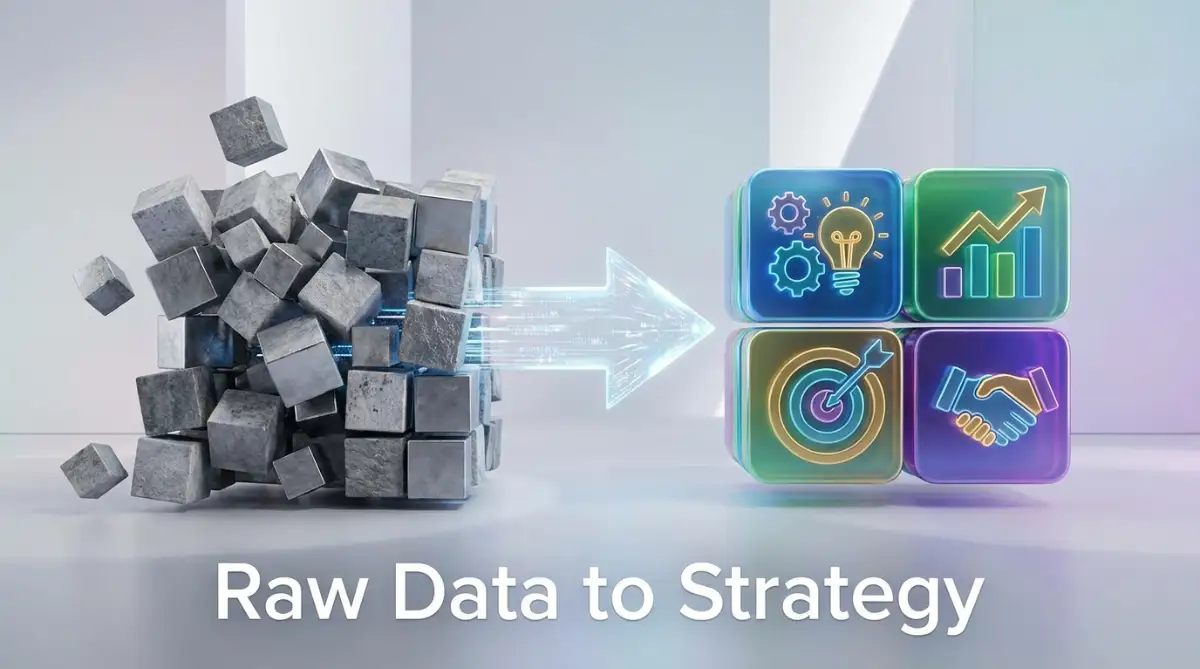
Stopping the Data Hoarding Habit
The first major step in solving this problem is changing how we look at information. Many companies suffer from a disease I like to call "data hoarding." They install every single tracking tool available and collect millions of data points they never actually use.
Having too much disorganized information is actually worse than having no information at all. It creates noise that distracts you from the metrics that actually impact your bank account. Your first goal is to figure out which numbers actually matter to your specific goals.
I used to think collecting more data was always better until my database became a bloated mess. My biggest realization was that focusing on just three key metrics—return visits, average order value, and time on site—was way more effective than tracking fifty random things.
Watch this simple breakdown to see exactly how raw numbers magically turn into smart business moves.
Once you strip away the useless metrics, you are left with a clean foundation. This clean foundation is what smart software needs to start making accurate guesses about the future. If you feed garbage information into a system, you will only get garbage advice back out.
My 3-Step "Data Diet" Framework
Stop tracking every single click today. Do this instead:
- Pick just one single goal (like getting fewer people to leave their shopping carts empty).
- Track only the three numbers that actually affect that specific goal.
- Ignore every other vanity metric for a full 30 days. Watch how much clearer your head feels when the noise is gone.
The Magic of Pattern Recognition
Once your information is organized, the software begins its most important job: pattern recognition. Think of this process like a highly trained detective looking for fingerprints at a scene. The system scans through thousands of customer journeys to find similarities that you would never notice.
For example, the software might notice that people who buy winter boots also tend to buy thick socks two weeks later. As a human, you might miss this connection because the purchases happen weeks apart. But the computer never forgets a timeline and maps out this exact buying cycle.
This is where the magic of machine learning really starts to shine. The more information you feed into the system over time, the smarter the detective gets. It begins to understand the complex relationships between age, location, browsing time, and spending habits.
Moving from History to Prediction
Most traditional business tools only tell you what already happened in the past. They give you a report saying you sold fifty items yesterday, which is nice to know but not very helpful for tomorrow. Predictive tools completely flip this old model upside down.
Instead of saying "You sold fifty items yesterday," the system says "You will likely sell seventy items next Friday." It makes these bold claims based on the historical patterns it just finished mapping out. This shift from looking backward to looking forward is exactly what creates an actionable insight.
An actionable insight is a piece of information that tells you exactly what to do next. It removes the guesswork and gives you a specific task to complete. Let us look at a real-world scenario to see how powerful this really is.
Imagine you run a subscription software company, and you lose a few customers every month. Normally, you only find out a customer is unhappy when they hit the cancel button. By then, it is entirely too late to save the relationship or fix their problem.
Catching Problems Before They Happen
Predictive systems monitor how your customers use your product every single day. The software might notice that a specific user has not logged in for over two weeks. It also sees that this user recently visited your help page looking for billing information.
Based on past patterns of other people who canceled, the system flags this user as a "high flight risk." This is a brilliant example of transforming a raw click into an actionable business insight. The system is literally warning you that this person is going to quit soon.
Now you have the power to step in and change the future before it happens. You can send this specific user a personalized email offering a discount or free training. Because you reached out before they got frustrated enough to quit, you save the account.
This simple intervention saves your company money and builds incredible brand loyalty. The customer feels like you read their mind and truly care about their experience. You achieved this simply by letting the software do the heavy lifting of pattern recognition.
Customizing the Shopping Experience
Another amazing way this technology helps is through personalized shopping experiences. We all know that showing the right product to the right person dramatically increases sales. But manually guessing what each website visitor wants to see is physically impossible.
Predictive software analyzes what a visitor is looking at right now and compares it to past visitors. If a new user reads three articles about camping gear, the system instantly adapts the website for them. The next page they load will automatically highlight tents and sleeping bags instead of office supplies.
This real-time adjustment makes the customer feel completely understood by your brand. They do not have to search hard to find what they want, so they buy faster. This seamless experience is why massive online retailers make so much money.
The Before & After Snapshot
Before Smart Software: You guess why a customer left your site, send a generic "10% off" email to everyone, and annoy half your list.
After Smart Software: The system notices a buyer keeps looking at red winter jackets. It automatically sends them a highly specific email showing those exact red jackets in their size. Boom, you just made a sale without lifting a finger.
Fixing Your Inventory Nightmares
Physical product businesses struggle heavily with managing their stock levels in warehouses. If you order too many products, your money is tied up in boxes sitting on shelves. If you order too few products, you miss out on sales and anger your loyal buyers.
Guessing how much stock to buy for the upcoming holiday season is a massive source of stress. Predictive analytics looks at last year's sales, current market trends, and even upcoming weather forecasts. It then gives you a precise number of items to order to perfectly match the upcoming demand.
The True Value of Actionable Insights
You might be wondering if setting all this up is worth the time and effort. The truth is that businesses moving blindly without these tools are falling behind rapidly. Your competitors are likely already using these systems to understand your shared audience better than you do.
When you know what your customer wants before they even ask, everything becomes easier. Your marketing emails get higher open rates because the topics are highly relevant. Your advertising costs go down because you stop showing ads to people who will never buy.
It is incredibly freeing to wake up and see exactly what needs your attention today. You no longer have to dig through endless spreadsheets hoping to find a spark of inspiration. The software hands you a clear list of opportunities, and your only job is to execute them.
This takes the emotional heavy lifting out of running a business completely. You can finally base your big decisions on solid math instead of gut feelings. The peace of mind this brings to a stressed-out team is absolutely priceless.
In the next part, we will explore some advanced ways to set these systems up without losing your mind. We will also talk about the dangerous mistakes people make when trusting machines too much. Taking the time to learn these advanced tricks will put you miles ahead of the competition.
Mastering the Art of Long-Term Predictive Strategies
Getting your first smart tracking system up and running is an amazing feeling. But the real magic happens when you learn how to maintain these tools over a long period. Many business owners set up their software once and completely forget about it.
Treating your analytics like a "set it and forget it" tool is a massive missed opportunity. If you want to keep seeing those high profit margins, you have to nurture the system. Let us walk through some advanced habits that separate the amateurs from the true industry professionals.
Breaking Down the Invisible Walls
The biggest secret to getting insanely accurate predictions is feeding your software a complete picture. Most companies keep their information trapped in completely separate digital boxes. Your email marketing numbers live in one program, while your website sales live in another.
We call these separate boxes "data silos," and they are terrible for your overall strategy. If the machine only sees your website sales, it cannot understand how your email campaigns influence those buyers. You need to connect all your different platforms into one massive central hub.
Think of it like trying to bake a cake with the ingredients scattered across different houses. You need all the flour, sugar, and eggs in the exact same mixing bowl to get a good result. Learning about automating daily tasks using cloud ai is a great way to force these different programs to share their numbers automatically.
The Danger of Stale Information
Another advanced concept you must understand is something called "data drift." Over time, the way your customers behave will naturally change and evolve. A strategy that predicted sales perfectly last month might completely fail today because shopping habits shifted.
Your software builds its rules based on the historical numbers you feed it. If you stop feeding it fresh, daily information, its predictions become completely outdated and useless. Keeping your models updated is very similar to fixing machine learning vulnerabilities in business because you are actively patching holes in the system's logic.
Pro Tip: I used to rely heavily on a highly successful predictive model that tracked summer clothing sales. When autumn arrived, I totally forgot to update the system, and it kept suggesting we buy more swimsuits in November. My biggest realization was that human oversight is always required to tell the machine when the seasons actually change.
To prevent this decay, you have to regularly audit the information flowing into your system. Academic researchers constantly warn companies about this specific issue in long-term technology projects. For a deeper scientific explanation, you can read how changing consumer habits cause predictive models to break down from the MIT Sloan Management Review.
Creating Micro-Neighborhoods of Buyers
Most basic tracking tools group your audience into massive, generic buckets like "Women aged 25-34." But a 25-year-old college student buys things very differently than a 34-year-old mother of three. Treating them as the exact same person will completely ruin your marketing budget.
Advanced systems allow you to create "micro-segments" based on hyper-specific behaviors. You can tell the software to find "people who open emails at 8 AM but only buy on weekends." This level of detail allows you to send incredibly personalized offers that feel hand-crafted.

When you start targeting micro-segments, your conversion rates will absolutely skyrocket. Customers feel highly respected when you only show them items they actually care about. It builds a quiet loyalty that prevents them from wandering over to your competitors.

The Dangerous Traps of Data Analysis
Even with the smartest software in the world, human beings still manage to mess things up. I have watched brilliant business owners completely destroy their own campaigns by falling into a few common traps. Relying heavily on machines requires a very specific type of mental discipline.
If you do not recognize these pitfalls early, you will end up wasting thousands of dollars. Even worse, you might permanently damage your relationship with your most loyal buyers. Let us look at the absolute worst mistakes you can make when diving into advanced analytics.
Blind Trust in the Machine
The most common trap is assuming the software is absolutely flawless and smarter than you. Predictive models are incredibly powerful, but they completely lack human empathy and real-world context. A machine does not know if there is a global crisis or a massive storm hitting your shipping routes.
If the software suddenly tells you to drop your prices by ninety percent, you should not blindly obey it. You always need a human being to look at the suggestion and see if it actually makes logical sense. This exact fear of losing control is why people often worry about the truth about ai replacing software engineers entirely.
Your gut feeling as a business owner still holds massive value in the final decision-making process. Think of the software as a highly intelligent assistant handing you a well-researched report. The assistant gives you the math, but you are still the boss who signs the final check.
Crossing the Creepy Line
There is a very thin line between being helpful and being incredibly creepy. Customers love it when you recommend a nice pair of shoes to match a dress they just bought. They absolutely hate it when you show them ads for things they only talked about in private.
When your tracking gets too aggressive, people immediately feel violated and unsafe. If you abuse their trust, they will delete their accounts and actively tell their friends to avoid your brand. Understanding the deep mechanics of the hidden truth about mobile app tracking helps you realize why users are so protective of their privacy today.
You must always be completely transparent about what information you collect and exactly why you need it. Make sure you are strictly following the law and respecting digital boundaries. You can easily review the official guidelines on protecting consumer privacy from the Federal Trade Commission to ensure you stay out of legal trouble.
Ignoring Poor Data Hygiene
We talked briefly about data hoarding, but poor data hygiene is an entirely different monster. Hygiene refers to the actual cleanliness and accuracy of the numbers living inside your spreadsheets. If your customer list is full of fake email addresses and duplicate names, your system is already poisoned.
A predictive model looks for patterns in the numbers you provide. If half of those numbers are wrong, the resulting pattern will be completely backwards. You will end up ordering the wrong products and sending emails to people who do not even exist.
Cleaning your database should be a regular, non-negotiable monthly chore for your team. You have to actively hunt down duplicate files, fix spelling errors in customer profiles, and delete inactive users. It is deeply tedious work, but skipping it completely invalidates the expensive software you just bought.
Getting Emotionally Attached to the Past
Business owners often have a very hard time letting go of things that used to work. You might have had a brilliant marketing campaign that generated massive revenue three years ago. When the new predictive software tells you that campaign is now dead, it hurts your ego.
People will actively ignore the math because they are too emotionally attached to their old ideas. They keep throwing advertising money at a failing strategy just hoping the good old days will return. This stubbornness is the fastest way to drain your company bank account.
You must learn to follow the math, even when it completely contradicts your personal feelings. Accepting hard truths gracefully is just like protecting your mental health while working as a digital nomad; it requires strict discipline. Let the numbers guide your strategy, and leave your personal ego completely at the door.
Your Next Steps Toward Smarter Decisions
We have explored the incredible journey of turning chaotic numbers into clear, profitable actions. You now know that hiding from your digital spreadsheets will only hurt your future growth. Embracing these advanced systems puts you in the driver's seat of your own success.
You do not need to tackle all of this in a single afternoon. Starting small is the absolute best way to build your confidence without getting totally overwhelmed. The goal is steady, measured progress rather than trying to transform your whole company overnight.
A Simple Plan for Tomorrow
Tomorrow morning, I want you to pick just one single goal for your business. Maybe you want to figure out exactly why people abandon their shopping carts at the very last second. Or maybe you want to find out which day of the week gets the most blog readers.
Take that single question and apply it to the basic analytics tools you already have. Look for the tiny patterns in the numbers that tell a clear story about your visitors. Once you solve that first small mystery, you will instantly feel the power of data-driven confidence.
As your confidence grows, you can start bringing in the heavy-duty predictive tools to do the heavy lifting. You can comfortably build a system that acts just like a fail-proof internet setup for remote work, completely reliable and unbreakable. The future of your business is hiding in those numbers, just waiting for you to find it.
I remember feeling completely paralyzed the first time I stared at a massive, messy customer spreadsheet. But taking that very first step to clean my database completely changed the trajectory of my business. My biggest advice to you is to stop overthinking, trust the math, and start putting those invisible numbers to work today.
Common Questions About Customer Analytics
Do I need a massive budget to start using these predictive tools?
Not at all. Many popular software platforms offer free basic tiers or highly affordable monthly subscriptions for beginners. You can start gathering incredibly powerful insights for less than the cost of your monthly coffee habit.
Will this software work for a small local business?
Yes, it works beautifully for local shops and service providers too. Even if you only have a few hundred customers, the software can quickly identify local buying trends and busy seasons. This helps you schedule the right amount of staff and order the perfect amount of inventory.
How long does it take for the machine to learn my audience?
Most modern systems need at least a few weeks of consistent traffic to build an accurate baseline. The more interactions they observe, the sharper their future predictions will become. Patience during this initial learning phase is absolutely necessary for long-term success.
Is it safe to upload my customer list to these platforms?
Top-tier analytics companies use military-grade encryption to protect your sensitive business information. However, you should always read their privacy policy deeply before uploading any personal contact details. Never use unverified, cheap software to handle your most valuable business assets.
Can I connect this to my current website easily?
Most modern tracking tools use a simple line of tracking script that you paste into your website header. If you use a popular website builder, they usually have direct plugin integrations that take three clicks to install. You definitely do not need to hire an expensive developer just to get started.
Disclaimer: The information provided in this article is for educational and informational purposes only. Business outcomes and software performance will vary based on your specific industry, audience size, and market conditions. Always consult with a certified data privacy professional before implementing new tracking tools to ensure you comply with local consumer protection laws. We are not responsible for financial losses or privacy violations resulting from the misuse of analytics software.