The Hidden Reality of Managing Money Across Borders
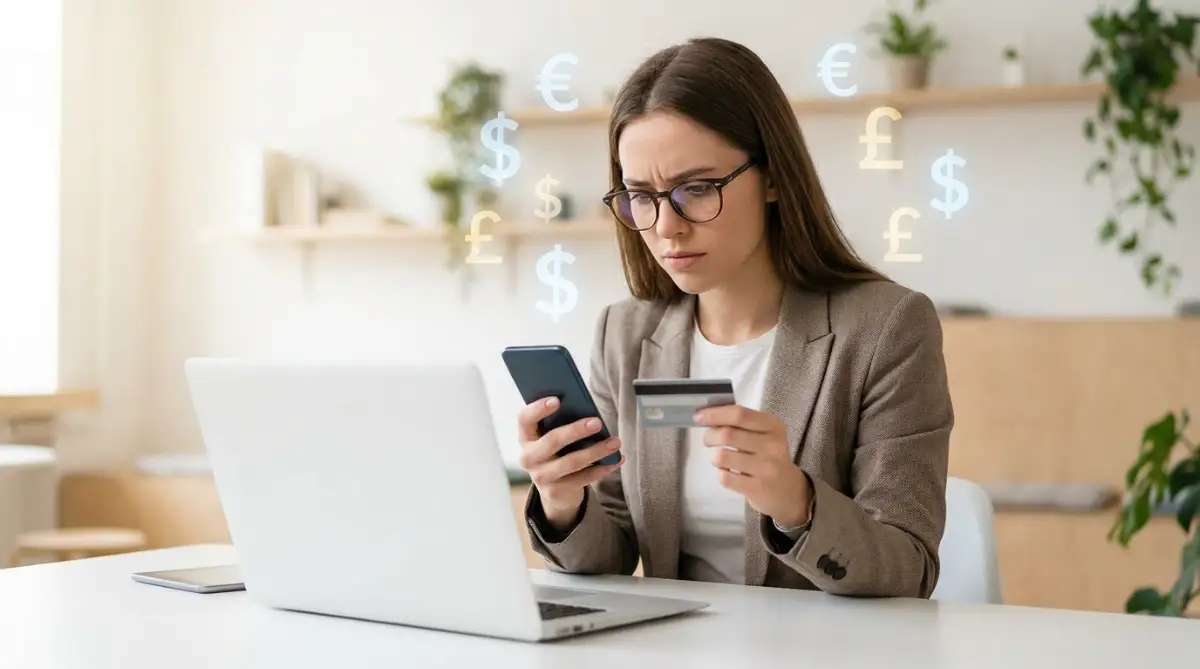
Ever tried paying for a meal in a new country, only to have your card declined while a line of angry locals forms behind you? Yeah, it sucks. When you start working from anywhere, everyone warns you about bad Wi-Fi, but nobody tells you how fast hidden banking fees and frozen accounts can drain your wallet. Let's fix your travel money setup right now so you never end up stranded without cash.
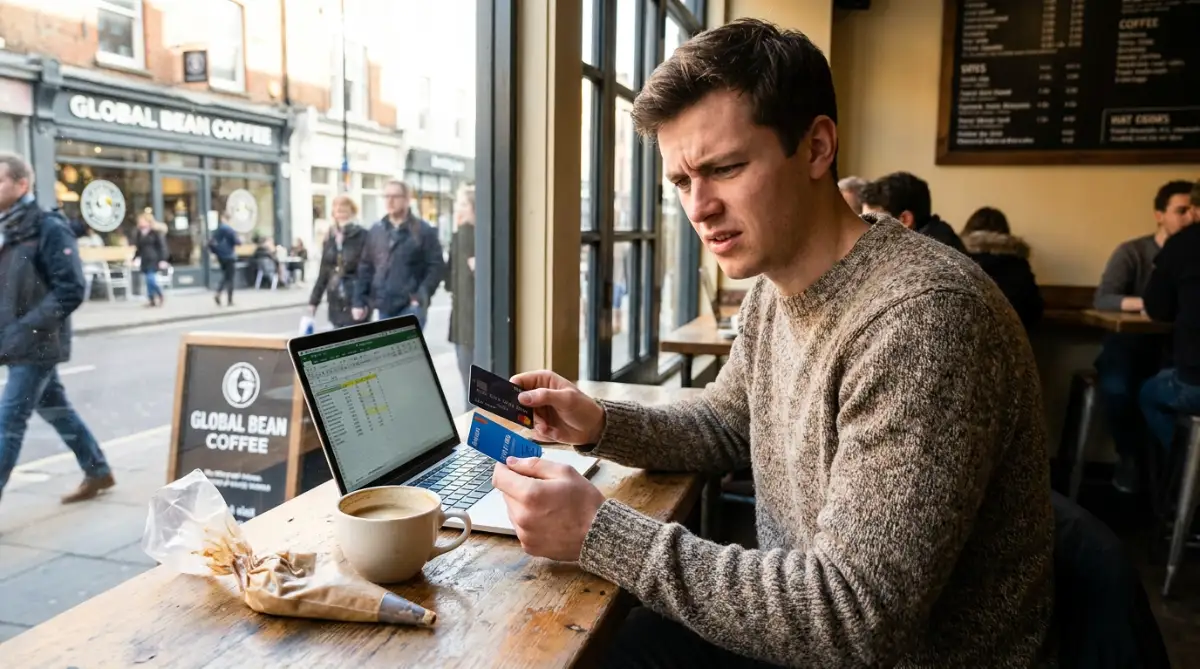
I tried again, my hands shaking a little bit, but the result was exactly the same. My home bank had completely frozen my account because they suspected unusual foreign activity. They left me stranded with absolutely no cash in my pocket and no immediate way to pay for my food.
I had to sit in that cafe for over two hours, desperately calling international customer service across totally different time zones. My peace of mind completely vanished in an instant, replaced by pure panic and embarrassment. That single event taught me a very harsh lesson about how unprepared I was for location-independent living.
You might find yourself constantly worrying about hidden conversion charges every time you swipe your card for a simple cup of coffee. You check your banking app and realize that terrible exchange rates are slowly eating away at your freelancing income. The mental load of doing constant math in your head to figure out local prices is completely exhausting.
Instead of enjoying your beautiful surroundings, you spend your weekends searching for ATMs that will not charge you a small fortune in withdrawal fees. This constant financial anxiety destroys the freedom you worked so hard to achieve. Money problems abroad do not just hurt your wallet; they ruin your overall travel experience and drain your creative energy.
Quick Takeaways: What You Need to Fix Today
- Always choose local currency at ATMs and restaurants to force the best exchange rate.
- Never travel with just one card; split your money across different banks and networks (Visa & Mastercard).
- Do your heavy money transfers on weekdays to dodge sneaky weekend markup fees.
- Ditch text message (SMS) logins and switch to an Authenticator app before you get on the plane.
Understanding the True Cost of Your Travel Finances
Most people assume that their local neighborhood bank will protect them when they take their laptop overseas. This is one of the biggest illusions that completely ruins the financial stability of new travelers. The banking systems we use at home are simply not designed for a borderless lifestyle.
When you use a standard domestic account internationally, you are playing a game where the bank holds all the winning cards. They quietly slip extra charges into every single transaction without you even noticing until the end of the month. To protect your hard-earned income, you need to understand exactly how these systems take advantage of you.
The "Dynamic Currency Conversion" Scam
Let us talk about one of the most common traps that almost every new traveler falls into right away. Dynamic Currency Conversion (DCC) sounds like a helpful service, but it is actually a massive money-drainer. You will usually encounter this when paying at a restaurant or using a foreign ATM.
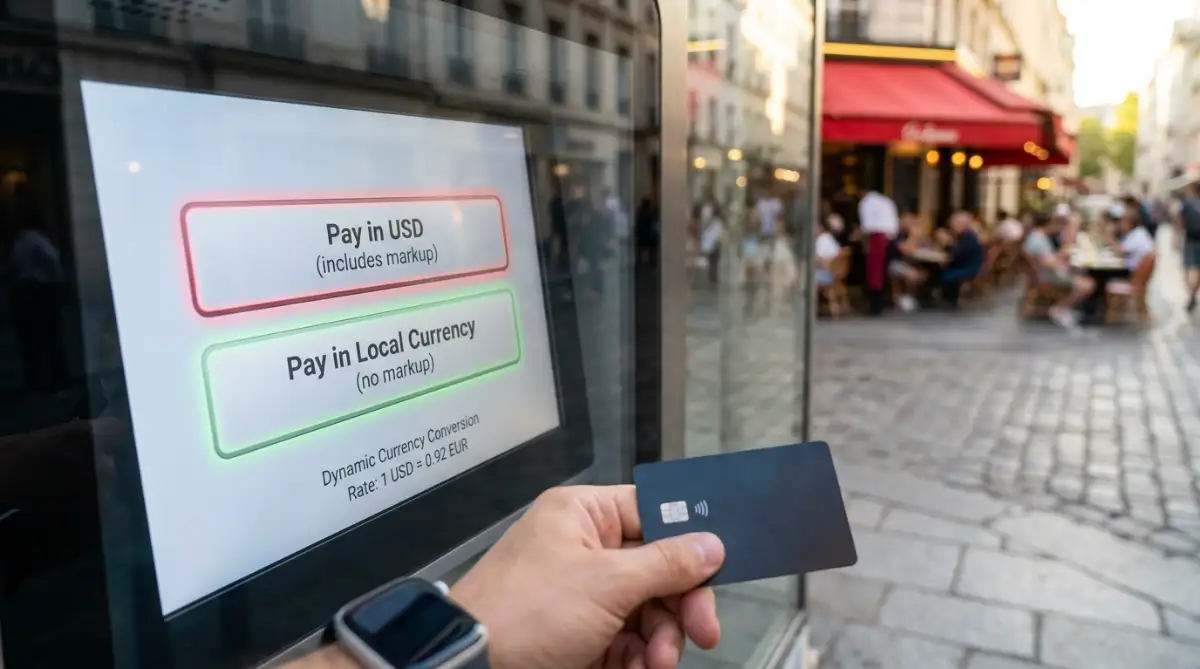
The machine will politely ask if you want to be charged in your home currency or the local currency. Seeing your familiar home currency feels incredibly safe and comforting when you are thousands of miles away from home. However, choosing your home currency is the absolute worst financial decision you can make in that moment.
If you choose your home currency, the foreign bank or ATM provider gets to decide the exchange rate. They usually apply a terrible rate and add a heavy markup fee just for doing the math for you. Always choose to pay in the local currency. This forces your own bank to do the conversion, which almost always results in a much fairer market rate.
Myth vs Fact: The ATM Conversion Trap
- The Myth: Hitting "Yes" to pay in your home currency is safer because you lock in the exact rate right there on the screen.
- The Fact: You are basically giving the foreign ATM permission to invent its own terrible exchange rate and slap a fee on top. Always pick "Decline Conversion" or "Continue without conversion." I saved over $40 in a single week in Thailand just by hitting the red "No" button on ATMs.
Losing Money While You Sleep: The Weekend Markup Trap
Here is a strange secret about international finance that most ordinary bank tellers will never explain to you. Global foreign exchange markets completely shut down over the weekend, meaning official currency rates stop updating. Because the market is closed, payment providers and banking apps face a tiny risk that the currency value might drop by Monday morning.
To protect themselves from this risk, many popular digital apps and banks add an extra percentage markup on all weekend transactions. If you book a costly hotel room or buy expensive flights on a Saturday, you are paying a hidden premium. Over a few months of traveling, these small weekend markups add up to hundreds of lost dollars.
To easily bypass this annoying problem, try to do your heavy spending or major currency conversions between Monday and Friday. If you know you have to pay for a month of rent on a Sunday, convert that money into a local currency wallet on Friday afternoon. Planning ahead by just 48 hours keeps your money safely in your own pocket.
The Danger of Relying on a Single Point of Failure
Think of your current banking setup right now. If your main wallet was stolen today, how quickly could you access the rest of your savings? For most beginners, the answer is usually a terrifying "I cannot."
Relying on just one physical card or a single financial institution is like driving across a desert without a spare tire. ATMs routinely swallow cards due to machine errors, and automated security systems block accounts for simply logging in from a new Wi-Fi network. When your one and only source of money gets cut off, a fun trip instantly turns into a survival situation.
I learned this the hard way during my early days of exploring new countries. My personal realization hit me hard: I had carried three different cards, but they were all tied to the exact same main checking account! My Pro Tip to you: Always carry cards from completely different banking institutions, and make sure you have a mix of both Visa and Mastercard. When one network goes down, the other will save your life.
Traditional Banks vs. Borderless Digital Accounts
To really fix these issues, we need to compare the old way of doing things with the modern approach. Let us look at a simple breakdown of why remote workers are abandoning their old local branches.
Wait, let me give you a real-world snapshot of what I actually keep in my phone right now so you can see how this works:
My Everyday Digital Wallet Setup:
- Wise: My go-to for holding Euros and Thai Baht. The interface is super clean.
- Revolut: Perfect for instant currency swaps on the weekdays to avoid those weekend fees.
- Charles Schwab Debit: The holy grail for US citizens. They refund every single ATM fee worldwide at the end of the month, even the sneaky $10 fees from random machines.
As you can clearly see from this basic comparison, traditional banking simply cannot keep up with a moving target. Modern digital accounts are built specifically for people who wake up in one time zone and buy lunch in another. They give you the superpower of holding multiple local currencies simultaneously, treating you like a local resident wherever you go.
Building a Safe Multi-Bucket Money System
Instead of keeping all your savings in one place, you need to create a smart "bucket" system. Think of your finances like a ship with multiple waterproof compartments; if one floods, the whole ship does not sink. You should divide your money into three totally separate categories: storage, spending, and emergency backup.
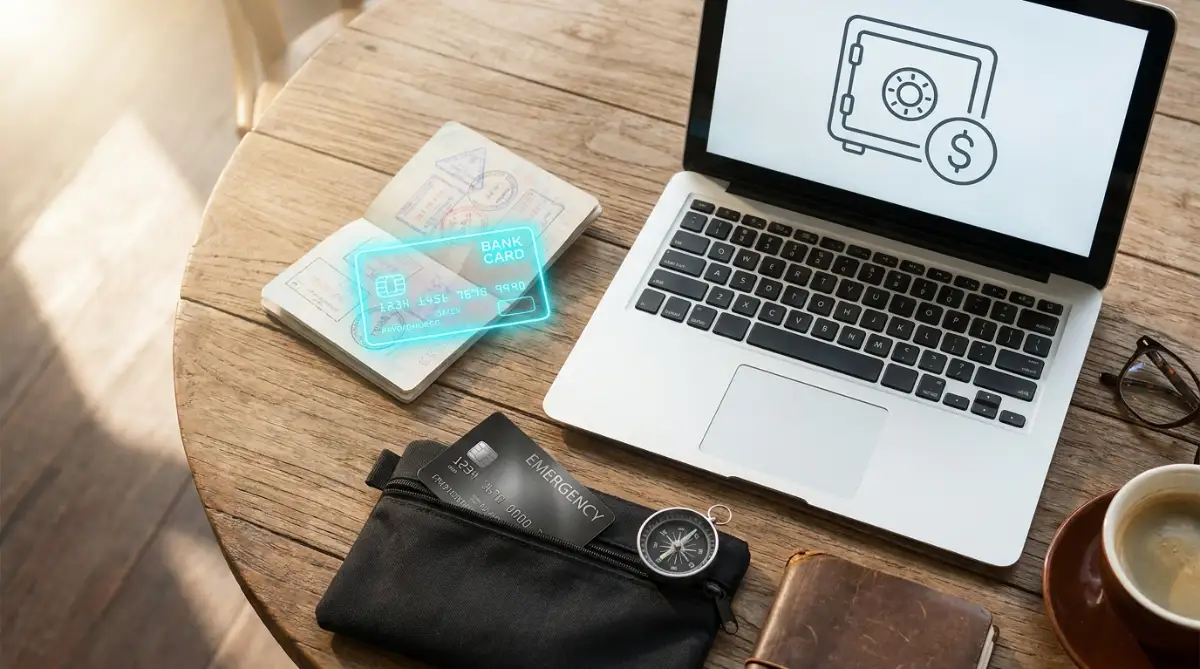
Your storage bucket is your main savings account back in your home country, which you never directly connect to a physical debit card. Your spending bucket is a digital multi-currency account that you only load with enough cash for one or two weeks of living expenses. If your spending card gets skimmed at a shady ATM, the thieves can only access a very small amount of money.
Your emergency backup bucket should be a completely separate credit card or hidden digital account that you never carry in your daily wallet. Leave this backup physical card hidden safely in your luggage or hotel safe. This simple three-bucket strategy instantly removes the constant fear of being left totally broke in a foreign land.
Navigating ATM Withdrawal Limits and Network Fees
Finding a machine that gives you physical cash is easy, but finding one that does not rob you is entirely different. Independent ATMs, usually found inside convenience stores or tourist areas, are notorious for charging massive fixed fees. Sometimes they ask for the equivalent of ten dollars just to hand you your own money.
Always look for official ATMs attached directly to major local bank branches. These official machines usually have significantly lower fees and are far less likely to have illegal card skimmers attached to them. Furthermore, check if your home bank has a global alliance network, which allows you to use partner banks overseas completely free of charge.
You also need to pay close attention to your daily withdrawal limits. Many people try to pay a landlord in cash, only to find out their card maxes out at a tiny amount per day. Log into your banking app right now and permanently increase your daily international withdrawal limit before you ever leave your house.
Why You Need a Digital Wallet Strategy
Physical plastic is slowly becoming a thing of the past, even in developing nations. Adding all your cards to Apple Pay, Google Pay, or a similar digital wallet is one of the smartest safety moves you can make. When you use your phone to tap and pay, the merchant never actually sees your real card number.
Digital wallets use a highly secure process called tokenization, creating a fake temporary number for every single purchase. If a restaurant's payment system gets hacked later that month, your actual card details remain perfectly safe. Plus, if you ever lose your physical wallet, you can still survive using the virtual cards stored safely inside your locked phone.
Expert Insight: The Myth of the "Travel Credit Card"
Many online gurus will confidently tell you that an expensive travel credit card solves all your money problems. This is a very common myth that leads beginners into paying hundreds of dollars in annual fees for benefits they never actually use. While airport lounge access is nice, it does not help you buy groceries at a local street market.
The reality is that a simple, no-fee debit card that offers zero foreign transaction fees is far more useful for daily survival. Credit cards are fantastic for booking expensive flights or renting cars because they offer great consumer protection. However, using a credit card to withdraw cash at an ATM will trigger horrible "cash advance" fees that begin accumulating heavy interest immediately.
Use your premium credit cards exclusively for big online purchases and major travel bookings. Use your specialized digital debit cards for everyday living expenses, local street food, and essential cash withdrawals. Mixing up these two tools is a very fast way to empty your bank account by mistake.
By applying these exact strategies, you immediately stop being an easy target for hidden financial traps. You transform yourself from a confused tourist into a smart, financially secure remote worker. Managing your money correctly allows you to finally focus on what truly matters: enjoying your freedom, producing great work, and exploring the amazing places around you.
Next-Level Money Hacks for Global Nomads
Once you understand the basic traps of international banking, it is time to upgrade your entire financial system. You need to transition from simply surviving foreign fees to actively outsmarting the global financial network. Managing your money correctly actually buys you more time to enjoy the beautiful locations you visit.
I remember spending hours staring at currency charts in a small apartment in Mexico, trying to guess the perfect time to transfer my rent money. It was exhausting and took away all the joy of my location-independent lifestyle. The secret is to remove human emotion and automate your currency conversions entirely.
Almost all modern borderless accounts have a built-in feature called target rate conversion. You simply tell the app your desired exchange rate, and it quietly watches the market for you day and night. When the global market hits your target, the app instantly buys the currency while you are sleeping.
This simple automation completely removes the daily stress of checking financial news every single morning. It is fascinating to learn how global cross border payments are routed automatically behind the scenes without manual intervention. By letting the algorithms do the heavy lifting, you guarantee yourself the best possible rate without lifting a finger.
Splitting Your Digital Identity for Maximum Safety
Another massive secret of experienced travelers is creating a secondary digital identity just for daily spending. If you hand your primary phone to a merchant and they drop it, or if it gets stolen on a crowded train, you lose access to everything. Never keep your primary banking applications on the smartphone you carry in your pocket every day.
Instead, buy a cheap secondary smartphone that stays safely locked inside your hotel room or Airbnb safe. This hidden device holds all your main banking apps, your original home country SIM card, and your largest savings accounts. The phone you carry outside should only have a digital wallet loaded with a very small amount of daily spending money.
If a pickpocket targets you at a busy street market, they only get a device with fifty dollars of spending power. You can calmly walk back to your room, open your hidden device, and cancel the compromised digital card in three seconds. This exact setup is one of the smartest ways for protecting your funds from unauthorized international charges.
Understanding the Delay of Cross-Border Settlements
Many beginners panic when they transfer money from their home bank to a foreign account and the cash suddenly disappears for days. I experienced this pure terror during my first month abroad when I tried to pay a landlord on a Friday afternoon. The money left my home account instantly, but it did not show up in my digital wallet until the following Tuesday.
Different countries use entirely different banking settlement systems, and almost none of them process large transfers over the weekend. If you need to pay a large bill, always initiate the transfer by Wednesday morning at the absolute latest. This gives the international banking network enough business days to process and clear the funds safely.
When you constantly worry about missing rent payments because your money is stuck in digital transit, your work suffers. I have noticed firsthand how constant relocation secretly destroys your deep focus and how to fix it when you add banking anxiety to the mix. Build a minimum buffer of seven days for all major international transactions, and you will sleep much better at night.
The Envelope Budgeting Method for Digital Wallets
Back in the old days, financial experts recommended putting physical cash into paper envelopes to control spending. You can apply this exact same psychological trick to your modern digital accounts to stop lifestyle creep. When everything feels like a vacation, it is dangerously easy to swipe your card for expensive dinners every single night.
Open a digital account that allows you to create separate sub-folders or "pockets" within the same app. Label one pocket for local groceries, one for transportation, and one for fun weekend excursions. Every Sunday night, move your exact budget for the week into these specific digital folders.
This visual separation forces you to stop and think before you make an impulsive purchase abroad. If your "weekend fun" pocket is empty by Thursday, you simply stay home and cook instead of going out. To make this work, you must take the time to accurately calculate your true cost of living abroad before you ever pack your bags.
Managing the Technical Headaches of Travel Finance
There is nothing worse than sitting in a foreign cafe, trying to resolve a frozen bank account, while your technology starts failing you. Dealing with financial customer support usually requires making long internet calls over somewhat unstable public Wi-Fi networks. The last thing you need is a hardware malfunction when you are trying to explain your situation to a bank teller across the world.
I once spent forty minutes on hold with my primary bank, only to have my audio completely cut out right when the agent answered. If you are already highly stressed about a blocked debit card, trying to figure out why your wireless earbuds won't connect to your PC and how to fix it during an emergency call is a total nightmare. Always travel with a cheap pair of wired headphones as a reliable backup for these urgent financial phone calls.
You should also set up a dedicated VoIP (Voice over Internet Protocol) phone number before leaving your home country. Many toll-free banking support numbers simply will not connect if you try to call them from a foreign mobile network. A digital VoIP number makes it look like you are calling from your hometown, bypassing those frustrating automated network blocks completely.

The Financial Traps That Destroy Remote Careers
Even with the best tools in the world, human error is the number one reason remote workers go broke overseas. We often become too comfortable with our routines and let our guard down when we feel safe in a new city. I want to share the darkest reality of travel finances so you never have to experience this pain yourself.
One single mistake at an ATM or a poor decision during a medical emergency can instantly drain years of hard-earned savings. These are not just small inconveniences; they are major life events that force people to abandon their travels and fly back home in defeat. Avoiding these hidden dangers requires constant awareness and a total shift in how you view your personal security.
The Two-Factor Authentication Nightmare
This is arguably the most common and devastating mistake every new traveler makes during their first few weeks away from home. You land in a beautiful new country, happily swap out your home SIM card for a local one, and try to log into your banking app. Suddenly, the screen asks you to enter a secure code that was just sent to your original home phone number.
Because your home SIM card is sitting inside a plastic bag in your suitcase, you cannot receive that text message. By the time you swap the SIM cards back, your home network provider has completely blocked your roaming signal for security reasons. You are now permanently locked out of your own money because you failed to plan for two-factor authentication.
You must transition all your banking security settings away from standard SMS text messages before you leave your house. Start securing your banking apps with multi-factor authentication by using a dedicated authenticator app like Authy or Google Authenticator. These apps generate security codes directly on your device locally, meaning they work perfectly even when you are totally offline or in airplane mode.
The Single Device Dependency Trap
Our entire modern lives are completely tied to a single piece of glass and metal in our pockets. People casually walk down foreign streets holding their unlocked phones, entirely unaware of the financial disaster waiting to happen. If a thief grabs your unlocked phone from your hand, they instantly gain full access to your digital wallet and email accounts.
Within minutes, they can reset your banking passwords and drain your entire life savings before you even find a police station. If you ever lose your primary device, you need to know exactly how to remotely destroy the data from another computer. Reading a beginner's guide to safely wiping data from your premium gadgets is absolute mandatory homework for anyone carrying digital wealth across borders.
Never link your financial recovery emails to the main email app installed on your smartphone. Create a highly secure, secret email address that is only used for banking resets, and never log into it from your daily mobile device. If your phone gets stolen, the thieves will hit a solid brick wall when they try to reset your passwords.
Skipping Emergency Health Preparedness
Many young remote workers believe they are completely invincible and decide to skip buying international health coverage to save a few dollars. This is the absolute fastest way to completely bankrupt yourself while living overseas. A simple scooter accident in Southeast Asia or a sudden stomach infection in South America can result in massive, unexpected hospital bills.
Foreign hospitals will often demand full payment upfront in physical cash before they even agree to look at your injuries. If your money is tied up in slow international transfers, you will be denied the urgent care you desperately need. Please, do yourself a massive favor and don't work abroad without this medical preparedness checklist.
Always keep an emergency credit card with a high limit hidden in your luggage specifically for sudden medical situations. The interest rate on that card does not matter if it ends up saving your life during a critical health crisis. Knowing exactly how to handle financial emergencies overseas is a non-negotiable skill for every digital nomad.
Falling for the "No Fee" Exchange Kiosk
When you arrive at a major international airport, you will immediately see bright, shiny kiosks promising "Zero Commission" currency exchange. These booths are specifically designed to prey on exhausted travelers who just stepped off a twelve-hour flight. While they technically do not charge a flat commission fee, they hide a massive profit margin inside a terrible exchange rate.
If you hand them one hundred dollars, they will give you back the local equivalent of seventy dollars, pocketing the rest as profit. Never, under any circumstances, exchange paper money at an airport kiosk or a popular tourist area. Just walk straight past them, find an official bank ATM, and withdraw local cash using your specialized digital debit card.
Hoarding the Wrong Currency
Sometimes people get overly excited when their home currency is strong and they decide to convert massive amounts of money into a foreign currency all at once. They think they are being clever by locking in a good rate for the next six months of their trip. However, local economies in popular remote work destinations can be incredibly unstable.
If that local currency suddenly drops in value due to political issues, your purchasing power completely vanishes overnight. Only convert exactly what you need for the next two or three weeks of living expenses. Keeping your main wealth stored in a stable, globally recognized currency is the ultimate shield against sudden economic shocks.
Wrapping It All Together: Your Blueprint for Peace of Mind
Navigating different currencies and foreign banking systems does not have to be a terrifying experience. Once you strip away the mystery, it all comes down to careful preparation and carrying the right digital tools. By setting up smart safety nets and avoiding the common tourist traps, you instantly place yourself in the top one percent of prepared travelers.
Every single mistake mentioned here is entirely preventable with just a few hours of proper planning before your flight. You now have the exact blueprint to protect your income from greedy bank fees and unexpected disasters. All that is left is to take action, update your security settings, and confidently step out into the world.
I know exactly how overwhelming all this financial setup feels right now, because I felt the exact same heavy weight on my shoulders. But I promise you, taking control of your money today will give you the ultimate freedom to truly enjoy every single sunset tomorrow. My greatest advice to you is to set up your multi-currency accounts this weekend, grab your passport, and boldly go build the life you have always dreamed of!
Common Questions About Managing Nomad Finances
Should I open a local bank account when working overseas?
For most short-term digital nomads, opening a local traditional bank account is completely unnecessary and highly complicated. Unless you plan to stay in one specific country for over a year and sign long-term leases, a borderless digital account is a much better choice. Local banks often require permanent residency paperwork and charge heavy fees for simple account maintenance.
How much physical cash should a remote worker carry?
You should only carry enough physical cash to cover two or three days of emergency living expenses and basic transportation. Having massive stacks of paper money makes you an obvious target for theft and creates unnecessary anxiety when traveling between cities. The safest approach is to rely mostly on tap-to-pay digital wallets while keeping a crisp fifty-dollar bill hidden in your shoe for emergencies.
Do digital borderless banks report my earnings to the tax office?
Yes, legitimate digital banks operate under strict international financial regulations and will share information with tax authorities if required by law. Moving your money to an online account does not magically erase your legal tax obligations in your home country. Always consult with a certified tax professional to ensure you are legally compliant while earning location-independent income.
What is the safest way to carry emergency cards abroad?
Never keep all your debit and credit cards stuffed into the exact same leather wallet that you carry in your back pocket. Leave your primary emergency card hidden safely inside a hollowed-out book or an empty vitamin bottle inside your checked luggage. If your daily wallet is lost or stolen, you simply walk back to your hotel room and pull out your backup card to keep living.
Disclaimer: The information provided in this article is for educational and informational purposes only and does not constitute financial, legal, or tax advice. Financial markets, currency exchange rates, and banking regulations change frequently. Always conduct your own research and consult with a licensed financial advisor or certified professional before making any major decisions regarding international banking, investments, or tax residency.