Why My First Personal Loan Felt Like a Complete Financial Trap
Let me guess: you just got a loan offer in the mail, saw a huge number, and thought, "Wait, how much am I actually paying for this?" I have been exactly where you are. A few years ago, I needed some quick cash to fix a leaking roof. I thought borrowing a few thousand bucks would be a simple handshake deal. Instead, I got hit with a mountain of hidden fees and confusing math that made my head spin. I finally cracked the code on how banks hide their real costs, and I am going to show you exactly how to protect your money.
Instead, I found myself drowning in a sea of financial jargon, tiny asterisk marks, and confusing percentage signs. My heart sank when I realized the monthly payment was nearly double what my own basic math had predicted. I felt completely defeated, wondering if the bank had made a mistake or if I was just terrible with money. That deep sense of frustration is exactly what pushed me to finally figure out how lending math actually works.
But a few months down the line, you realize your total balance barely moved because of how the interest is structured. This creates a terrible cycle of stress and anxiety. It feels like you are working incredibly hard just to hand your paycheck right back to a massive financial institution.
They accept bad terms because they believe whatever the lender tells them is the absolute law. This constant worry about making a wrong financial move can bleed into your work performance and your relationships. You deserve to make financial decisions with total confidence, without that heavy knot of anxiety sitting in your stomach.
The "Too Long, Didn't Read" (TL;DR) Checklist:
- Never trust the shiny "nominal interest rate." The APR is the only number that tells you the true cost.
- Stretching a loan over 7 years makes your monthly bill cheaper, but it will cost you thousands more in hidden interest.
- Paying off small credit card balances before applying can force lenders to give you a much cheaper loan.
- Always check if the bank will fine you (Prepayment Penalty) for being smart and paying off your loan early!
Unmasking the Real Math Behind Your Borrowing Costs
To stop losing money to big lenders, we need to completely rethink how we look at borrowing. Many of the things you have heard from friends or family members about getting a loan are actually completely outdated. Let us break down the exact math and logic you need to protect your hard-earned money.

The Massive Difference Between Nominal Rates and APR
The most common trap people fall into is looking only at the big, bold number printed on a loan advertisement. Lenders love to highlight something called the nominal rate, which usually looks highly attractive and affordable. However, this shiny number does not include all the extra costs of doing business with that specific bank.
To find out your true cost of borrowing, you always need to look for the Annual Percentage Rate, commonly known as APR. The APR combines your basic interest rate with any origination fees, processing charges, or administrative costs the bank tacks onto your balance.
Imagine you are renting a car for a weekend trip. The rental company might advertise a rate of twenty dollars a day, which sounds like an amazing bargain. But when you get to the counter, they add mandatory insurance, cleaning fees, and airport taxes, bringing your actual daily cost to fifty dollars.

In this exact same way, a loan might advertise a six percent interest rate. But once they roll in a massive origination fee, your actual APR could easily shoot up to nine or ten percent. Always ask the lender for the APR before you ever sign a piece of paper.
Myth vs Reality: The Credit Score Illusion
Many borrowers assume their credit score is a magical number that dictates their entire financial destiny. While your score is definitely a major factor, lenders look at a much wider picture to determine your risk level.
If you have a mediocre credit score but a highly stable, high-paying job, some credit unions will gladly offer you a fantastic deal. On the flip side, someone with an excellent credit score but massive existing credit card debt might get rejected immediately. Lenders call this your Debt-to-Income (DTI) ratio, and it is the secret gatekeeper to the best financial products.
My Real-Life DTI Reality Check:
- Before: I owed $2,000 on three different store cards. My DTI was dangerously high. The bank offered me a personal loan at a crazy 14% APR.
- After: I used a small bonus from work to clear two of those tiny cards. My DTI dropped quickly. The exact same bank suddenly dropped my APR offer to 8.5%. That one little move saved me over $900 in interest!
Here is a bold truth: Lenders are incredibly scared of people who already owe too much of their monthly paycheck to other banks. Before you apply for any new funding, try to aggressively pay down your smallest revolving debts. Lowering your DTI by just a few percentage points can force their automated systems to instantly offer you a cheaper deal.
I learned this the hard way during my early twenties. I applied for a personal loan with a decent credit score but a ton of maxed-out store credit cards. I got slapped with an outrageous fifteen percent interest rate simply because my DTI was dangerously high. If I had just paid off two small store cards before applying, I could have saved thousands of dollars in long-term fees.
How Loan Terms Quietly Drain Your Wallet
Another massive misunderstanding revolves around the length of your repayment schedule. When you stretch a loan out over five or seven years, your monthly payment drops significantly, making it look highly affordable.
This is an intentional psychological trick designed to make you feel comfortable while maximizing the bank's profits. The longer you take to pay back the principal balance, the more total money the bank extracts from your pocket.
Let us look at a highly practical scenario. If you borrow ten thousand dollars at an eight percent rate over three years, you pay roughly twelve hundred dollars in total interest. If you stretch that exact same ten thousand dollars over seven years to get a smaller monthly bill, your total interest skyrockets to over three thousand dollars.
You are literally paying the bank an extra eighteen hundred dollars just for the luxury of having a lower monthly bill. Whenever you possibly can, you should always choose the shortest repayment timeline your monthly household budget can safely handle.
The Hidden Danger of Variable Rate Offers
Sometimes a lender will offer you a deal that seems almost too good to be true, but it comes with a variable rate. A variable rate means your borrowing cost is directly tied to an underlying economic index managed by the government.
When the economy is struggling, these rates can drop beautifully low, making your payments a breeze. But when inflation hits and the central banks react, your affordable loan can suddenly become a financial nightmare.
Are variable rate loans always bad? Not necessarily, but they require you to have a massive tolerance for sudden budget changes. If your monthly budget is already tight, a sudden spike in your required payment could force you into a default situation.
For the vast majority of everyday households, locking in a fixed rate provides absolute peace of mind. With a fixed option, you know exactly what your bill will be every single month until the balance hits zero.
A Quick Guide to Understanding Interest Rate Changes
The Shocking Truth About Prepayment Penalties
You might naturally assume that paying off your debt faster would make the bank incredibly happy. After all, you are giving them their cash back ahead of schedule!
Unfortunately, the modern financial system does not reward this kind of responsible behavior without a catch. Many aggressive lenders write hidden clauses into their contracts called prepayment penalties.
A prepayment penalty is basically a heavy fine the bank charges you for being highly responsible with your money. Banks project exactly how much profit they will make from you over the entire lifespan of the agreement. When you pay them back early, they lose out on years of expected interest revenue.
Ask Your Banker This Exact Question Before Signing:
"If I get a promotion next year and want to pay this entire loan off early, will you charge me a fee for doing it?"
If the loan officer says yes, stand up and leave. Seriously, do not pay a bank extra money just because you were responsible enough to clear your debt early.
To protect their bottom line, they force you to pay a large fee to make up for their lost profits. Before you ever accept an offer, you must explicitly ask the loan officer if there are any penalties for early payoff. If they say yes, you should politely stand up, walk away, and find a much better institution to work with.
How Compounding Interest Works Against You
Most people learn about simple interest in high school, which assumes you only pay a flat fee on the original amount borrowed. However, many financial products actually use a daily compounding model that quietly inflates your balance.
Compounding means the bank calculates your interest based on your principal balance, plus any interest that has already piled up. It is essentially charging you interest on top of your interest, which creates a snowball effect of debt.
This is exactly why missing even a single payment can completely derail your entire financial recovery plan. The moment you miss a due date, the unpaid interest gets added to your total balance.
The very next day, the bank starts charging you a percentage based on that newly inflated, much larger number. To protect yourself, you should always set up automatic payments from your primary checking account. Many banks will even give you a small percentage discount just for keeping auto-pay turned on.
The Role of Co-Signers in Lowering Your Costs
If you are facing incredibly high borrowing costs, you might consider bringing a co-signer into the picture. A co-signer is simply someone with a strong financial history who legally promises to pay the debt if you cannot.
Having a trusted family member back up your application drastically reduces the risk for the lending institution. Because their risk drops so much, they will almost always reward you with a significantly lower rate.
However, you must treat this strategy with the utmost caution and respect. When someone co-signs for you, the entire balance appears on their personal credit report as well.
If you make a late payment, it actively damages their financial reputation and can ruin your relationship forever. You should only use a co-signer if you have a rock-solid, completely foolproof plan to clear the balance on time.
Understanding these common misunderstandings is the first major step toward taking back control of your personal finances. When you know exactly how the math works, lenders can no longer use confusing jargon to squeeze extra money out of you. You can confidently walk into any bank or credit union and demand the fair, transparent terms you actually deserve.
Expert Moves to Outsmart the Banking System
Now that we have busted those common myths, it is time to go on the offensive. You do not just want to survive the borrowing process; you want to walk away with the absolute best deal possible. Getting a fantastic rate requires a few advanced strategies that most everyday people never learn.
One of the most powerful tools in your arsenal is something called the rate-shopping window. Many borrowers are terrified to apply at multiple banks because they think it will destroy their credit history. In reality, modern credit scoring models are actually designed to help you shop around safely.
When you apply for similar loans within a short timeframe, usually fourteen to forty-five days, the credit bureaus group them together. This means you can check offers from five different lenders, but it only counts as one single hard inquiry on your report. The Consumer Financial Protection Bureau explains how rate shopping works to protect everyday consumers from being penalized for finding better deals.
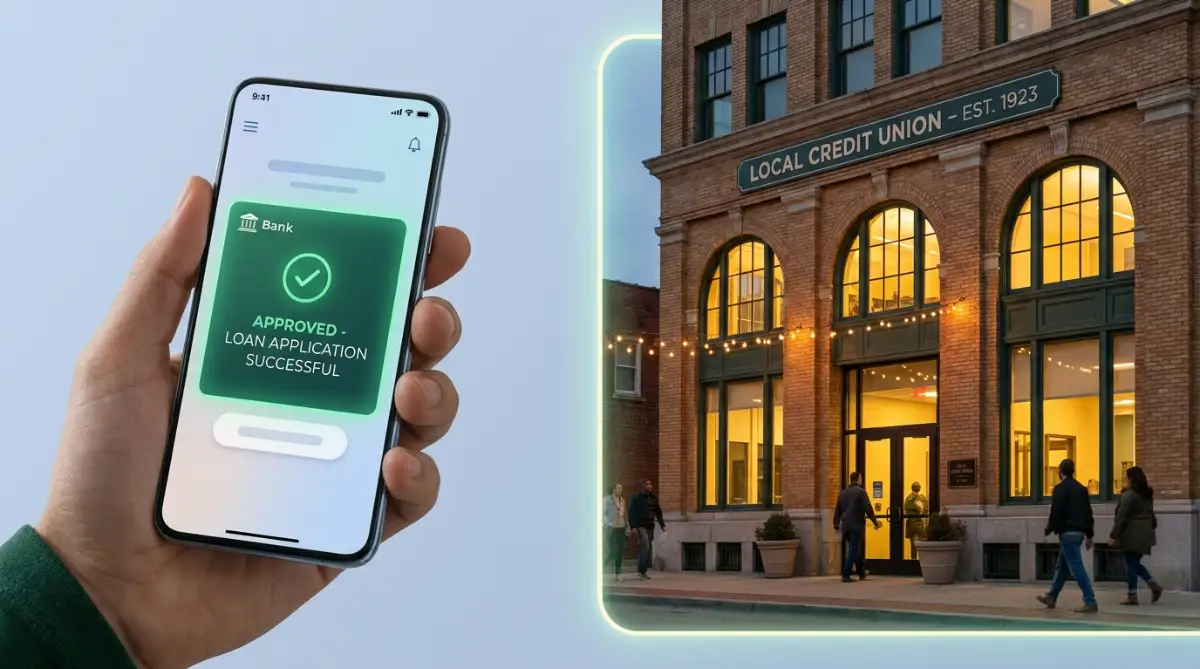
You should always use this window to pit different banks against each other. If an online lender offers you a seven percent rate, take that digital offer straight to your local credit union. Ask the local branch manager if they can beat that exact number to win your business.
Never Accept the First Offer Blindly
Most people just accept the very first approval they get because they feel a sense of relief. But lending is a highly competitive business, and banks are absolutely desperate for responsible customers. You actually have way more negotiating power than you probably realize.
You can explicitly ask a loan officer to drop their mandatory origination fees. If you have a solid payment history, simply telling them you will walk away to a competitor often makes those extra fees magically disappear. You have to advocate for your own wallet because the bank certainly will not do it for you.
Sometimes, improving your overall financial profile before you apply is the smartest move you can make. If you are planning a large purchase, you need to understand how to improve your credit score before applying for a car loan or a personal cash advance. Small adjustments, like paying down a nearly maxed-out credit card, can bump your score up just enough to unlock premium interest tiers.
The Power of Local Credit Unions
Another massive secret is looking beyond massive national banking chains. Big banks have massive advertising budgets, but they often have the most rigid and unforgiving underwriting rules. If you do not fit perfectly into their automated algorithm, you will get rejected or slapped with a terrible rate.
Credit unions, on the other hand, are non-profit organizations owned by their members. They genuinely care about your personal story and often look at your overall character, not just a three-digit number. If you sit down and explain a past financial mistake to a credit union officer, they have the power to manually approve a great rate.
This is exactly why high-income earners still get denied for personal loans at big banks—the algorithms lack human empathy. A computer does not care that you make good money if your debt profile looks slightly unusual. Local institutions bring human common sense back into the lending equation.

The Devastating Traps Most Borrowers Fall Into
Even with the best intentions, it is incredibly easy to make a wrong move when you are stressed about money. When everyday people face a sudden medical bill or a broken-down car, panic often takes over. That sudden panic forces us to make hasty decisions that end up costing thousands of dollars over the long haul.
One of the most dangerous things you can do is borrow the absolute maximum amount the bank approves you for. Let us say you only need five thousand dollars to fix your roof, but the bank happily approves you for fifteen thousand. The loan officer might encourage you to take the extra cash to go on a vacation or upgrade your appliances.
This is a psychological trap designed to inflate their profits. Every extra dollar you borrow immediately starts generating compound interest against you. Borrowing more than you genuinely need is a fast track to long-term financial anxiety. You must stay highly disciplined and only accept the exact amount required to solve your immediate problem.
Breaking Your Existing Financial Foundation
Another massive mistake people make happens right before they even submit their application paperwork. In an attempt to clean up their finances, some folks decide to close down their oldest credit accounts. They think having fewer open cards will make them look more responsible to a new lender.
This is actually one of the worst things you can possibly do to your financial reputation. Closing old accounts completely ruins your credit age and drastically spikes your credit utilization ratio. You really need to think twice before closing that credit card because it can instantly tank your score right when you need it most.
The Federal Reserve actively monitors household debt trends, and their data consistently shows that maintaining long-term, open credit lines signals stability. When a bank sees you have managed a single credit card safely for ten years, they feel incredibly safe lending you cash. Do not erase your own good history just before asking for a new favor.
The Hidden Penalty Rates That Destroy Budgets
Many borrowers get so excited about getting approved that they completely ignore the penalty clauses buried in the fine print. You might secure a fantastic five percent interest rate today, but what happens if you miss a payment next year? Many aggressive lending contracts include something called a default penalty rate.
If your payment arrives even a few days late, the bank legally has the right to hike your interest rate to twenty-five or thirty percent. Suddenly, that affordable monthly payment balloons into an unmanageable nightmare. This tiny hidden clause has pushed countless hard-working families into severe bankruptcy.
You should always read the specific section about late fees and default terms before signing your name. If the penalty terms seem overly aggressive or completely unfair, you need to find a different lender. Keeping your family safe from predatory financial practices requires reading the fine print provided by regulatory guidelines.
Applying Out of Pure Desperation
Perhaps the saddest mistake I see is when people randomly apply to dozens of shady online lenders in the middle of the night. When your credit score is struggling, facing a sudden emergency feels completely hopeless. You might just start filling out web forms hoping someone, anyone, will say yes.
Each one of those desperate applications places a hard inquiry on your report, pushing your score even lower. By the time you finally find a legitimate lender, your profile looks incredibly risky. If you are starting from a tough spot, you must follow a structured step-by-step guide to get a personal loan with bad credit.
Instead of blind applications, you need to actively seek out specific lenders who specialize in bad credit recovery. Some institutions offer secured options where you use a small savings account as collateral to prove your trustworthiness. Taking a slow, calculated approach always beats throwing desperate applications at random internet websites.
Your Personal Action Plan for Borrowing Success
Taking out a new loan does not have to be a dark, terrifying experience filled with anxiety. Now that you understand how nominal rates, APR, and sneaky bank penalties actually work, you hold the power. You are no longer an easy target for confusing financial jargon or aggressive loan officers.
Start your journey by checking your own credit reports for totally free to ensure there are no surprising errors. Pay down any small revolving debts you can to lower your total income-to-debt ratio before applying. Then, take full advantage of the rate-shopping window to force multiple local and online banks to compete for your signature.
Remember, you are the one hiring the bank to provide a service, not the other way around. Do not be afraid to negotiate origination fees, demand clear answers about prepayment penalties, and completely walk away from bad deals. By treating this process like a serious business transaction, you will save your household an incredible amount of money.
I spent years feeling totally intimidated by bank managers and confusing percentage charts, simply because I did not know the rules of the game. Once I finally learned how to decode their hidden fees and demand better terms, my entire financial life changed. You completely deserve to keep more of your own hard-earned money, and I know you can take control of this process starting right now.
Clear Answers to Your Biggest Borrowing Questions
Does checking personal loan rates hurt my credit score?
Checking your rates through a pre-qualification process generally does not hurt your credit score at all. Most reputable online lenders use a "soft pull" to show you estimated terms without leaving a negative mark. However, once you officially accept an offer and submit the final paperwork, a hard inquiry will be recorded.
Can I really negotiate a personal loan interest rate?
Yes, you absolutely can negotiate your terms, especially if you have a strong income and good payment history. While you might not change the base algorithm rate, you can easily ask loan officers to waive heavy origination fees. Taking a competitor's lower offer directly to your local bank manager is the best way to start this conversation.
Is it better to get a personal loan from my local bank or an online lender?
Online lenders often provide faster funding and highly competitive rates because they do not have expensive physical branches to run. However, local credit unions and community banks can offer more personalized service if your financial situation is complicated. It is always smartest to get quotes from both types of institutions to see who offers the lowest APR.
What actually happens if I pay off my personal loan early?
If you have a fair, consumer-friendly contract, paying off your balance early simply saves you a massive amount of interest money. You are completely freed from the debt ahead of schedule and your monthly cash flow increases immediately. Just make absolutely sure your specific contract does not include sneaky prepayment penalties before you send in that large final check.
How can I get a decent interest rate if my credit is currently low?
When your score is struggling, the fastest way to get a better rate is to apply with a financially stable co-signer. You can also look into secured options, where you back the borrowed amount with a savings account or a vehicle title. For a much deeper strategy, review how to qualify for a personal loan with a low credit score to safely rebuild your reputation.
Disclaimer: The information provided in this article is for educational and informational purposes only and does not constitute professional financial or legal advice. Interest rates, loan terms, and lending practices vary widely based on individual circumstances and locations. Always consult with a certified financial advisor or a licensed banking professional before signing any legal contracts or making major financial decisions.