The Frustrating Reality of Freezing Mornings and Slow Charging
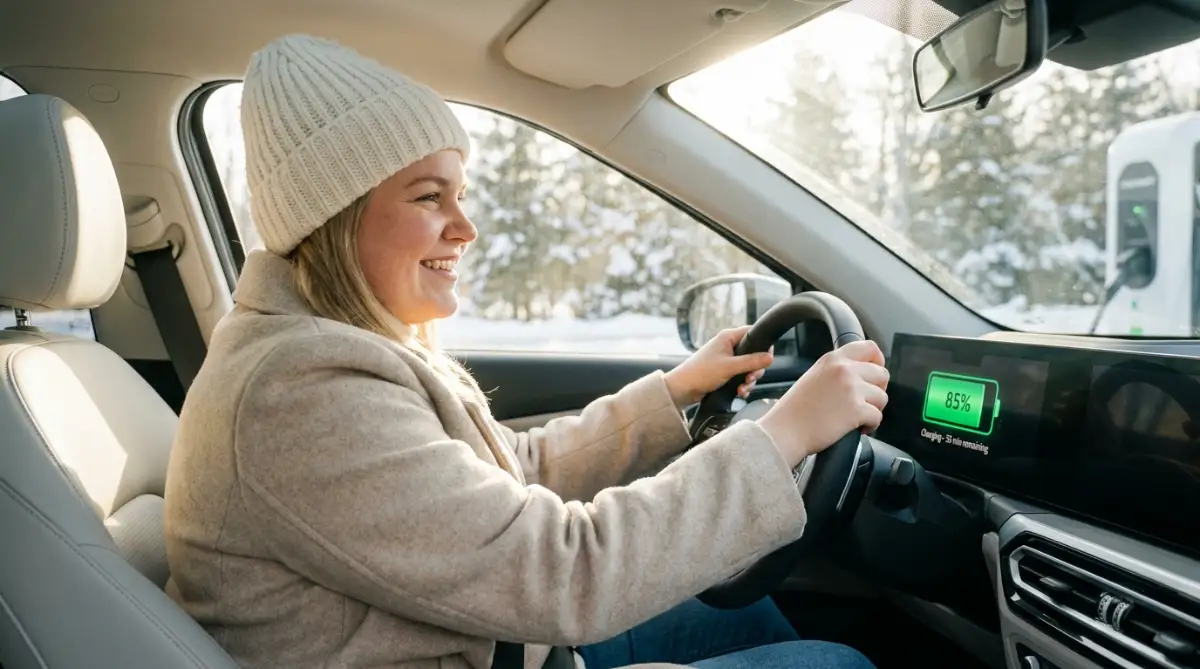
You wake up, look out the window at the frost, and rush out to your electric car just trying to get to work on time. But when you plug into that fast charger, the screen shows a charging speed so slow it makes you want to cry. I sat shivering in my car for over an hour during my first winter with an EV, totally regretting my purchase. But here is the good news: your car isn't broken, and you don't have to freeze. Let me show you the exact tricks I use to get my EV charging fast again, even when it's freezing outside.
Imagine waking up early on a freezing winter morning. You look out your window to see a thick layer of frost covering your driveway. You grab your keys, rush outside, and jump into your electric vehicle, expecting a smooth and easy start to your day.
Instead, you look at your dashboard and notice something alarming. Your driving range has dropped significantly overnight, even though you plugged the car in before going to bed.
You drive to the nearest public fast charger, shivering in your seat as the freezing wind cuts through your coat. You plug in the connector, expecting a quick twenty-minute charge so you can get to work on time. Instead, the screen shows a charging speed that is painfully slow, barely crawling upward.
This is the exact moment when doubt starts to creep into your mind. You begin to wonder if buying an electric car was a mistake. You feel a sense of regret and frustration as you sit in your cold car, watching the minutes tick away.
This silent panic is something thousands of new electric car owners face every single winter. The fear of getting stranded on a cold highway with a dead battery is highly stressful. It makes you feel like you have lost your freedom and your peace of mind.
But does it really have to be this way? The short answer is no, and the solutions are much simpler than you might think.

Your Quick Winter EV Survival Guide
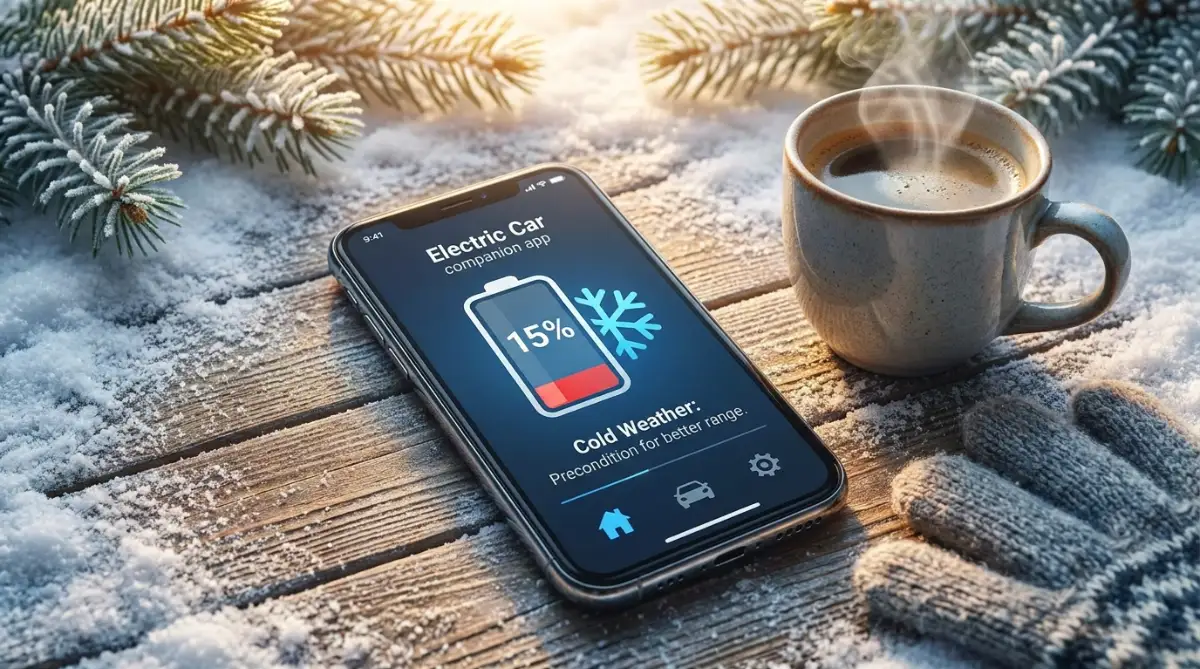
- Warm it up early: Always use your app to heat the car while it's still plugged in at home.
- Use the car's map: Telling your car's built-in GPS that you are going to a charger helps it warm up the battery on the way.
- Charge when hot: Hit the fast charger right after a long drive, not the next morning when the car is frozen solid.
- Never park on empty: Keep your battery above 20% on freezing nights so it has enough juice to protect itself from the cold.
The Cold Science: Why Winter Affects Your EV Battery
To understand how to fix this issue, we first need to look at how these batteries work. Electric cars use lithium-ion batteries, which rely on chemical reactions to store and release electrical energy.
Cold temperatures naturally slow down these chemical reactions. When the temperature drops near freezing, the liquid electrolyte inside the battery cells becomes thicker and more resistant.
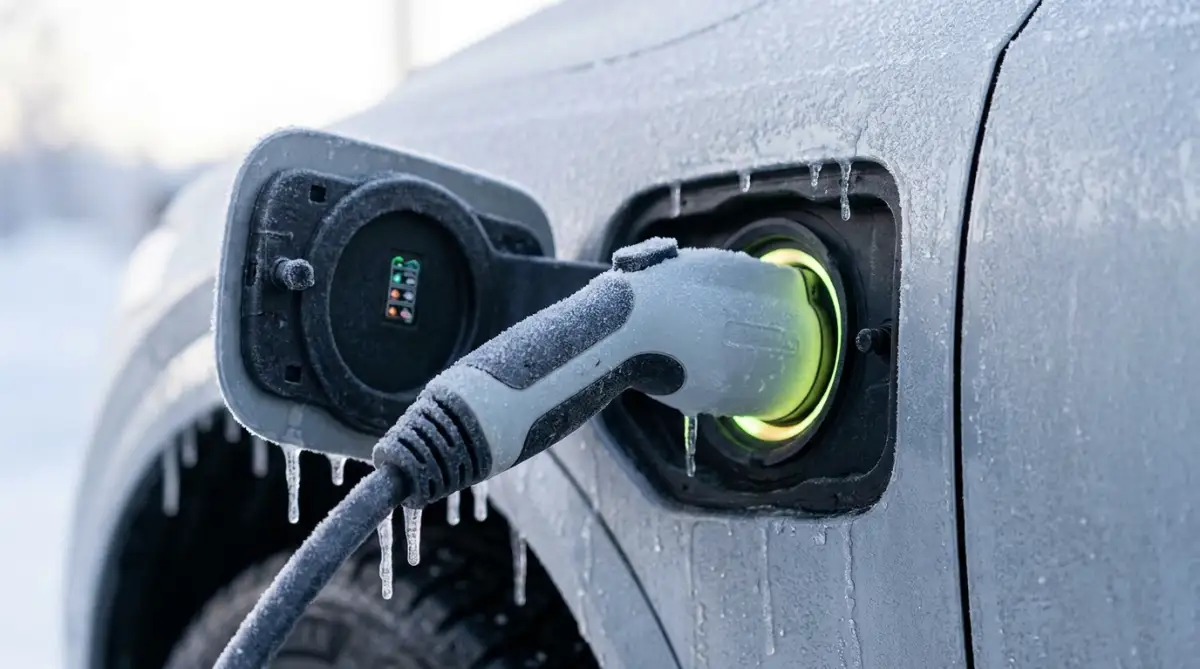
Think of it like trying to pour cold honey out of a jar. It moves slowly and takes a lot of effort.
Knowing this scientific fact helps us realize that slow charging is not a design flaw. It is actually a built-in safety feature designed to keep your vehicle running safely for many years.
Myth vs. Reality: Setting the Record Straight
There are many frightening stories online about electric cars in winter. Let us look at the facts and clear up the most common misunderstandings.
1: Extreme Cold Will Permanently Ruin Your Battery Life
Many people believe that driving in cold temperatures permanently degrades the battery pack. This is simply not true.
The drop in battery performance in winter is temporary. Once the spring weather arrives and temperatures rise, your battery will regain its normal range and charging speed. Winter weather does not cause permanent damage; it only reduces efficiency for a short time.
2: Electric Vehicles Do Not Charge at All in Sub-Zero Weather
You might have read horror stories about cars refusing to charge when it is snowing. While cold batteries charge much slower, they do not stop charging completely.
The car will still accept power, but it will use some of that initial energy to heat up the battery pack first. Once the battery reaches a safe operating temperature, the charging speed will increase.
3: Leaving Your Car Plugged In Overnight Wastes Electricity
Some owners worry that leaving their car plugged into a home outlet all night will waste power and damage the vehicle. Actually, the opposite is true.
When your vehicle is plugged in, it can use electricity from your house to keep the battery warm. This prevents the battery from freezing and ensures you have a warm cabin when you step inside.
Simple and Practical Steps to Speed Up Winter Charging
Now that we know the science, let us look at some practical habits you can start using today to get the best performance from your electric car in cold weather.
Feature / Scenario Normal Temperature (70°F / 21°C)Freezing Temperature (32°F / 0°C)Freezing Temp with Pre-Conditioning0-80% Charging Speed Fast (approx. 30 mins)Slow (approx. 60+ mins)Medium-Fast (approx. 35-40 mins)Regenerative Braking Full capacity Highly restricted or disabled Normal or near-normal Starting Range100% of estimated range70% to 80% of estimated range90% to 95% of estimated range
1. Use the Pre-Conditioning Feature Daily
Most modern electric cars have a built-in feature called pre-conditioning. This is a simple setting that allows you to warm up both the cabin and the battery pack before you drive.
- How to do it: Open your car's mobile app while you are eating breakfast. Set your departure time and turn on the climate control.
- Why it works: If your car is plugged into your home charger, it will use power from the grid to warm up the battery. This means your battery is already warm and ready to perform when you unplug and start driving.
2. Plug In Immediately After Driving
When you drive your car, the battery naturally warms up due to the flow of energy. If you need to use a public fast charger, try to do it right after you finish a drive, rather than waiting until the next morning.
Because the battery is already warm from your trip, it will accept electricity at a much faster rate. This simple change in your daily schedule can save you thirty minutes of waiting in the cold.
The "Cold Battery" Cheat Sheet
Here is a quick look at how I handle my battery depending on the temperature outside:
- Above 50°F (10°C): Just plug and play. Your battery is happy.
- 32°F to 50°F (0°C to 10°C): I precondition the car for about 10 minutes before I leave the house.
- Below Freezing (Under 32°F / 0°C): I always navigate to the charger using the car's built-in map so it warms the battery on the way, and I plug in immediately after driving while the battery is still hot.
3. Navigate Directly to the Charger
If your vehicle has an on-board navigation system, always use it to find your next charging station. Many electric cars will recognize that you are heading to a fast charger and will automatically start warming up the battery pack as you drive there.
This process is called active thermal preparation. By the time you arrive at the station, your battery will be at the perfect temperature to accept the maximum possible charging speed.
For months, I used my phone's mapping app instead of the car's built-in navigation because I just liked how it looked. I had no idea this simple mistake was stopping my car from warming up the battery before reaching the station! Once I switched back to the car's own map, my waiting times at public chargers practically got cut in half
4. Park Indoors Whenever You Can
If you have access to a garage, use it during the winter months. Even an unheated garage is usually several degrees warmer than the freezing wind outside.
By keeping your vehicle out of the direct cold wind, you help the battery retain its heat. This small step can prevent significant range loss overnight and make morning charging much faster.
Pro Tip: Warm the Cabin, Save the Range
Here is a simple trick that many experienced electric car drivers use to save battery power in the winter. Instead of blasting the main cabin heater, rely more on your heated seats and heated steering wheel.
The main cabin heater uses a large amount of electricity to warm up the air inside the car. Heated seats and steering wheels transfer heat directly to your body, which uses far less energy. By using this smart strategy, you can keep yourself warm while saving valuable miles of driving range.
Understanding the Limits of Public Fast Chargers in Winter
It is also important to remember that public charging stations can also suffer from cold weather. The cables on outdoor chargers can become stiff and difficult to bend in heavy snow.
Additionally, the charging station itself may experience reduced efficiency in extreme cold. If you notice a slow charge, the issue might be with the station rather than your car.
If a particular charger is giving you very low speeds, try moving to another stall at the same location. Sometimes, a different unit might perform better.
Final Thoughts on Stress-Free Winter Driving
Driving an electric vehicle in the winter does not have to be a stressful experience. Once you understand how the battery behaves in cold weather, you can make small adjustments to your daily routine.
By pre-conditioning your vehicle while it is plugged in at home, using your car's navigation to warm the battery on the way to chargers, and parking indoors when possible, you can easily overcome the challenges of freezing weather.
With these simple habits, you can keep your car running efficiently, save time at the charging station, and enjoy a warm, comfortable drive all winter long.
Advanced Winter Charging Strategies to Beat the Freeze
Now that we understand why the cold slows things down, we can focus on advanced ways to improve our daily charging routines. Managing an electric car during freezing months is all about being proactive and using your vehicle's smart settings correctly.
With a few expert adjustments, you can keep your battery healthy, save money on electricity, and cut down your waiting time at public stations.
Master Your Car's Cabin Temperature Settings
One of the easiest ways to protect your driving range is to adjust how you heat the interior of your car. The main cabin heater can pull a huge amount of energy from the battery pack very quickly.
To prevent this sudden drain, we can use a clever setting on our climate control menus. By tweaking these small settings in your car's climate menu, you can optimize the entire thermal system.
Instead of turning the general cabin heat up to maximum, turn it down a few degrees and turn on your heated seats and steering wheel. These direct contact heaters keep you warm using only a fraction of the power.
This simple adjustment keeps the rest of the battery energy free for driving, which means you will not have to stop and charge as often.
Create a Reliable Travel and Charging Schedule
Warming up your battery or managing your winter trip requires a clear, organized schedule. It is very much like building a structured study timetable to organize your time and lower daily anxiety.
If you plan your departure times in advance, you can program your car to finish its charging cycle right before you walk out the door.
This is a great secret because the actual act of charging generates internal heat inside the battery cells. By setting your vehicle to finish charging just as you are ready to leave, you ensure that you start your trip with a warm, highly efficient battery pack.
Know the Difference Between Level 2 and DC Fast Chargers in the Cold
If you want to see exactly how much temperature affects your charging speed, check out this awesome real-world test that shows a clever trick to manually warm up your battery before a fast charge. Watch the quick video below, and then keep reading to find out which common charging mistakes you should avoid this winter!
In the winter, not all charging stations behave the same way. When you plug into a Level 2 home charger, the electricity flows slowly, which allows the battery to warm up gradually without any stress.
However, when you plug into a DC fast charger, the sudden rush of high-voltage power can be too much for a frozen battery to handle safely. According to a real-world Idaho National Laboratory study, charging times can increase significantly when the weather drops near freezing because the onboard battery management systems actively limit the charging speed to protect the cell chemistry.
If you must use a DC fast charger during a cold trip, try to drive for at least thirty minutes beforehand. This active driving gives the battery pack enough time to warm up naturally, allowing it to accept the fast charge much more easily when you plug in.
Use Eco Driving Modes to Manage Your Energy
Most modern electric vehicles come with a dedicated winter or eco-driving mode. This setting gently limits the amount of power sent to the electric motors when you press the accelerator pedal.
It also increases the sensitivity of your traction control to keep you safe on icy roads. Using this mode helps prevent sudden surges of power, which can drain your battery quickly in freezing weather.
It is a quiet, stress-free way to make sure every single kilowatt-hour of energy in your battery is used as efficiently as possible.
Severe Pitfalls: The Mistakes That Drain Your Battery and Time
When the temperature drops, it is easy to make simple mistakes that can hurt your electric car's performance. Some of these errors can cause long-term issues for your battery health, while others will simply leave you waiting in the cold.
Let us look at the most common pitfalls so you can avoid them completely.
Letting Your Battery Sit at Zero Percent in the Deep Freeze
One of the worst things you can do to an electric car in the winter is to leave it parked with a nearly empty battery in freezing temperatures. When the battery charge drops extremely low, the internal chemical balance becomes highly vulnerable.
If the battery freezes completely when it is empty, the cells can suffer permanent physical damage. Always try to keep your state of charge above twenty percent during the coldest weeks of the year. This gives the car enough reserve energy to run its internal heater to protect the battery cells from freezing.
Forcing Ice-Cold Fast Charging Without Warning
Many drivers make the mistake of pulling up to a DC fast charger with a battery that has been sitting in the freezing cold all night. They plug in the cable and expect the car to charge at its maximum advertised speed.
When the charging speed is slow, they get frustrated and think the charger is broken.
In reality, forcing a high-voltage current into a frozen lithium-ion pack is highly inefficient and can cause lithium plating on the battery cells. To prevent this, always warm up the car by driving it or using the pre-conditioning app before you attempt to fast charge.
Ignoring Snow and Ice Accumulation on the Charging Port
It is easy to forget about the physical charging port on the side of your car. During a winter storm, wet snow can blow into the port and freeze around the electrical pins.
If you try to force the charging connector into an icy port, you can bend the delicate pins or break the plastic latching mechanism.
Always check the port before you plug in, and gently brush away any snow or ice. You can even purchase a cheap, waterproof cover for your charging port to keep it dry and clean during heavy snowfalls.
Keeping Your Cabin Temperature Set to Maximum
It is completely natural to want to stay warm, but leaving your heater set to its highest setting for your entire trip is a massive waste of energy. According to testing data from the U.S. Department of Energy, cold weather accessories and cabin heating can reduce an electric car's range by a notable margin on short winter trips.
Instead of keeping the heater on high, use the heater to bring the cabin to a comfortable temperature, and then lower it.
Relying on your seat heaters is much more efficient and will prevent your range from dropping rapidly.
Real Owner Q&A: The Heater Problem
Question: "But won't I freeze if I turn the cabin heater down?"
My Answer: Not at all! The trick is to heat the cabin while the car is still plugged in at your house. Once you are driving, rely on the heated seats and steering wheel. They use barely any battery compared to the air vents, keeping you warm without eating up your driving range.
Your Plan for Winter EV Success
Driving an electric vehicle in the snow does not have to be a daily struggle. By changing a few simple habits, you can take complete control of your winter driving experience.
Let us look at a simple daily checklist that you can start using tomorrow morning to ensure a warm cabin and a fast charge.
+--------------------------------------------------------------+
|                     DAILY WINTER CHECKLIST                   |
|                                                              |
|   [ ] Pre-condition the cabin 15 minutes before leaving      |
|   [ ] Keep the battery charged above 20% overnight           |
|   [ ] Park inside a garage whenever possible                 |
|   [ ] Use heated seats instead of blasting the cabin heater  |
|   [ ] Brush snow and ice away from the charging port area    |
+--------------------------------------------------------------+
Remember, every type of vehicle experiences a drop in efficiency when the weather turns freezing. Gasoline cars lose fuel economy, and electric cars lose range. It is simply a temporary law of nature, not a permanent problem with your car.
Once you start using these smart pre-conditioning habits and advanced scheduling strategies, the cold weather will no longer feel like a major obstacle. You can step into your warm car every single morning, enjoy your drive, and charge your vehicle with complete confidence.
Honestly, once I got the hang of these easy winter habits, my daily drives became just as smooth as they were in the summer. Give that pre-conditioning setting a try tomorrow morning before you leave the house. I promise you will love stepping into a warm car that is completely ready for the icy roads ahead!