Why Scrolling Through Screens Left My Mind Completely Blank
You just dropped a ton of cash on a gorgeous new tablet, hoping to crush your reading list and get smarter. But after swiping through three long articles, a friend asks you what you learned, and your mind goes completely blank. Sound familiar? I used to feel super embarrassed about forgetting everything I read online. Let me show you exactly why scrolling too fast tricks your brain, and how you can fix it right now without giving up your favorite gadgets..
I bought this beautiful, premium device specifically to consume information faster. But when a friend called and asked what I was reading about, my mind went totally blank.
I could not recall a single meaningful detail. I felt like I was slowly losing my mental edge, despite owning the best technology available.
It was an embarrassing realization that forced me to question my entire digital reading habit. I realized that my obsession with reading faster was actively destroying my ability to remember anything.
Are you constantly skimming through articles, hoping to absorb knowledge at lightning speed? You are definitely not alone in this daily struggle.
But this false belief destroys our mental peace and leaves us feeling exhausted. You end up spending hours looking at words, only to walk away with zero actual knowledge.
The constant skimming creates a severe lack of focus in our everyday lives. People feel anxious because they can never seem to remember the important details for work or studies.
We end up buying more high-end gadgets, thinking better screens will solve our focus problems. Yet, the real issue is not the technology, but how our brains actually process human language.
Quick Fixes to Remember What You Read
- Stop the Skim: Your eyes physically cannot read whole paragraphs at once. Slow down to actually understand the words.
- Keep Your Inner Voice: Do not try to silence that reading voice in your head. It is the main bridge to your long-term memory.
- Ditch the Highlights: Stop painting your screen yellow. Type short, active notes in the margins instead.
- One Tab Only: Close everything else. Multitasking while reading destroys your focus and causes instant mental fatigue.
The Hard Truth About How Our Brains Process Words
Let us break down exactly what happens when you try to force your brain to read too quickly. It turns out that your eyes and your memory operate on completely different timelines.

The Eye Movement Fallacy
Many popular courses claim you can train your eyes to take in whole paragraphs at a single glance. They tell you to use apps on your smartphone that flash words rapidly on the screen.
The physical reality is that the human eye has a very narrow field of sharp vision. This tiny area is called the fovea, and it can only focus on a few words clearly at a time.
When you force your eyes to dart across your tablet screen, you are essentially creating a blur of information. Your eyes might see the shapes of the words, but your brain does not have the time to decode their meaning.
The Real Cost of Speed Reading
Here is what actually happens to your brain when you push your reading speed past its natural limit:
| Reading Speed | What You Actually See | What You Remember |
| :--- | :--- | :--- |
| 250 Words per minute | Clear words, inner voice active | High detail, concepts stick |
| 500 Words per minute | Blurry blocks of text | Only bold words and titles |
| 750+ Words per minute | Total screen blur | Absolutely nothing |
It is exactly like driving past a billboard at a hundred miles per hour. You might catch the colors, but you will never remember the phone number written on it.
The Myth of Eliminating the Inner Voice
One of the biggest lies in the rapid reading community is that you must stop pronouncing words in your head. This internal voice is known scientifically as sub vocalization.
Gurus will tell you that sub vocalization is a bad habit holding you back from reading a whole book in an hour. But science tells us a completely different story about how comprehension works.
That little voice inside your head is actually the main bridge between seeing a word and storing it in your memory. When you silence that voice, you strip the text of its context and emotion.
Pro Tip from My Own Experience: I spent weeks forcing myself not to "hear" the words in my head while reading on my e-reader, and my comprehension dropped to zero. I finally realized that my inner reading voice is my brain’s way of deeply digesting the information, not a bad habit to be broken.
When you allow yourself to hear the words naturally, your brain builds stronger neural pathways. This makes it much easier to recall the details weeks or even months later.
Understanding Digital Screen Fatigue
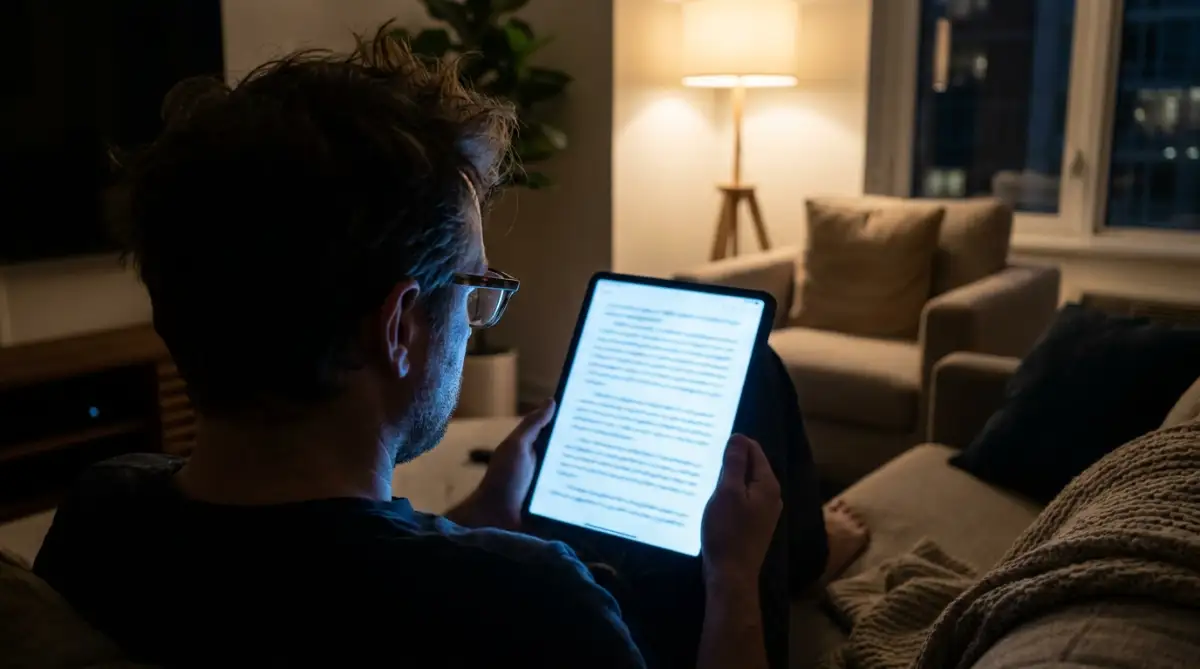
We cannot ignore the role our favorite tech gadgets play in this memory retention problem. Reading on a glowing digital display requires more mental energy than reading a physical paper page.
The blue light, the endless scrolling, and the hidden notifications constantly fight for your attention. Your brain is already working overtime just to filter out all these digital distractions.
When you add the pressure of speed reading on top of this, your working memory simply crashes. It is like opening fifty different tabs on your internet browser and wondering why your computer froze.
Watch This Quick Explanation on Brain Processing:
If you want to understand exactly why your brain deletes information when you read too fast, check out this brilliant visual breakdown below. It perfectly explains the science of visual processing in a way that just makes sense.
Actionable Strategies for Deep Digital Comprehension
Now that we know the physical limits of our eyes and brains, we need a better approach. You do not have to throw away your premium tablets or stop reading online.
Instead, you need to change the way you interact with digital text. Let us look at a few highly practical ways to improve your long-term memory right now.
The Power of Intentional Pacing
The very first thing you need to do is give yourself permission to slow down. Reading is not a race, and there is no prize for finishing an article the fastest.
Before you start reading anything important, clearly define your purpose. Ask yourself, "Am I reading this just to find a specific fact, or do I need to understand the whole concept?"
If you only need a fact, skimming is perfectly fine. But if you want to learn something new, you must match your reading speed to the complexity of the material.
The Stop-and-Reflect Technique
Your short-term memory is incredibly small and gets filled up very quickly. If you keep pouring water into a full glass, it just spills over the sides.
The same thing happens to your brain when you read page after page without pausing. You must build intentional breaks into your digital reading sessions.
After you finish a heavy section on your screen, simply look away for twenty seconds. Try to summarize what you just read in one simple sentence inside your head.
This tiny pause signals your brain that the information is important enough to move into long-term storage. It turns passive screen scrolling into active, engaged learning.
Comparing How We Read vs How We Retain
To make this even clearer, let us look at how different reading habits affect your brain. The way you approach a text completely changes what you walk away with.
As you can see from the table above, deep reading always wins when it comes to memory. Quality of attention will always beat the speed of your eyes.
Creating a Distraction-Free Digital Environment
Your premium gadgets are amazing tools, but they are also designed to steal your focus. You cannot absorb complex information if your tablet keeps buzzing with social media alerts.
Take control of your device before you sit down to read something important. Use the "Do Not Disturb" mode to block all incoming notifications temporarily.
If your reading app has a clean or focused reading mode, turn it on immediately. This removes the sidebars, the extra links, and the flashy advertisements from your view.
By cleaning up your digital environment, you free up massive amounts of brain power. Your mind no longer has to actively ignore distractions, so it can focus entirely on remembering the text.
The Role of Active Note-Taking on Devices
One of the best features of modern e-readers and tablets is the ability to highlight and write notes. However, simply dragging your finger across a screen to highlight a sentence is not enough.
Mindless highlighting actually gives you a false sense of security. Your brain thinks, "Oh, the tablet saved this, so I do not need to remember it myself."
To truly lock information into your long-term memory, you must take active notes. Use a digital pen or your keyboard to write your own thoughts in the margins.
Translate the author's words into your own personal language. When you force your brain to rephrase a concept, you create a very strong memory hook that lasts for years.
Myth vs. Reality: The Digital Highlight Trap
- The Myth: If I highlight a sentence in bright yellow, my brain will automatically save it for later.
- The Reality: Highlighting is lazy. It tricks you into feeling productive without actually learning a single thing.
- The Fix: Use the digital sticky note feature instead. Type out exactly why that sentence matters to you. If you cannot explain it in your own words, you did not really understand it.
Overcoming the Anxiety of Missing Out
Many people push themselves to speed read because they suffer from intense information anxiety. We feel like we are falling behind if we do not consume every single piece of content on our feeds.
You have to accept the reality that you will never be able to read everything. The internet creates more content in one day than you could read in a thousand lifetimes.
Once you let go of that impossible goal, a huge weight lifts off your shoulders. You can finally start focusing on the quality of your reading instead of the quantity.
Choosing to read one excellent article deeply is much better than skimming twenty mediocre ones. Your knowledge base grows stronger when you actually take the time to digest the material.
Building Better Analogies for Your Mind
Think about your memory like a physical muscle in your body. You cannot build a strong muscle by lifting a heavy weight once as fast as you can.
You build muscle through steady, deliberate, and controlled movements over time. Reading works exactly the same way for your brain's neural networks.
When you take your time, you allow the concepts to connect with things you already know. These mental connections are what make it possible to recall facts during a conversation or a presentation.
By applying these thoughtful strategies, you can transform your premium gadgets from simple distraction machines into powerful learning tools. It takes a little practice to break the fast-reading habit, but the mental clarity you gain is absolutely worth the effort.
Taking Full Control of Your Screen Time and Brain Power
We already know that treating our minds like a high-speed scanner simply does not work. Now, we need to focus on exactly how you can use your expensive tech gadgets to actually build lasting intelligence.
It is time to completely change your relationship with digital text. Let us look at some expert-level habits that will help you absorb and remember everything you read on a screen.
The Magic of Digital Mental Anchoring
When you read a physical paperback, your brain naturally creates a mental map of the pages. You remember that a specific quote was on the top right corner, about halfway through the book.
Digital screens destroy this natural physical mapping because the pages are just endless streams of scrolling text. This is a massive reason why we struggle to remember digital articles.
To fix this, you have to create your own intentional anchors while using your tablet. Whenever you find a highly valuable concept, stop scrolling and say it out loud in your own words.
This simple vocalization creates a strong audio anchor in your mind. According to deep research on cognitive load in digital environments from Harvard Graduate School of Education, actively breaking your visual focus helps transfer information from short-term to long-term storage.
Treat Your Mental Energy Like a Device Battery
We are usually very careful about keeping our electronic devices fully charged and optimized. Yet, we rarely show the same level of care and respect to our own mental energy.
When you spend three hours speed-reading through random blogs, you are heavily draining your brain's processing power. It is incredibly similar to why your phone battery dies so fast when you have too many background apps running at once.
You need to start reading in short, focused bursts of energy. Give your brain twenty minutes of pure, uninterrupted reading time, and then put the tablet face down.
During this break, let your mind wander and naturally process what you just consumed. This completely prevents the dreaded "screen fatigue" that makes you forget everything by the end of the day.
Transforming Passive Highlights into Active Knowledge
Most premium reading apps and e-readers come with beautiful highlighting tools. But dragging your finger to highlight a sentence in bright yellow is a very passive activity.
Your brain basically tricks you into thinking, "The tablet has saved this for me, so I do not need to memorize it." This is a massive trap that ruins long-term retention.
Instead of just highlighting, you need to start using the digital notepad feature. Take a moment to write down exactly why that sentence matters to your specific life or work.
If you are trying to learn a new skill, like starting a freelance writing journey, summarizing complex ideas into your own words is highly effective. You stop being a passive consumer and instantly become an active creator of knowledge.
The Golden Rule of "Read and Teach"
One of the most powerful secrets to remembering anything is pretending you have to teach it to someone else. When you approach an article with the mindset of a teacher, your focus naturally sharpens.
While holding your device, ask yourself, "How would I explain this concept to my best friend over a cup of coffee?" This forces you to strip away the complicated jargon and find the actual core message.
If you cannot summarize the page you just read in simple, conversational English, you read it too fast. Go back, slow down your eye movement, and try again until the concept is perfectly clear in your mind.
Customizing Your Digital Environment for Success
Your premium device is completely customizable, so you should make it work in your favor. Never read dense, educational material on the exact same screen settings you use to watch movies.
Turn the brightness down to a comfortable level and always activate the warm light filter if your device has one. Scientific studies from the National Institutes of Health on screen light and memory show that harsh blue light actively disrupts the deep sleep cycles required for memory consolidation.
Increase the font size a little bit more than you think you need. A larger font forces your eyes to slow down naturally, which gives your brain the exact amount of time it needs to comprehend the words.

The Most Dangerous Traps of Digital Skimming
Understanding the right way to read is only half the battle. We also need to look deeply at the common mistakes that completely destroy our ability to retain information.
Many smart, capable people fall into these daily traps without even realizing it. Let us break down the exact behaviors you need to avoid to protect your mental peace.
The Illusion of Instant Competence
The biggest danger of speed reading on premium tablets is a psychological trick called the illusion of competence. Because the words flow by so smoothly on a high-refresh-rate screen, you feel incredibly smart in the moment.
You finish a huge article in three minutes and feel a massive rush of dopamine. You genuinely believe you have just mastered the topic.
But this feeling is completely fake, and it often leads to highly embarrassing situations in real life. Imagine sitting in a business meeting, confidently bringing up an article you skimmed, only to realize you cannot answer a single follow-up question.
It is a terrible, sinking feeling when your mind just goes blank in front of your peers. True knowledge requires friction and time, not just smooth scrolling.
The Endless "Read-It-Later" Hoarding Habit
Another massive mistake is hoarding hundreds of articles in your digital bookmarks. We see an interesting headline, immediately save it to a reading app, and tell ourselves we will speed-read it on the weekend.
This creates a massive pile of unread information that just sits there, causing hidden anxiety. It feels just like holding onto widespread lithium-ion battery charging myths—you are carrying around useless habits that only drag your energy down.
You end up feeling guilty for not reading all those saved links. When you finally do try to read them, you rush through the text just to clear the notification badge.
Pro Tip from My Own Experience: I used to have over three hundred unread articles saved on my expensive tablet, and looking at that number gave me literal chest pain. I simply deleted the entire list and promised myself I would only read what actually matters to me in the present moment.
Stop hoarding content like a digital squirrel preparing for winter. If an article is truly important to your personal growth, make the time to read it properly right now.
Expecting Technology to Fix a Biological Limit
Many tech lovers fall into the trap of throwing money at their reading problems. If they cannot remember what they read on an entry-level tablet, they assume buying a thousand-dollar premium model will fix it.
They download expensive speed-reading apps, hoping a new software algorithm will hack their brain. This is exactly like thinking that understanding the truth about home solar power is just about buying the most expensive panels, rather than understanding how energy actually works.
Technology can beautifully display the words, but it absolutely cannot do the biological work of learning for you. Your brain requires effort, repetition, and quiet reflection to build new neural pathways.
When you rely entirely on an app to push words into your eyes faster, you completely bypass the learning center of your brain. Save your money, and simply invest more patience into your daily reading habits.
The Danger of Multi-Tab Learning
Reading multiple things at the exact same time is a guaranteed way to remember absolutely nothing. When you have five different articles open in your browser, your brain enters a state of continuous partial attention.
You read two paragraphs about history, switch to an article about creating passive income with digital products, and then check a social media post. Your focus becomes heavily fractured and broken.
According to extensive UX research on screen reading behaviors by the Nielsen Norman Group, multitasking while reading completely destroys your working memory capacity. You are forcing your brain to constantly reset its context, which is incredibly exhausting.
By the end of the hour, you will feel tired, stressed, and completely empty-headed. Make it a strict personal rule to only have one piece of content open on your screen at a time.
Stepping Into a Smarter Digital Life
You now have a deep understanding of why speed reading on digital devices is mostly a beautiful illusion. You know exactly why your mind goes blank and, more importantly, how to permanently fix the issue.
It is incredibly freeing to finally let go of the pressure to read at lightning speed. You can finally stop racing against the clock and start enjoying the actual process of learning again.
When you choose to slow down, pace yourself, and engage deeply with the text, your premium gadgets truly become superpowers. They stop being sources of stress and transform into massive libraries of retainable knowledge.
You will start noticing the benefits in your daily conversations almost immediately. You will be the person in the room who actually remembers the specific details, simply because you took the time to read them properly.
I finally stopped treating my brain like a computer hard drive, and my ability to recall complex ideas naturally skyrocketed. My advice to you is to take a deep breath, slow down your scrolling thumb, and let the words actually sink into your mind.
Everyday Questions About Digital Reading and Memory
Does listening to audiobooks give the same memory retention as reading?
Yes, audiobooks can provide excellent memory retention if you are paying close attention to the story. However, if you are doing heavy chores while listening, your brain might miss the complex details.
Should I completely stop using my tablet for reading?
You absolutely do not need to throw away your premium tablet or e-reader. You just need to turn off your digital notifications and use intentional reading strategies to help your brain focus.
Why do I instantly fall asleep when I try to read on a screen?
Screen fatigue heavily drains your eye muscles and your mental energy all at once. If you are reading right before bed, the glowing light combined with an exhausted brain naturally triggers sleepiness.
Can speed reading apps actually damage my comprehension?
Yes, apps that flash words at high speeds completely bypass your brain's natural processing time. They give you the visual shape of the words, but they strip away the deep context you need for true learning.
How long should a healthy digital reading session last?
A highly focused reading session should last around twenty to thirty minutes before you take a break. Looking away from the screen gives your working memory the exact time it needs to store the fresh information.
Disclaimer: The information provided in this blog post is for educational and informational purposes only and does not constitute professional medical, psychological, or cognitive advice. While we strive to provide highly accurate and helpful strategies, individual memory retention and learning capabilities can vary greatly. Always consult with a qualified professional regarding any specific cognitive or learning concerns you may have.