The Hidden Anxiety of Bringing a Shelter Dog Home
Let's be honest—bringing a rescue dog home is an emotional rollercoaster. You fall completely in love with their goofy smile, but then the late-night panic sets in: What if they get sick and I simply cannot afford the vet bill? I know that feeling all too well. I spent weeks stressing over whether pet insurance would even cover a dog with a mystery past, but it turns out, we have been fed a lot of myths about how this actually works.
I felt this heavy weight on my chest, thinking I made a huge financial mistake that could ruin my savings. I spent nights scrolling through forums, feeling completely defeated by the confusing insurance jargon. But I refused to give up on my new best friend, so I started digging deep into the real rules of animal health policies.
What I discovered completely changed my perspective and saved me thousands of dollars. The truth is, most of what we hear about shelter animals and health coverage is based on outdated rumors. Daily life for a new pet owner is already stressful enough without the constant fear of a massive, unexpected medical emergency.
People who adopt animals want to provide the best care possible, but the fear of a denied claim paralyzes them. You might be holding back from taking your pet to the clinic for a minor issue just because you are scared of paying out of pocket. This constant worry ruins the peace of mind and pure joy that should come with saving an animal's life.
By understanding how the medical history process really works, you can protect your wallet and your furry friend. Let us break down exactly how you can navigate this situation and secure the safety net your pet deserves.

Quick Takeaways: Insuring Your Rescue Pet
- The Clock Resets: Your dog's medical history essentially starts over the day you adopt them.
- Act Fast: Getting a full vet checkup within the first 48 hours is your best defense against denied claims.
- Cure Periods: Minor shelter illnesses (like ear infections) can be fully covered again after a symptom-free waiting period.
- Stay Put: Never switch your insurance provider if your dog develops a chronic health issue.
Shattering the "Unknown History" Illusion
One of the biggest roadblocks stopping people from insuring their newly adopted pets is the mystery of their past. You might think that because you have no idea what happened to your dog before they met you, insurance companies will just assume the worst.
This is a massive misconception that keeps millions of adopted animals uninsured. Pet health companies actually do not penalize you for the blank pages in your dog's history book. Instead, they look at the current state of your animal from the moment you take ownership.
Think of it like buying a used car with no maintenance records. The insurance provider does not care if the previous owner changed the oil five years ago. They only care about the inspection you get on the day you buy the car.
The blank slate is actually your biggest advantage. When you adopt from a shelter, the pet's medical record essentially starts over with you. Unless the shelter documentation explicitly lists an ongoing chronic illness, your pet is considered a clean slate.
Myth vs. Fact: The Shelter Medical Record
Myth: Shelters quietly hide major illnesses just to get dogs adopted faster.
Fact: Non-profit animal rescues are legally required to disclose known health issues. If they hand you a clean bill of health on adoption day, insurance providers almost always accept that document at face value.
If your dog comes home and seems perfectly healthy, the insurance company assumes they are perfectly healthy. You just need to follow a few specific steps to lock in that status legally and officially.
The Power of the First Vet Visit
The most important action you will ever take for your shelter pet happens within the first few days of bringing them home. You must schedule a comprehensive nose-to-tail examination with a licensed veterinarian immediately.
This visit is the foundation of your entire insurance relationship. The detailed notes your vet writes down during this first appointment become your dog's new official medical baseline.
If the vet checks your dog's heart, eyes, joints, and ears and writes "healthy and normal," you now have documented proof. When you submit this fresh medical record to the insurance company, it officially establishes that there are no pre-existing issues at the start of your policy.
Even if an issue pops up three months later, the company cannot claim it was pre-existing because you have that initial clean bill of health. I highly recommend asking your vet to be as detailed as possible in their written notes.
A simple "dog looks good" is not enough. You want them to specifically document that the knees are stable, the skin is clear, and the teeth are in good shape. This detailed documentation is your absolute best defense against a denied claim.
Pro Tip for Your First Clinic Visit
I once made the mistake of waiting three weeks to get my newly adopted dog examined by my local vet. During that waiting period, she developed a slight limp, which was then permanently marked as a pre-existing joint issue on her new policy. My biggest advice to you is to schedule that first vet checkup on the exact same day you pick up your pet, or at least within 48 hours. This completely eliminates the risk of a new symptom being labeled as a prior condition.
Decoding Curable vs. Incurable Conditions
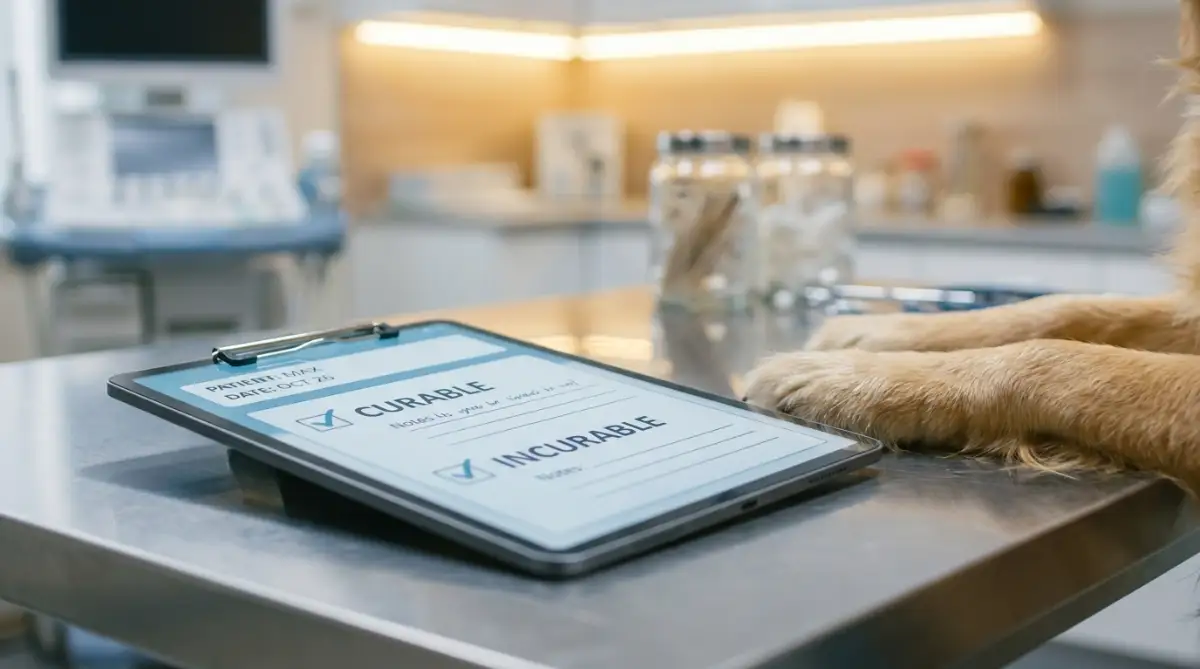
Another massive myth is the idea that once a pet has a medical issue, it can never be covered again. This simply is not true, because insurance providers separate illnesses into two very different categories.
You need to understand the distinct difference between curable and incurable conditions. Incurable conditions are lifelong diseases like diabetes, hip dysplasia, or chronic allergies. If your dog is diagnosed with one of these before your policy starts, it will never be covered.
However, curable conditions are temporary problems that can be completely resolved with treatment. Examples include ear infections, broken bones, vomiting, or a simple urinary tract infection.
Most modern health policies have a "cure period" rule, which usually lasts between 180 to 365 days. If your dog had an ear infection at the shelter, but goes completely symptom-free and treatment-free for that cure period, the condition resets.
After the reset period, if the ear infection comes back, the insurance company will cover it as a brand new illness. This is incredible news for adopted pets who often come out of the shelter with minor, easily treatable infections like kennel cough or skin parasites.
Here is a quick breakdown to help you understand how companies view different health problems:
Navigating the Tricky Waiting Period
Every single pet health policy comes with a mandatory waiting period before the coverage actually kicks in. This is designed to stop people from buying a policy on the way to the emergency room.
Waiting periods usually range from 14 to 30 days for illnesses, and 2 to 5 days for accidents. This is the most dangerous window of time for a new pet owner. If your adopted dog shows any symptoms of illness during these first few weeks, the company will label it as a pre-existing condition.
This means that specific illness will be excluded from your coverage for the rest of the dog's life. This is why it is so important to keep a very close eye on your new pet and keep their environment as stress-free as possible.
Do not take them to dog parks, crowded public spaces, or boarding facilities during this waiting window. You want to minimize their exposure to any contagious diseases or potential accidents until your policy is fully active.
Some companies even have extended waiting periods for specific breed-related issues, like cruciate ligament tears (ACL injuries) in the knees. Always ask the provider exactly how long the waiting period is for both accidents and illnesses before you hand over your credit card.
Here is a quick cheat sheet I made showing the common waiting periods you can expect from most major providers:
| Type of Care | Typical Waiting Period | Why They Do It |
| :--- | :--- | :--- |
| Accidental Injury | 2 to 5 days | To stop owners from filing claims on the way to the emergency room. |
| General Illness | 14 to 30 days | To make sure the dog was not adopted while already visibly sick. |
| Orthopedic (like ACL) | 6 to 12 months | High-cost knee surgeries require a long-term commitment from the owner. |
Watch This Expert Explanation on Policy Terms
Understanding the fine print of your policy can be incredibly overwhelming, but taking just a few minutes to learn the terminology can save you from a rejected claim. The video below breaks down exactly how insurance providers review a shelter pet's medical file, so be sure to watch it before signing any paperwork.
How to Handle Existing Shelter Paperwork
Sometimes, the animal shelter will hand you a stack of medical records when you finalize the adoption. Many people panic when they see notes about diarrhea, eye drops, or mild limping in the shelter's paperwork.
Do not throw these papers away, but do not let them scare you either. Honesty is always the best policy when setting up your coverage.
You must submit these shelter records to your new provider when you apply. If you try to hide them and the company finds out later during a major claim review, they can cancel your entire policy for fraud.
Instead, review the papers carefully with your own veterinarian. Ask your vet to officially note that those specific shelter issues have fully resolved.
If the shelter gave your dog medication for a minor stomach bug and the dog is now fine, your vet's clean bill of health overrides the old problem. The insurance company will note the past issue, apply the "curable condition" waiting period, and you will be good to go for the future.
Appealing a Frustrating Claim Denial
Even if you do everything perfectly, you might still face a situation where an insurance adjuster denies a legitimate claim. They might look at a new illness and incorrectly link it to a completely unrelated note from the shelter days.
This happens more often than it should, but you do not have to accept their first answer. You always have the absolute right to appeal a denied claim.
The secret weapon in an appeal is your own veterinarian. Insurance adjusters are looking at words on a screen, but your vet actually examined the animal in person.
If your claim is denied, call your vet immediately and ask them to write a formal letter of medical necessity. This letter should clearly explain why the current illness has absolutely no connection to any prior shelter history.
When an insurance provider receives a formal, logically explained letter from a licensed medical professional, they frequently overturn their original denial. Do not be afraid to advocate loudly for your pet.
The system can be confusing, but armed with the right knowledge, you can absolutely secure top-tier medical protection for your rescue dog. Your new family member deserves the best care possible, and now you know exactly how to make that happen without breaking the bank.
Expert Strategies for Long-Term Pet Health Protection
Getting that initial policy approved is just the first step in your journey as a responsible pet parent. You also need a solid, long-term strategy to ensure your coverage actually works when an emergency strikes. Many people think they can just set up their monthly payments and forget about the policy completely.
This passive approach is exactly how well-meaning owners end up facing completely unexpected claim denials. I want to share a few pro-level secrets that completely changed how I manage my own dog's medical file.
One of the smartest moves you can make is asking your provider for a formal Medical History Review right after your waiting period ends. Most companies will not tell you this is an option, but you have the legal right to request one.
During this review, an underwriter looks at your dog's shelter papers and your vet's initial examination notes. They will then send you a written document stating exactly what they consider a pre-existing condition for your specific animal.
Having this document in your hands eliminates all the guesswork from your life. You will know exactly what is covered and what is excluded before you ever face a stressful midnight trip to the animal hospital. If you find yourself confused by the dense legal language in your policy, you are not alone.
Many owners lose money simply because they do not understand the fine print of their specific contract. I highly recommend learning about the hidden veterinary coverage terms costing pet owners thousands to protect your wallet.
Another incredibly powerful strategy is to request a pre-approval for any major, non-emergency surgery. Let us say your adopted dog needs a costly dental extraction or a knee repair in the future.
Instead of paying upfront and hoping for a reimbursement, you can have your vet submit a pre-approval request to the insurance company. The provider will review the upcoming procedure and guarantee your reimbursement amount in writing before the surgery even happens.
This single trick removes a massive amount of anxiety from the entire surgical process. You can focus entirely on helping your dog heal instead of sweating over credit card bills.
Organizing Your Dog’s Health Arsenal
You must treat your rescue dog's medical records like highly sensitive financial documents. Every single time you visit the clinic, ask the front desk to email you a digital copy of the doctor's visit notes.
Do not rely on the physical paper receipts, because those get lost easily in the chaos of daily life. Create a dedicated folder on your computer or cloud drive specifically for your pet's health history.
Whenever you submit a claim, having these organized digital files ready to upload will speed up your reimbursement by weeks. If you are worried about keeping these digital files safe from data loss, you should definitely learn the best way to keep your information secure every single day so you never lose your proof of coverage.
For routine checkups and minor worries, consider using a veterinary telehealth service. Many modern insurance policies now include free 24/7 digital access to a licensed vet through an app.
You can show the online vet your dog's mild rash or strange behavior through a video call before rushing to an expensive emergency room. This is especially helpful if you live far away from an animal hospital.
If you frequently experience connection issues during these digital vet appointments, you might need to fix unstable internet while working remotely in rural areas to ensure smooth communication with the medical team. Relying on trusted resources, like the American Animal Hospital Association (AAHA) guidelines on preventive care, can also help you understand exactly what to discuss during these video calls.
Staying proactive and organized is the ultimate secret to maximizing the value of your monthly premiums.
The Heartbreaking Pitfalls of Insuring a Shelter Dog
Navigating the medical world with a newly adopted animal feels like walking through a maze blindfolded. Even the most caring and dedicated owners can easily fall into hidden traps that completely ruin their financial safety net.
I have seen countless people make innocent mistakes that ended up costing them thousands of dollars in rejected claims. One of the most devastating traps you can fall into is the "Provider Hopping" mistake.
Imagine you have been paying for a policy for three years, and your dog develops a mild but chronic skin allergy during that time. You see an advertisement for a different company offering slightly cheaper monthly premiums, so you decide to switch.
This is an absolute disaster waiting to happen. The moment you cancel your original policy and start a new one, that skin allergy instantly becomes a pre-existing condition under the new company.
You will completely lose coverage for an illness you were already successfully managing. Think of it like changing lifeboats in the middle of a massive thunderstorm.
Unless you have a perfectly healthy, young animal, you should almost never switch providers once a chronic issue has been diagnosed on your current plan.
The Dangers of the Missing Annual Exam
Another incredibly common mistake is ignoring the mandatory annual checkup clause hidden in almost every policy. Most health providers legally require you to take your pet to a licensed veterinarian at least once every twelve months.
They use this annual physical to track the ongoing health of the animal and catch small problems before they become massive emergencies. If you skip this yearly checkup just to save a little bit of time, you are actively voiding your own insurance contract.
I have heard nightmare stories of owners submitting a massive claim for a sudden illness, only to be completely denied because they missed their routine exam by just two months. The insurance adjuster will argue that a regular checkup could have prevented the sudden emergency.
Always set a recurring alarm on your phone to schedule this mandatory visit. Consistent, documented preventive care is highly recommended by experts, including the researchers studying animal health at Cornell University College of Veterinary Medicine.
Assuming Older Rescues Are Uninsurable
Many kind-hearted people specifically choose to adopt older, senior dogs from the shelter to give them a peaceful retirement. However, a massive mistake these owners make is assuming no company will insure an older animal.
They resign themselves to paying massive out-of-pocket bills for arthritis treatments and bloodwork. While it is certainly more expensive to start a policy for an older animal, it is absolutely still possible and highly recommended.
Older dogs are naturally more prone to sudden illnesses, making a safety net even more necessary. If you just brought home an older companion, you really need to discover the truth about pet insurance for senior dogs and how to save money on their specialized care.
The Panic of the Emergency Room
When an actual emergency happens, panic completely takes over our logical thinking. You might rush your dog to the nearest 24-hour clinic without realizing you forgot your insurance documentation at home.
This panic often leads to poorly documented medical notes from the emergency vet, which later causes huge headaches with the claims department. You have to train yourself to act methodically during a crisis.
Just like you would read up on what to do if you dropped your phone in water do this immediately to save it, you need an immediate action plan for pet emergencies. Keep a printed copy of your policy number and provider contact info right inside your glovebox.
Finally, do not forget that the vast majority of these plans work on a reimbursement model. You will still need to pay the emergency vet clinic upfront before the insurance company pays you back.
Failing to keep an emergency credit card or a small savings fund ready for these upfront deposits is a massive oversight. Managing this cash flow correctly is just like finding a smart strategy to plug financial leaks in enterprise saas; it requires planning ahead to protect your overall household budget.
Always read your consumer rights regarding financial contracts, a topic thoroughly covered by the Consumer Financial Protection Bureau (CFPB), to ensure you understand your reimbursement timeline.
Your Roadmap to Financial Peace and Happy Paws
We have covered a massive amount of ground today, and I know this process can feel incredibly overwhelming at first glance. But you are now armed with the exact knowledge needed to outsmart the confusing health coverage system.
Instead of letting fear hold you back, you can confidently adopt that sweet shelter dog knowing you have a bulletproof plan. Let us look at a quick, dynamic action plan you can start using tomorrow morning.
Your Immediate Action Checklist:
- Day 1: Secure a full, detailed copy of all shelter medical records upon adoption.
- Day 2: Schedule an incredibly thorough nose-to-tail examination with your local vet.
- Day 3: Enroll in a high-quality policy and immediately submit the fresh vet records to establish your dog's clean baseline.
- Day 45: After the waiting periods end, formally request a medical history review from your provider to lock in your peace of mind.
Adopting a rescue animal is one of the most beautiful and rewarding experiences a human being can have. These animals offer us unconditional love, and in return, we owe them the absolute best medical protection available.
By understanding curable conditions, keeping meticulous records, and communicating clearly with your vet, you completely remove the financial fear of pet ownership.
I remember staring at my own rescue dog on our first night together, terrified of failing her if she ever got sick. Today, I sleep incredibly well knowing my customized policy has her fully protected, and I want you to experience that exact same relief. You have the power to change an animal's life without destroying your savings, so take a deep breath and go enjoy your new best friend.
Most Frequently Asked Questions About Rescue Dog Coverage
Will a mixed-breed shelter dog cost more to insure than a purebred?
Actually, the exact opposite is usually true for health coverage premiums. Mixed-breed dogs generally have far fewer genetic health problems compared to highly bred purebreds. Because they are statistically less likely to develop inherited diseases, insurance companies typically offer much lower monthly rates for beloved shelter mutts.
Does an unknown birth date or age affect my monthly premium?
When you adopt, the shelter usually provides an estimated age based on the dog's teeth and overall condition. Insurance companies completely accept this estimated age when calculating your monthly policy cost. You simply use the vet's best guess, and the provider will base your ongoing premiums on that specific starting point.
What happens if my adopted dog has a pre-existing physical injury?
If your dog comes from the shelter with an old, fully healed injury like a previously broken leg, it will likely be excluded from future coverage. However, the rest of the dog's body will absolutely still be covered for completely unrelated illnesses and accidents. As long as the old injury is completely stable and requires no ongoing treatment, it will not prevent you from getting a great policy.
How fast should I get my newly adopted shelter dog insured?
You should ideally purchase your policy on the exact same day you sign the adoption paperwork at the shelter. Because waiting periods can take up to a month to clear, you want that countdown clock to start ticking immediately. The faster you secure the policy, the smaller the chance your pet develops a new symptom while completely unprotected.
Disclaimer: The information provided in this article is for educational and informational purposes only and should not be considered professional financial, legal, or veterinary medical advice. Insurance policies vary widely by provider, location, and individual pet circumstances. Always consult with a licensed insurance agent and a certified veterinarian before making any binding health or financial decisions for your animal.