The Midnight Panic: My Struggle With The Machine Age
You open your phone, and boom—another flashy headline screams that smart algorithms are coming for your job. I totally get it; seeing those posts makes your stomach drop and leaves you wondering how you will pay the bills in five years. But after spending months freaking out, I finally peeked behind the curtain to see how these tools actually work. Good news: they are not coming to replace you, and I am going to show you exactly how to make them work for you instead.
Every time I read a new headline about machines learning to think, my stomach would tie itself into knots. I started questioning my self-worth and wondering how I would ever feed my family if a piece of software could do my job in seconds. The anxiety was so heavy that it actually ruined my sleep schedule and destroyed my mental peace for weeks.
You wake up, read another exaggerated tech headline, and suddenly feel like you are already falling behind. The fear of the unknown creates a terrible dark cloud that hangs over your daily life. It makes you feel incredibly small and entirely out of control regarding your own financial security.
But after months of living in pure panic, I decided I could not take the mental drain anymore. I forced myself to stop reading the clickbait headlines and started studying how these systems actually work behind the scenes.
What I discovered completely changed my perspective, and it made me realize how badly we are being manipulated by science fiction stories. I want to share exactly what I learned so you can finally stop stressing and get your peace of mind back.
Before You Read: 3 Fast Facts to Calm Your Nerves
- Modern software is just a giant math calculator, not a thinking brain.
- You can double your speed at work by treating these tools like a junior intern.
- Never put your private company data or personal numbers into a free online chatbot.
The Great Tech Illusion: Separating Hollywood Fiction From Reality
When we talk about smart software today, we are almost always talking about narrow tools built for very specific tasks. However, pop culture has trained our brains to expect glowing red robot eyes and machines that want to take over the world. This massive gap between reality and movies is exactly what causes so much unnecessary panic.
We need to break down the actual science behind these tools so you can see them for what they really are. Once you understand the basic mechanics, the scary monster under the bed just becomes a normal, everyday calculator. Let us walk through the most common misunderstandings that are probably keeping you awake at night.
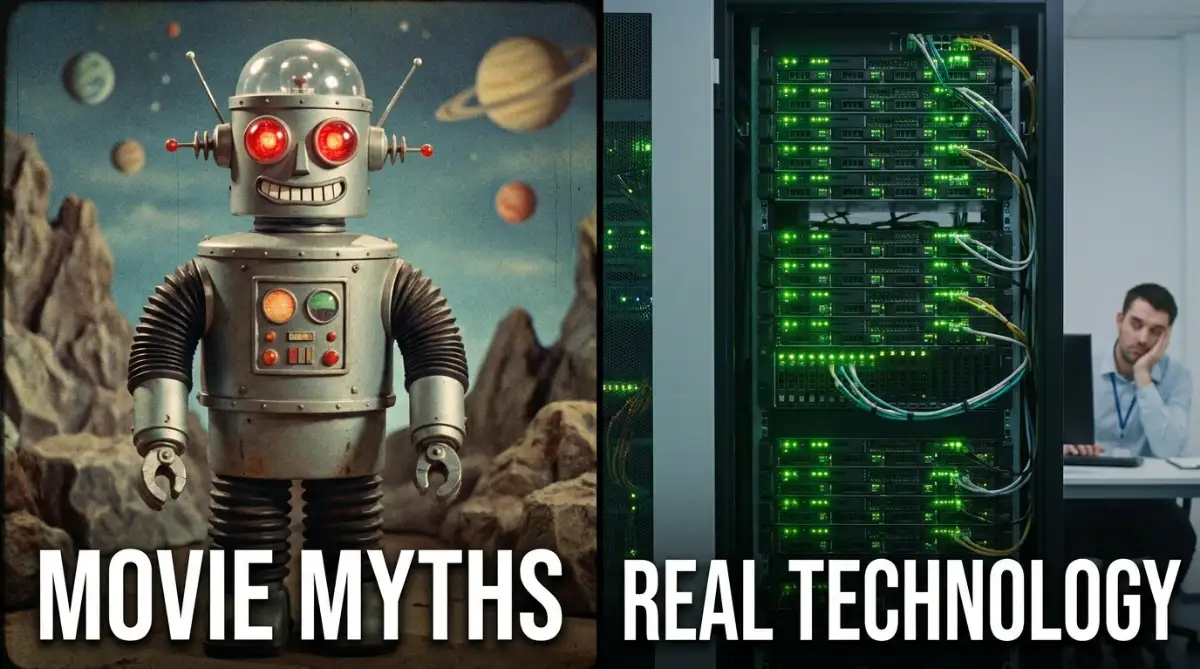
Why We Misunderstand Machine "Intelligence"
The biggest mistake we make is applying human traits to lines of computer code. We hear the word "intelligence" and immediately imagine a brain that has feelings, thoughts, and personal desires. In reality, what we call intelligence in software is just a very fast mathematical guessing game.
Think of a parrot that learns to mimic your voice perfectly when you say hello. The parrot sounds exactly like a human, but it has absolutely no idea what the word actually means. It just knows that making that specific sound gets it a cracker.
Machine learning operates on this exact same principle of pattern matching. The computer does not understand the essay it just wrote for you; it just knows which words mathematically belong next to each other. Understanding this lack of true awareness is the first step to overcoming your tech anxiety.
Real-Life Scenario: The Worried Graphic Designer
My friend Sarah is an incredibly talented graphic designer who almost quit her business because of new image-generation tools. She spent a whole week crying, convinced that no client would ever pay for her art again. But then, she actually tried using the software her clients were supposedly going to replace her with.
She quickly realized that the software was completely blind to human emotion, branding strategy, and cultural context. The tool could make a pretty picture, but it could not sit down with a client and understand the soul of their business. Now, she uses those same tools to brainstorm ideas faster, and she actually doubled her monthly income.
She learned that human connection and strategic thinking are totally impossible to automate. People will always pay a premium for a professional who understands their specific pain points and goals.
Pro Tip from My Own Experience
I made the terrible mistake of completely ignoring new tech tools because I was too angry and scared to look at them. I wasted months complaining about the changing industry instead of just spending ten minutes learning the basics. My best advice is to open up one of these free tools today and just play around with it like a toy. You will quickly see how many silly mistakes it makes, and your fear will instantly disappear.
The Giant Gap Between AGI and What We Have Now
You have probably heard the term Artificial General Intelligence thrown around in podcasts and news articles. AGI refers to a hypothetical machine that can understand, learn, and apply knowledge across any totally new situation, exactly like a human being. The reality is that we are absolutely nowhere near achieving this level of technology right now.
Currently, we only have narrow systems that are trained on massive piles of old data. If you train a system to play chess, it might beat the world champion without breaking a sweat. But if you ask that exact same chess-playing system to bake a cake or drive a car, it will completely fail.
Let's look at a quick reality check of what these tools can and cannot do:
| What You Ask It To Do | What It Actually Does | Will It Replace You? |
| :--- | :--- | :--- |
| "Write an email" | Guesses the next best word based on older emails. | No, it lacks your personal tone. |
| "Make a logo" | Mixes a bunch of old designs together. | No, it does not understand brand strategy. |
| "Organize my data" | Sorts numbers fast using math. | No, you still have to tell it what the numbers mean. |
It has zero common sense and zero ability to adapt outside its specific programming box. We are easily distracted by how good a tool is at one specific trick, assuming it must be smart at everything else.
Comparing The Systems: A Simple Breakdown
To make this completely clear, let us look at the differences between the everyday tools we use and the sci-fi concept of AGI. This simple comparison will help you see why the current panic is totally blown out of proportion.
When you look at the facts laid out like this, it becomes very clear that we are dealing with advanced calculators, not digital humans. You do not need to fear a tool that cannot even tell if a picture of a stop sign has a shadow on it.
The Emotion Myth: Can Algorithms Actually Feel?
One of the most terrifying thoughts is that a machine might develop a personal grudge or suddenly decide it dislikes humans. We see text-based chatbots say things like "I am feeling sad today," and our brains naturally panic. But we have to remember that these systems are literally just predicting the next most logical word in a sentence.
If the data they were trained on contains thousands of science fiction books where robots get sad, the tool will just repeat that pattern. There is no actual heart, no brain chemistry, and absolutely no emotional experience happening behind the screen. It is just a very complex mirror reflecting our own human language right back at us.
Want to see exactly how these mathematical predictions work behind the scenes in simple English? Check out this incredible visual breakdown that totally changed my mind!
Why Machine Learning Is Just Math, Not Magic
The word "learning" makes us think of a child sitting in a classroom, absorbing knowledge and growing wiser. In the computer world, learning simply means adjusting mathematical weights to make fewer errors over time. Let us imagine you are trying to teach a computer what a cat looks like.
You do not explain whiskers, soft fur, or meowing to the computer because it cannot understand physical concepts. Instead, you feed it one million pictures of cats and one million pictures of dogs. The software simply looks for mathematical pixel patterns that show up in the cat folder but not the dog folder.
Once it finds that mathematical pattern, it locks it in and uses it to guess future pictures. There is absolutely no magic happening here; it is pure, repetitive statistics operating at a very high speed.
How This Actually Impacts Your Daily Life
Right now, you are probably already using these tools dozens of times a day without even realizing it. When your email sorts out the spam messages, that is a pattern-matching algorithm doing exactly what it was built to do. When your favorite streaming app recommends a movie you end up loving, that is just math finding similarities between your past choices.
The exact same logic applies to the newer, flashier tools that the media loves to panic over. They are designed to assist you with boring, repetitive tasks so you can focus on the things only a human can do.
Adapting To The New Normal Without Any Panic
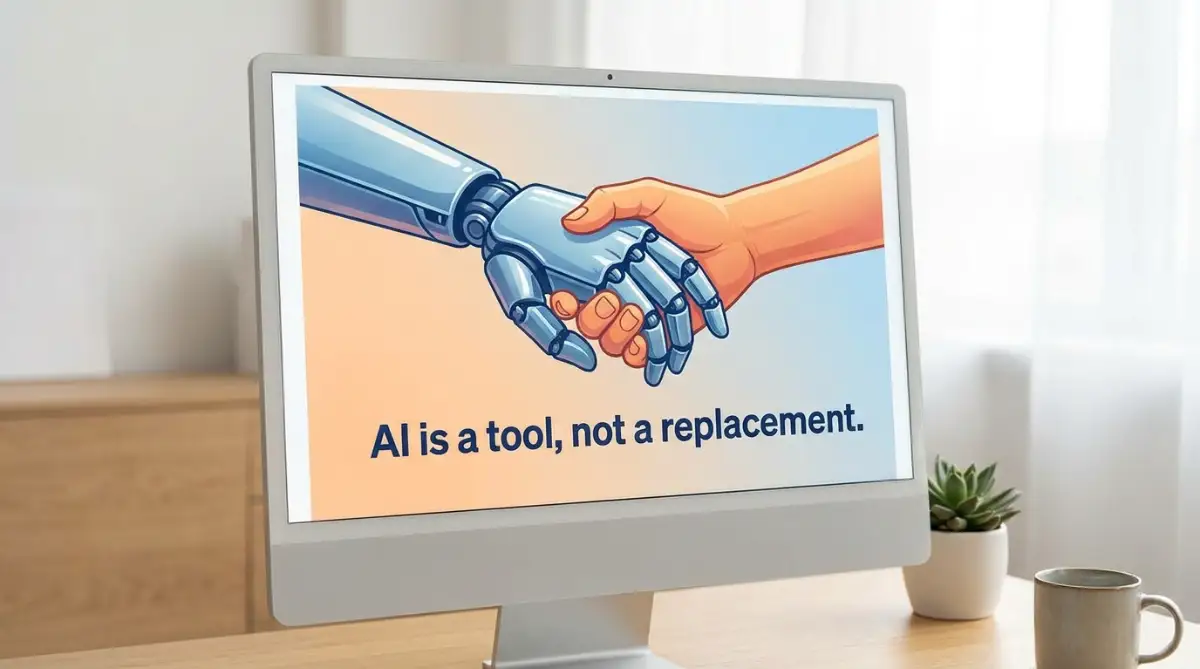
So, how do we move forward without constantly looking over our shoulders in fear? The best approach is to completely shift your mindset from being a victim to being an active director. You are the human with the actual ideas, emotions, and personal experiences that people deeply care about.
Instead of trying to compete with a machine on speed, compete on depth, empathy, and personal connection. If you are a writer, inject your personal life stories into your work, because a machine has no childhood memories to share. If you are a customer service agent, focus on showing genuine warmth and understanding, which an algorithm can never fake.
Start treating these software programs like very fast, slightly confused interns who need your direct supervision to succeed. They can gather the raw materials for you quickly, but you are the master builder who has to put the house together.
By focusing on your unique human qualities, you make yourself completely irreplaceable in any job market. Remember, people will always crave authentic human interaction, because that is how our brains are naturally wired. Take a deep breath, stop letting the media scare you, and start enjoying the simple benefits of having a digital assistant.
Taking Control: How To Actually Make Smart Algorithms Work For You
Now that we have completely destroyed the scary science fiction stories, it is time to look at the practical side of things. You do not have to become a computer programmer to use these modern tools effectively. You just need to change the way you think about your daily workflow and learn a few simple secrets.
The most successful professionals right now are not the ones with the highest technical skills. Instead, they are the people who know how to ask the right questions and delegate the boring tasks. Let us explore some powerful strategies that will put you firmly in the driver's seat of your own career.
Mastering The Art Of The Junior Intern Strategy
The absolute best way to interact with machine learning tools is to treat them exactly like a brand-new junior intern. Imagine you just hired an assistant who is incredibly fast at typing but knows absolutely nothing about your specific company. You would never ask this new intern to write a final contract and send it directly to your biggest client.
Instead, you would ask them to gather the basic documents, organize the rough ideas, and highlight the main points. This is exactly how you should be using automated software in your daily life. Let the software handle the heavy lifting of gathering basic information, while you use your human brain to add the final polish.
By treating the tool like an eager but clueless helper, you completely remove the pressure of expecting perfection. You save hours of time on the boring setup work, and you still get to be the hero who delivers the final masterpiece.
Building Your Own Custom Hybrid Workflow
Most people assume they have to choose between doing everything entirely by hand or letting a machine do it all. This is a completely false choice that limits your potential and causes unnecessary stress. The real magic happens when you build a hybrid workflow that combines machine speed with human creativity.
For example, if you run an online business, you can easily use these tools for improving customer service interactions without losing your personal touch. You can have the software draft a polite response to a common customer complaint in three seconds. Then, you step in and manually add a personal joke or a specific detail that only a human would know.

The customer feels completely heard and valued because they are receiving genuine human empathy. Meanwhile, you just saved twenty minutes of typing out a boring email from scratch. It is a perfect win-win situation that protects your energy while keeping your audience extremely happy.
Giving Better Instructions For Better Results
One of the biggest frustrations people face is getting generic, boring answers from text-generating tools. They type in a five-word question and then get angry when the software produces a robotic, useless response. You have to remember that these systems cannot read your mind or guess your personal preferences.
If you want a highly specific output, you have to provide highly specific input. Tell the software exactly who you are, what your goal is, and what tone of voice you want to use. Give it clear boundaries, like telling it to keep the answer under two paragraphs or to use simple words.
When you learn how to clearly explain your exact needs, the quality of the results will absolutely blow your mind. It is a simple communication skill that will put you miles ahead of everyone else who is just typing blind questions.
Understanding The Illusion Of Digital Empathy
Sometimes you will interact with a program that seems incredibly sweet, supportive, and understanding. It might say all the right things to comfort you, making you feel like there is a real person on the other side. You need to always remind yourself how algorithms simulate emotional responses by just matching words from human psychology books.
There is no actual feeling behind those kind words, which is both a limitation and a massive relief. It means you never have to worry about the machine judging you, getting angry at you, or holding a grudge. You are simply interacting with a very complex mirror that reflects human kindness back in your direction.

Dangerous Traps And Costly Mistakes You Must Avoid Today
While these new tools are incredibly helpful, using them carelessly can actually destroy your hard work and ruin your professional reputation. Many people jump into using automated software with zero strategy, and they end up making massive mistakes. I want to share the most common pitfalls so you can protect yourself and avoid these embarrassing disasters.
The Disaster Of Blind Trust And Zero Fact-Checking
The absolute most dangerous thing you can do is trust a machine learning program to give you completely factual information. Remember, these systems are designed to predict the next word that sounds good, not the word that is historically accurate. They will confidently invent fake statistics, make up fake names, and present total lies as absolute truth.
If you copy and paste this fake information into a work presentation, you are the one who will look completely foolish. Your boss is not going to blame the software; they are going to blame you for not doing your homework. This is a massive issue, and even the government has released AI risk management guidelines to warn people about these exact hallucinations.
You must always be the final editor and the ultimate fact-checker for anything a computer generates. Take the extra five minutes to verify names, dates, and numbers through a traditional search engine. Your professional credibility is worth way more than the three minutes you saved by blindly trusting an algorithm.
Handing Over Your Most Sensitive Personal Data
When we find a helpful new website, our first instinct is to feed it everything we are currently working on. People will casually paste their company's private financial records or their personal medical history into an open text box. They completely forget that many of these free online tools actually save your prompts to train their future systems.
Once you hit enter, you have effectively handed over your private information to a third-party server. This is a massive security risk that could get you fired or lead to serious identity theft issues. You must start protecting personal data online with the exact same caution you use for your bank account passwords.
Never put any sensitive client names, private addresses, or confidential business strategies into a public algorithm. Always use fake placeholder names if you need help formatting a private document, and fill in the real details offline.
Quick Myth vs. Fact Check:
- Myth: If I let a chatbot write my entire report, my boss will never know.
- Fact: A lot of companies now use simple software to check if something was written by a human or a machine. If you just copy and paste an entire generated article, people will eventually catch on. Always add your own unique spin!
Losing Your Unique Human Voice In A Sea Of Robots
Because it is now so easy to generate thousands of words in seconds, the internet is becoming flooded with incredibly boring content. People are using software to write their personal blog posts, their social media updates, and even their text messages to friends. The result is a massive wave of completely soulless communication that all sounds exactly the same.
If you start relying on automated writing for everything, you will quickly lose your unique personality and charm. Your audience will instantly sense that your messages feel slightly off, robotic, and emotionally empty. You have to actively fight this by injecting your own messy, beautiful human experiences into everything you publish.
Even top economic researchers studying economic studies on technology complementing workers agree that original human creativity is becoming the most valuable skill on the market. Do not let a machine water down your personality just because it is faster.
Ignoring The Ethical Rules Of Content Creation
There is a growing temptation to take a beautiful generated image or a well-written article and claim it as your own hard work. This is a very slippery slope that completely destroys trust with your clients, readers, and peers. We must follow basic ethical rules for software usage to maintain honesty in our digital world.
If you used a tool to heavily assist you with a project, there is absolutely no shame in being transparent about it. Honesty actually builds far more trust with your audience than pretending you did a hundred hours of work in five minutes.
Additionally, we have to be aware that these systems often show hidden biases based on their training data. According to leading experts who study understanding algorithmic bias, software can easily repeat unfair stereotypes without us even realizing it. You have to actively look for these biases and correct them before you share the final result with the world.
The Hardware Trap: Upgrading Without Security In Mind
As these new software tools become heavier, many people are rushing out to buy brand new laptops and smartphones to keep up. In their excitement to try the newest tech, they carelessly throw their old devices in a drawer or sell them online. They completely forget that their old hard drives contain years of personal emails, passwords, and private photos.
Before you upgrade your tech setup, you must learn the proper way of completely erasing old device data to protect your identity. A simple factory reset is often not enough to stop a smart criminal from recovering your private files. Take your digital security seriously from the very beginning to the very end of your hardware's life.
Clear Answers To Your Biggest Technology Fears
Will an algorithm eventually replace my specific career entirely?
No, software tools cannot entirely replace jobs that require complex human empathy, physical presence, or deep strategic thinking. The jobs that will disappear are strictly limited to highly repetitive, mindless data entry tasks. Your goal is simply to learn how to use these tools to make your current job easier and more valuable.
Is it true that machine learning systems are just guessing answers?
Yes, at their core, these systems are simply running massive statistical probabilities to guess what should come next. They do not have an actual brain, they do not understand context, and they do not know what the words actually mean. It is incredibly advanced mathematics, but it is definitely not true human intelligence.
Can these programs secretly read my thoughts or track my daily life?
These tools can only know the specific information that you directly type into their text boxes or allow through your privacy settings. They do not have magical powers to read your mind or hack into your private life without your permission. You are in complete control of exactly how much personal data you choose to share with them.
Do I need to go back to school to learn coding to survive?
Absolutely not, the newest tools are specifically designed to respond to natural, everyday conversational language. If you know how to write a clear email to a human friend, you already have the skills to use these systems. The barrier to entry has never been lower for average people to benefit from advanced technology.
Why does the media constantly make these tools sound so terrifying?
Fear is the easiest human emotion to trigger, and terrifying headlines generate far more clicks than boring, logical explanations. News companies know that a story about a robot takeover will make them much more advertising money than a story about a helpful calculator. You always have to look past the dramatic headlines and focus on the actual, boring science.
Your Next Steps Toward A Stress-Free Digital Life
The journey from feeling terrified of technology to completely mastering it does not happen overnight. It takes a little bit of patience, a willingness to make silly mistakes, and a healthy dose of curiosity. You have already taken the biggest step just by reading this guide and educating yourself on the real facts.
You now understand the massive difference between Hollywood fantasy and the everyday statistics running in the background. You know how to protect your personal data, and you know why your unique human voice is your biggest advantage. There is absolutely no reason to let panic ruin your day or make you doubt your own professional worth anymore.
Start extremely small by picking just one simple, boring task that you hate doing every single week. Use a free tool to help you speed up that one specific chore, and watch how much mental energy you save. Once you see the practical benefits with your own eyes, all the remaining fear will completely melt away.
I truly hope sharing my own messy journey helps you feel a lot more confident about navigating this new digital era. My biggest realization was that the future belongs to those who stay uniquely human while simply letting the machines do the heavy lifting. You have all the power in your hands right now, so go out there and show these tools who is actually the boss!
Disclaimer: This article is for informational and educational purposes only and does not constitute professional career, financial, or legal advice. Technology evolves rapidly, and the tools or methods mentioned should be independently researched and verified before applying them to your personal or business workflows. Always prioritize your own data privacy and consult with a certified IT professional regarding specific software security concerns.