The Hidden Money Trap: My Global Financial Awakening
Picture this: you finally land that dream remote client, get paid in strong US dollars, and feel completely unstoppable. Then, you check your local bank account and realize a massive chunk of your cash just vanished into thin air thanks to hidden exchange fees. If you are tired of watching traditional banks eat your hard-earned money every time it crosses a border, you are in the right place. Let me show you exactly how to plug those sneaky leaks.
A huge chunk of my hard-earned money had completely vanished into thin air. At first, I honestly thought someone had hacked my bank account. I called my bank in a complete panic, only for a polite customer service agent to explain the reality to me.
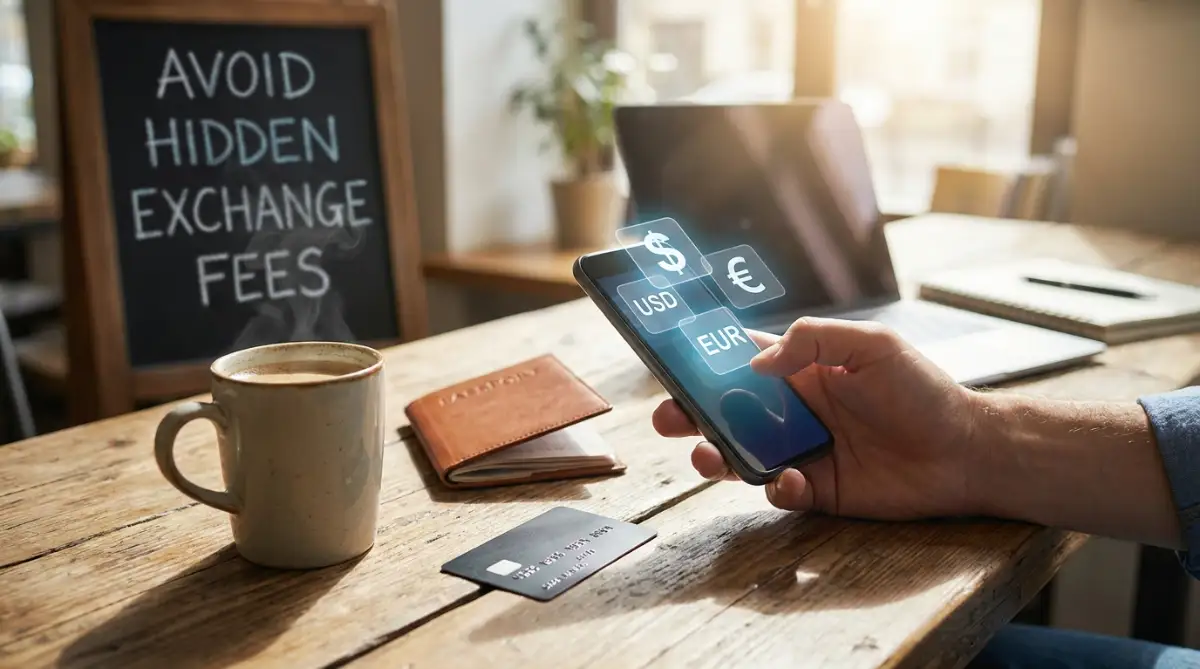
My money was lost to terrible currency conversion rates and hidden foreign transaction fees. Every time I earned money in USD and bought a simple coffee or paid my rent in a different local currency, the bank took a slice. I felt completely defeated, realizing that working remotely across borders was secretly draining my savings.
This is the exact nightmare almost every location-independent professional faces today. You work incredibly hard to earn your income, only to lose a massive percentage of it simply because your money crosses an invisible border. It feels incredibly unfair to watch your wealth shrink just because you choose to live a global lifestyle.
Instead of enjoying new cultures, you end up obsessing over exchange rate apps and feeling guilty about every purchase. It turns a dream lifestyle into a stressful daily math test. But the good news is, you do not have to live this way anymore.
Your Quick Action Plan
- Stop Using Hometown Banks: They punish you with hidden conversion markups every time you spend abroad.
- Use the Three-Bucket Rule: Separate your money into an Income Receiver, a Local Wallet, and Home Base Savings.
- Pay Like a Local: Tap into zero-fee regional payment networks (like PIX or PromptPay) to skip international card fees entirely.
- Never Convert on Weekends: Global markets close on weekends, and banks will give you the worst possible rates.
Escaping the Traditional Banking Matrix
Traditional local banks are simply not built for people who live and work across borders. They rely on outdated systems that punish you for earning and spending in different countries. If you want to keep your hard-earned money, you have to completely rethink how you store it.
The very first step to fixing this is creating a clear separation between where your money lands and where it is spent. Most beginners make the mistake of having their international clients send money directly to their local hometown bank account. This is exactly where the banks trap you with terrible exchange rates.
Instead, you need a financial system that acts as a secure waiting room for your money. Think of it as a central hub that catches your income before any bank gets the chance to convert it.
Setting Up a Multi-Currency Shield
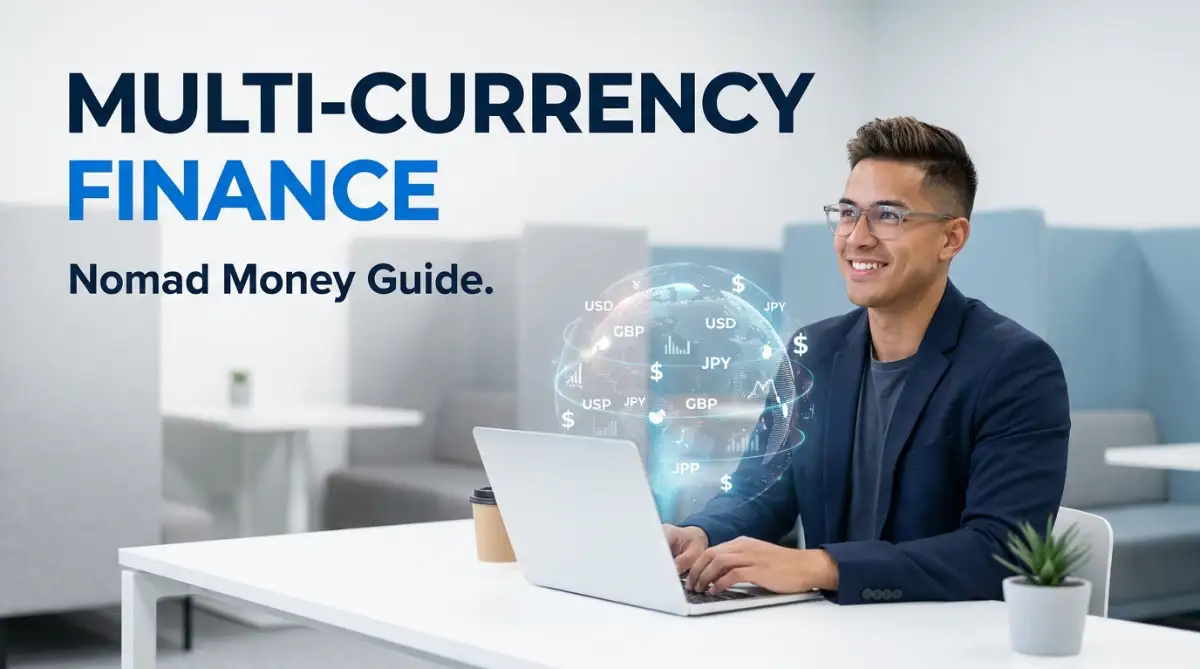
To protect your income, you need to open a dedicated borderless account or a global fintech wallet. These modern financial tools allow you to hold balances in dozens of different currencies at the same time. When your client pays you in USD, the money simply stays in USD within your account.
You have complete control over when and how that money gets converted. You are no longer at the mercy of whatever exchange rate your local bank decides to give you on a random Tuesday. You can wait for a day when the exchange rate is strong before moving the money to your local spending account.
Quick Look: The Traditional Bank vs. Borderless Wallet
Here is a fast breakdown of why you need to make the switch today:
- Traditional Bank: Charges 3-5% markup on exchange rates, freezes your card for "suspicious" overseas travel, and hits you with $5 ATM fees.
- Borderless Wallet: Uses the real mid-market exchange rate, holds 40+ currencies at once, and usually offers free global ATM withdrawals up to a certain limit.
Watch this incredibly helpful breakdown of how international bank fees actually work, so you can stop falling for their hidden traps.
Real-Life Scenario: The Airport Apple
To truly understand how much money you are losing, think about buying an apple at an airport. You know the apple only costs fifty cents at your local grocery store. But once you step inside the airport terminal, that exact same apple suddenly costs three dollars.
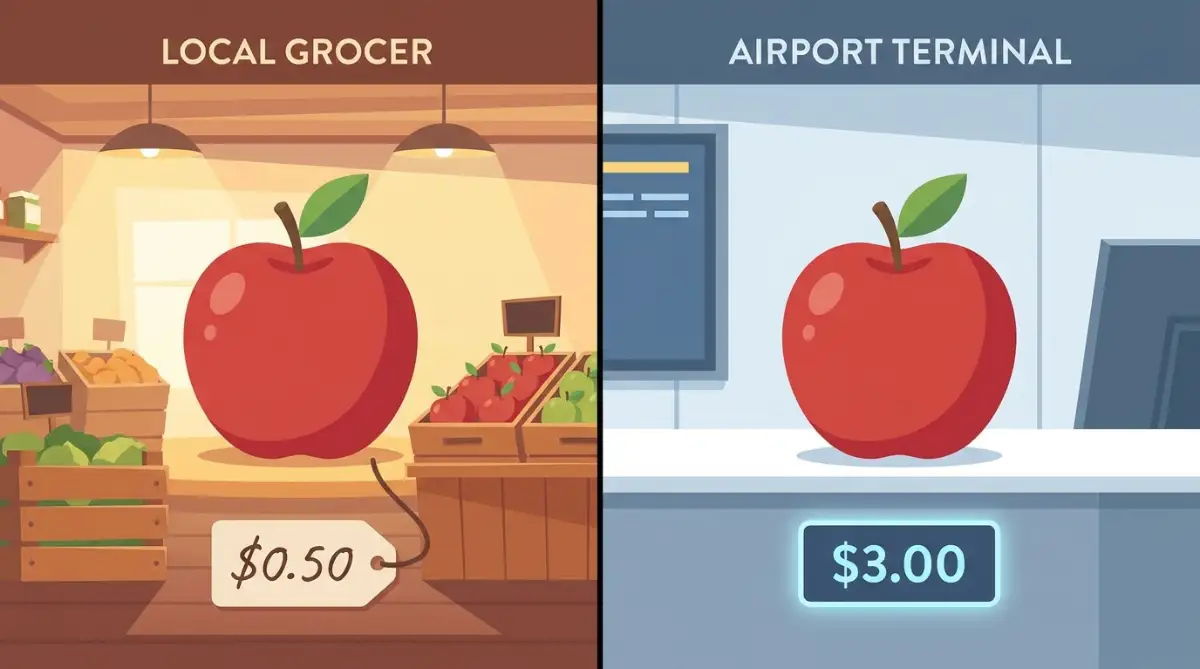
Traditional banks do the exact same thing with your money when it crosses a border. They take the real exchange rate, add their own invisible markup, and keep the difference as a profit. By using a borderless account, you are essentially skipping the airport markup and buying your money at the wholesale grocery store price.
My Expensive Learning Curve
When I first started traveling, I used my hometown debit card for everything from buying plane tickets to ordering street food. I thought the tiny 3% foreign transaction fee on my card was not a big deal. I was completely wrong. After calculating my expenses six months later, I realized I had paid enough in bank fees to fund an entire month of rent! I immediately stopped using traditional cards abroad and switched entirely to zero-fee global travel cards.
The Science of Mental Accounting Across Borders
Fixing your banking setup is only half the battle. The other half is fixing how your brain processes money in a foreign country. Behavioral economics teaches us that our brains struggle to value money when the numbers look unfamiliar.
If you are used to spending $10 on lunch, seeing a lunch menu priced at 150,000 local currency units can completely confuse your brain. You might accidentally overspend simply because the numbers feel like Monopoly money. Or, you might starve yourself because the large numbers trick you into thinking everything is too expensive.
Anchoring Your Financial Reality
To fix this psychological trap, you need to create a personal mental anchor. An anchor is a small, everyday item that you know the exact value of in your home currency. For many remote workers, this is the cost of a standard cup of coffee or a basic fast-food meal.
When you see a price tag in a new country, do not try to calculate the exact exchange rate in your head. Instead, ask yourself how many "cups of coffee" that item costs. If a new pair of shoes costs the equivalent of twenty cups of coffee, your brain can easily understand whether that is a fair price or not.
Myth vs Reality: The Global Money Mindset
Let's break down some common misunderstandings about managing money internationally. Many people believe things that simply are not true.
- Myth: It is always safer to carry large amounts of cash when traveling.
- Reality: Carrying heavy cash makes you a target for theft. Modern global cards are accepted almost everywhere and offer much better security.
- Myth: You should always choose to pay in your home currency when a card machine asks.
- Reality: Never let the card machine do the conversion! Always choose to pay in the local currency to avoid dynamic currency conversion scams.
- Myth: Managing multiple currencies requires an accounting degree.
- Reality: Simple smartphone apps can automate 90% of the hard work for you.
The "Three-Bucket" Strategy for Global Earners
If you want to build wealth while traveling, you need an organized system for your money. Throwing all your income into one big pile makes budgeting impossible. I highly recommend using the scientific "Three-Bucket" strategy to organize your multi-currency life.
The first bucket is your Income Receiver. This is the borderless account we talked about earlier, where all your money lands in its original currency. You never spend directly from this bucket; you only use it to collect and hold your earnings securely.
The second bucket is your Local Spending Wallet. Every week or two, you strategically convert a set amount of money from your Income Receiver into this spending wallet. This bucket holds the specific local currency of the country you are currently living in. You use this bucket for groceries, rent, and daily fun.
The third bucket is your Home Base Savings. This is a secure account in your home country where you send your long-term savings and investment money. No matter where you travel, your long-term wealth should always be built in the most stable currency available to you.
Managing Subscription Creep
One of the biggest budget killers for digital nomads is what I call "Subscription Creep." You sign up for a software tool in US dollars, a streaming service in Euros, and a local gym membership in Pesos. Because these small charges happen in different currencies, you never really notice how much they add up.
To solve this, you need to perform a monthly subscription audit. Write down every single recurring payment you have and convert them all to your primary home currency on a single spreadsheet. You will be absolutely shocked to see how much money is leaking out of your accounts every month through forgotten global subscriptions.
The Subscription Math That Will Shock You:
Let's say you pay for a software tool in Euros (roughly €20/month) using your US debit card. If your bank charges a 3% foreign transaction fee plus a bad exchange rate markup, you are losing an extra $1.50 to $2.00 every single month just on that one tool. Multiply that by 10 different global subscriptions over a whole year, and you are literally throwing away hundreds of dollars for zero reason!
Preparing for Extreme Exchange Rate Swings
Sometimes, global events cause the value of a currency to crash overnight. If your income is in a falling currency and your rent is in a strong currency, you can suddenly face a financial crisis. You have to actively protect yourself against these wild market swings.
Economists use a method called "hedging" to protect against currency risk. For a regular remote worker, this simply means not keeping all your eggs in one basket. If you know you will be living in Europe for the next six months, start slowly buying Euros right now.
Do not wait until the day your rent is due to convert your money. By converting small amounts every week, you smooth out the ups and downs of the market. This scientific approach is called dollar-cost averaging, and it is a massive lifesaver for location-independent workers.
The Rule of Matching Liabilities
There is a golden rule in international finance that every remote worker should memorize. Try to match the currency you earn with the currency you spend. If a large chunk of your living expenses is in British Pounds, try to find a client who pays you in British Pounds.
This completely removes the exchange rate risk from the equation. When you earn and spend in the same currency, the global market fluctuations simply do not matter to you. You create a perfectly balanced financial bubble for yourself.
Navigating Cash and ATM Realities
Even in our highly digital world, there are still places where cash is absolutely necessary. Street food vendors, small rural markets, and local buses often do not accept plastic cards. You need a solid strategy for getting cash out without paying ridiculous ATM fees.
Always look for a banking card that offers free global ATM withdrawals. Many modern fintech companies will cover the cost of the foreign ATM fee for you. If you withdraw cash just twice a week, a card like this can save you hundreds of dollars over a few months.
When you do use an ATM, withdraw larger amounts less frequently. Paying one ATM fee for a large withdrawal is mathematically much smarter than paying five separate fees for small withdrawals. Just be sure to hide the extra cash securely in your luggage, never carrying it all in your pockets at once.
Surviving Freelance Platform Fees
If you earn your money through online platforms, you face an entirely different set of challenges. Platforms are notorious for forcing you to use their own terrible exchange rates when you withdraw your earnings. They advertise a small withdrawal fee, but hide a massive profit margin inside the currency conversion.
To beat this system, you need to route your money smartly. See if the platform allows you to withdraw directly in USD to your borderless account. Once the pure USD is safely in your own account, you can convert it yourself at the real mid-market rate.
Organizing the Tax Residency Puzzle
While I am not an accountant, I can tell you that living globally makes taxes incredibly complicated. When you earn in one place, live in another, and hold citizenship in a third, governments get very confused. You have to be deeply organized to avoid getting taxed twice on the exact same money.
The absolute best thing you can do for your future self is to track your physical location meticulously. Keep a detailed log of exactly how many days you spend in each country. Tax residency is almost always based on the number of days your feet are on the ground in a specific nation.
Save every single boarding pass, hotel receipt, and passport stamp in a digital cloud folder. When tax season eventually arrives, handing this perfectly organized folder to a professional accountant will save you a massive headache. It will also protect you if a government ever questions your residency status.
Building Financial Peace of Mind
At the end of the day, managing money across borders is all about building strong systems. Once your borderless accounts are set up and your mental accounting is anchored, the anxiety completely melts away. You stop worrying about bank fees and start actually enjoying the beautiful places you travel to.
You work hard for the freedom to live anywhere in the world. Do not let outdated banking rules and invisible fees steal that freedom away from you. Take full control of your multiple currencies today, and watch your global lifestyle become much richer and significantly more peaceful.
Next-Level Money Hacks for the Global Worker
Once you have your basic multi-currency accounts set up, you are ready to play the game at a professional level. The most successful remote workers do not just survive the exchange rate game; they actively use it to build wealth. I want to share some incredibly powerful strategies that took me months of traveling to finally figure out.
These methods go far beyond simple budgeting. They are about understanding how global economies interact and using that knowledge to your absolute advantage. You can completely change your financial reality simply by shifting how you move your digital money.
Let's look at some advanced habits that will protect your income and help your savings grow automatically. These are the exact strategies I use every single month to keep my finances healthy while moving across different continents.
Mastering the Art of Geographic Arbitrage
Geographic arbitrage is a big financial term for a very simple concept. It simply means earning your income in a strong currency and choosing to spend it in a country with a lower cost of living. This is the ultimate superpower of the location-independent lifestyle.
Imagine you earn three thousand US dollars a month from your freelance clients. If you live in a major American city, that money barely covers rent and basic groceries. But if you take that exact same income to a beautiful beach town in Southeast Asia or South America, you suddenly live like royalty.
To truly master this, you have to understand the purchasing power of your money. Economists study this concept deeply, and you can actually look at the World Bank data on Purchasing Power Parity to see which countries offer the best value for your specific earning currency. By tracking these economic trends, you can strategically plan your travel destinations to maximize your savings.
Tapping into Local Payment Networks
One of my biggest breakthroughs was learning to ditch international cards entirely for my daily expenses. Almost every modern country now has its own instant, zero-fee digital payment network. In Brazil, it is called PIX; in India, it is UPI; and in Thailand, it is PromptPay.
When you arrive in a new country for a long stay, your first goal should be getting access to their local network. You can often open a basic tourist bank account or use a verified local mobile wallet simply by showing your passport. Once you are on the local network, you pay the exact same low prices as the locals, with zero hidden card fees.

You can use your borderless fintech app to send a chunk of your earnings directly into this local mobile wallet once a month. This completely isolates your spending money from your main savings. If you are working with global clients without losing sleep over unpaid invoices, this local wallet system ensures you always have immediate cash for your daily coffee and meals.
The "Weekend Transfer" Trap
Here is an advanced secret that banks really do not want you to know. The global foreign exchange market completely shuts down over the weekend. Because of this, traditional financial institutions freeze their exchange rates from Friday evening until Monday morning.
To protect themselves from sudden news events over the weekend, banks and transfer apps often add a secret markup to their weekend rates. If you transfer money or convert currencies on a Saturday, you are almost always getting a significantly worse deal. I always set a strict personal rule: I only convert currencies between Tuesday and Thursday.
You want to make your money moves when the global markets are highly active and highly competitive. Mid-week transfers guarantee that you get the most accurate, real-time mid-market exchange rate available.
Invoice Routing for Freelancers
If you run your own online business, you have the power to control how the money flows from the very beginning. Stop sending generic invoices that force your clients to figure out the international transfer. You should be sending invoices that match your client's local currency.
If you have a client in Germany, use your borderless account to generate a local European IBAN. You send them an invoice in Euros, and they pay it like a completely normal local bank transfer. This removes all friction for your client and ensures you receive the exact amount you expected, without any international wire fees eaten along the way.
This simple trick makes you look incredibly professional and easy to work with. It is a win-win situation where your client saves money on international transfer fees, and you maintain total control over when that Euro balance gets converted.

The Silent Wealth Destroyers You Must Avoid
Managing money across borders is incredibly rewarding, but it is also filled with hidden landmines. When you make a financial mistake in your home country, it is usually an easy fix with a quick phone call. When you make a mistake while living thousands of miles away, it can turn into a full-blown crisis.
I have watched many brilliant remote workers drain their bank accounts simply because they ignored the basic rules of global finance. These mistakes rarely happen all at once; they are slow, quiet leaks that slowly destroy your hard-earned wealth.
Let's talk about the most dangerous pitfalls that catch travelers off guard. Knowing these traps beforehand is the only way to keep your money safe while you explore the world.
The "Phantom Tax Residency" Nightmare
This is arguably the most terrifying mistake you can make. Many people think that if they just keep moving from country to country on tourist visas, they do not owe taxes anywhere. This is a completely illegal myth that can ruin your life.
Governments communicate with each other much more than you realize. If you spend too much time in a country, usually over 180 days, their government will legally consider you a tax resident. You could suddenly owe them a massive percentage of your global income.
Even worse, your home country might still expect you to pay taxes too. You could end up getting taxed twice on the exact same paycheck. Always consult international tax guidelines or read official reports from organizations like the Oxford University Press on global taxation to understand how international tax laws are actively changing.
Banking on Public Airport Wi-Fi
We have all done it. You land in a new country, connect to the free airport Wi-Fi, and immediately open your banking app to check your balance. This is one of the most dangerous things you can possibly do with your digital money.
Public Wi-Fi networks in airports, cafes, and train stations are incredibly easy for hackers to monitor. They can quietly steal your login credentials while you are trying to pay your credit card bill. You must learn how to stay safe on public Wi-Fi by always using a premium, paid VPN service before opening any financial application.
If your bank account gets drained because of an insecure connection, the bank might refuse to refund you. They will claim you were negligent with your security details. Always treat keeping your information secure every single day as your top priority when managing money digitally.
The Single-Card Dependency Panic
Imagine standing at a grocery checkout line in a foreign country with a cart full of food. You swipe your only debit card, and the machine flashes a bright red "Declined" message. Your home bank noticed a foreign transaction and automatically froze your account for "suspicious activity."
If you only carry one physical card, you are setting yourself up for an emotional breakdown. Physical cards get eaten by greedy ATMs, magnetically wiped, or simply stolen by pickpockets. You can easily find yourself completely cut off from your own money with no way to pay for a hotel.
You should always travel with at least three different physical cards, all linked to completely separate bank accounts. Keep one in your daily wallet, hide the second deep inside your main luggage, and keep the third tucked away in a secret pocket of your backpack.
Forgetting Your Security Lifeline
Most banks now require Two-Factor Authentication (2FA) by sending a text message to your phone before letting you log in. But what happens if you lose your phone while hiking, or you drop your phone in water at the beach? You instantly lose access to your text messages.
Without that physical SIM card, you are completely locked out of your financial life. You cannot approve transfers, pay your credit card, or even talk to customer service easily. Never rely solely on SMS text messages for your banking security while traveling.
Set up an authenticator app that backs up to your secure cloud, or carry a physical hardware security key on your keychain. You also need a reliable communication method; learning how to fix unstable internet in rural areas ensures you can always reach your bank's emergency hotline if a crisis happens.
Your Master Plan for Financial Freedom
Managing a location-independent income does not have to feel like a stressful mathematical chore. When you have the right systems in place, your money works quietly in the background while you focus on enjoying your life. You are no longer reacting to bad exchange rates; you are actively controlling them.
The key to long-term success is consistency. The small habits you build today will compound into massive savings over the next few years. Let's look at how you can tie everything together into a simple, actionable routine.
The Monthly Check-In Routine
To maintain total control over your multi-currency life, you need to schedule a strict financial date with yourself once a month. Pick a quiet afternoon, grab a coffee, and sit down to review your entire system. This is your time to spot any hidden fees you might have missed.
During this check-in, move your primary savings out of your borderless account and into your secure home-base investments. Do not leave massive amounts of money sitting idle in travel apps. Move the cash you need for the upcoming month into your local spending wallet, and clear out any old currencies you no longer need.
This simple monthly routine drastically reduces the psychological stress of money. In fact, studies from the American Psychological Association on financial stress show that people who actively track their finances report significantly lower levels of daily anxiety. Knowing exactly where your money is helps you escape long-term loneliness and thrive because you feel completely secure and self-reliant.
Embracing the Mindset of a Global Citizen
At the end of the day, you have chosen a lifestyle that most people only dream about. You have broken free from the traditional office cubicle and taken your skills to the global market. Your financial habits simply need to evolve to match your ambitious lifestyle.
Do not be afraid to experiment with new digital tools and borderless banking features. The financial technology industry is moving incredibly fast, and there are constantly new ways to save money on transfers and fees. Stay curious, stay organized, and always protect your digital security.
By taking control of your cross-border money today, you are buying yourself ultimate freedom for the future. You will never again have to stress over an airport ATM fee or a hidden conversion markup.
Common Questions About Nomad Finance
What is the safest currency to keep my long-term savings in?
For long-term savings, you should always hold your money in a major, stable currency like USD, EUR, or your native home currency. Avoid holding large savings in highly volatile emerging market currencies, as sudden inflation can wipe out your purchasing power overnight. Convert to local currencies only as you need spending money.
How do I legally pay taxes if I am constantly moving countries?
Tax laws depend heavily on your passport and where you spend the majority of your physical time. Most countries follow the 183-day rule, meaning if you stay there for more than half the year, you become a tax resident. You must consult a specialized international tax accountant to create a legal, stress-free tax strategy for your specific situation.
Can I get paid directly into my foreign bank account by US clients?
Yes, but doing so through traditional wire transfers will cost you massive fees and terrible exchange rates. Instead, you should use a borderless fintech account to provide your US clients with local ACH routing numbers. They pay locally in USD, and you receive the exact amount without any international wire fees.
What happens if my banking app blocks me while I am abroad?
This happens frequently when banks detect sudden logins from new countries. You should always notify your bank of your travel plans before you leave your home country. If you do get blocked, having a backup bank account and a premium VPN to simulate a connection from your home country can be a lifesaver.
Is it better to use cash or digital cards for daily street purchases?
It completely depends on the specific country's local economy and digital infrastructure. In modern European or Asian cities, a zero-fee global card or local mobile wallet is the absolute safest and cheapest option. However, if you are visiting deeply rural areas, carrying small amounts of local cash is still necessary for daily survival.
Pro-Tip from my personal journey: I finally stopped losing sleep over money when I started treating my borderless account like a protective fortress. My biggest piece of advice is to never, ever let a foreign ATM or a payment terminal do the currency math for you. Take control of the conversion yourself, and you will save thousands of dollars over your traveling career.
Disclaimer: The information provided in this article is for educational and informational purposes only and does not constitute financial, legal, or tax advice. Personal finance situations vary greatly, and international tax laws are subject to frequent changes. Always conduct your own research and consult with a certified financial planner or international tax professional before making major financial decisions or moving money across borders.