The Day My Nomad Dream Almost Crashed
Picture this: you are sipping coffee in a beautiful Bali cafe, your biggest client project is due in 48 hours, and your phone buzzes. It is a text saying your visa extension was denied. You have to leave the country tomorrow. If you do not have a solid backup plan right now, your freelance business is about to take a massive hit. I have been there, and I want to show you exactly how to survive an emergency border run without losing your clients or your mind.
My hands were shaking as I stared at my screen, realizing that I also had three major client meetings scheduled for the exact same day I needed to cross the border. The absolute panic of choosing between breaking immigration laws or failing my highest-paying client is a feeling I will never forget. I felt entirely alone, furiously searching for cheap flights while trying to pretend everything was totally normal on my team communication channels.
For most ordinary remote workers, the desire to travel the world comes from a place of seeking ultimate freedom. We want to work from cozy mountain cabins, bustling foreign cities, and quiet islands. But when bureaucratic paperwork suddenly fails, that beautiful dream quickly turns into a logistical nightmare.
When you are constantly worrying about passport stamps and border guards, your daily peace of mind completely vanishes. You start producing lower-quality work because your brain is exhausted from managing constant travel logistics. Your clients start noticing small errors, your communication becomes spotty, and the professional reputation you worked so hard to build begins to crack under the pressure.
Quick Takeaways for Emergency Travel:
- Set up a global eSIM before your current visa expires.
- Shift to asynchronous work (like video recordings) so you don't need real-time internet.
- Pack a modular tech bag you can grab in under five minutes.
- Always pad your client deadlines with a 4-day safety buffer.
Creating an Unbreakable Remote Work Safety Net
When a border emergency strikes, you cannot simply tell your boss or your clients that the government messed up your paperwork. In the professional business world, excuses do not pay the bills or maintain trust. You need to treat an unexpected visa trip exactly like a planned power outage.
If you know the power might go out, you buy a generator and save your files. When you know travel problems might happen, you build a resilient communication and backup plan. Let us break down exactly how you can protect your income and your professional relationships during severe travel chaos.
Mastering the Art of Asynchronous Communication
The biggest mistake you can make during a travel crisis is trying to maintain a normal, real-time meeting schedule. You simply cannot guarantee that you will have a quiet background or a strong internet connection while sitting on a cross-border bus. This is where asynchronous communication becomes your absolute best friend.

Asynchronous work simply means communicating without expecting an immediate, real-time response. Instead of jumping on a live video call to explain a project update, you record a clear, detailed screen-sharing video beforehand. You can upload this video to a secure drive and send the link to your client while you are packing your bags.
If you have ever struggled to explain complex ideas to clients without getting on a live call, you need to see this incredible breakdown of asynchronous video strategies.
By shifting your work style to this method, you completely remove the pressure of needing to be online at an exact specific minute. Your client still gets the high-quality information they need, and you get the flexibility to cross a border without checking your watch every five seconds. Studies on workplace productivity consistently show that teams using asynchronous methods actually experience less daily stress and make fewer emotional mistakes.
Myth vs. Fact: Asynchronous Work on the Road
- The Myth: Clients will think you are ignoring them if you don't reply in five minutes.
- The Fact: Clients respect boundaries. Sending a pre-recorded video update 24 hours early builds way more trust than taking a laggy Zoom call from a noisy bus station.
Structuring a Mobile Emergency Office
When you are forced to leave a country quickly, your beautiful dual-monitor desk setup gets left behind. You must learn how to turn any random space into a fully functioning production studio within minutes. Your mobile office needs to be lightweight, reliable, and completely independent from public utilities.
Never rely on airport Wi-Fi or coffee shop internet when your professional reputation is on the line. Public networks are incredibly unstable and often block the specific ports needed for heavy software applications. You must carry a high-quality global mobile hotspot with a pre-loaded international data plan.
Along with your own private internet, you need to control your own power supply. Carrying a massive laptop power bank ensures you can work for an extra eight hours even if your train gets delayed in the middle of nowhere. Independence is the ultimate key to surviving a sudden change in travel plans.
My Personal 5-Minute Emergency Tech Checklist
Here is exactly what I grab when I have to pack my office in a hurry:
| Item | Why You Need It | Estimated Cost |
| :--- | :--- | :--- |
| Global eSIM app (like Airalo) | Instant internet when you land. | $10 - $20 |
| 20,000mAh Power Bank | Keeps your laptop alive during 12-hour bus rides. | $40 - $60 |
| Wired Earbuds | No charging needed, perfect for unexpected calls. | $15 |
| USB-C Hub | For plugging into random monitors at co-working spaces. | $25 |
The Psychology of Client Expectation Management
Your clients do not actually care where you are physically located in the world. They only care about consistency, reliability, and feeling like their project is in safe hands. When a travel emergency happens, your instinct might be to hide the problem and pretend everything is fine.
I used to make this exact mistake by trying to hide my travel chaos from my main client, terrified they would fire me if they knew I was on a moving bus. I ended up missing a massive deadline because my internet dropped at the border, and the client lost total trust in me because I was not transparent. I quickly learned that sending a professional, proactive message about being in transit actually builds massive respect.
Instead of saying you are having a visa crisis, simply frame it as planned professional transit. You can say, "I will be traveling between locations on Thursday and will have limited connectivity, so I am delivering these files a day early." This makes you look incredibly organized and thoughtful, rather than chaotic and stressed.
Pre-Loading Your Deliverables Before the Chaos
The moment you realize you have to make a sudden border run, you need to enter a hyper-focused production mode. You should immediately look at your calendar for the next five days and identify every single item that absolutely must be delivered. Your goal is to finish and schedule as much of this work as physically possible before you even buy your bus or plane ticket.
Think of this process like preparing meals for the week on a Sunday afternoon. If you pre-write your emails, finish your graphic designs, and schedule your social media posts in advance, your business basically runs on autopilot while you travel. You are buying yourself time and emotional breathing room.
Automating Your Professional Presence
When you are arguing with a border control officer about entry requirements, the last thing you want is your phone buzzing with client questions. You need to leverage basic automation tools to act as your digital assistant while you are offline. Setting up a highly professional email auto-responder is a fantastic first step.
Do not write a message saying you are stuck at an airport. Instead, write a polite note stating you are currently in deep work mode or transit and will review all messages within twenty-four hours. This immediately resets the sender's expectations and buys you the time you desperately need to handle your personal logistics.
You can also use simple software tools to schedule your internal team messages. If you want your team to think you are working normally, you can schedule specific updates to send automatically at your usual morning hours. This keeps the project momentum moving forward seamlessly while you focus entirely on getting your passport stamped.
Creating a Buffer Zone in Your Contracts
If you are a freelancer or agency owner, you have the power to design your own rules. You should always build a natural buffer zone into your delivery estimates right from the very beginning. If you know a website takes exactly ten days to build, you must quote the client fourteen days in your contract.
This extra four-day window is your invisible safety net for life's unexpected disasters. When a sudden visa run forces you to lose two full days of work, you will not miss your promised deadline. Your client remains perfectly happy, and you avoid the heart-pounding stress of trying to code a website in the back of a moving taxi.
Building these buffers is actually rooted in a scientific concept called the planning fallacy. Human beings consistently underestimate how long tasks will take, especially when external factors are introduced. Acknowledging this natural flaw and planning for delays makes you a much more reliable and professional business partner in the long run.
Securing Your Hardware During Frantic Travel
When you are rushing through crowded train stations or sleeping in busy airport terminals, your physical laptop becomes incredibly vulnerable to theft or damage. Your laptop is not just a piece of metal and plastic; it is your entire livelihood and your direct connection to your income. You must treat it like physical gold during an emergency border run.
Always keep your work devices in your personal backpack that never leaves your body. Never put your primary laptop in a checked suitcase that goes under a bus or into the cargo hold of an airplane. Bags get lost, damaged, and stolen constantly during chaotic international transit.
Furthermore, you need to ensure every single client file is backed up to a secure cloud server before you leave your apartment. If you accidentally drop your laptop while running to catch a ferry, you can simply buy a new machine, log into your cloud account, and continue working without losing any client data. Complete hardware redundancy is the ultimate stress reliever.
Managing Your Physical Energy and Mental Focus
It is incredibly easy to forget about your own physical health when you are worried about legal documents and project deadlines. However, your brain requires massive amounts of energy to handle high-level problem-solving under severe stress. If you stop eating properly and skip sleep to catch cheap red-eye flights, your work quality will instantly plummet.
You must treat yourself like an athlete preparing for a major competition. Drink massive amounts of water, pack healthy protein snacks in your bag, and force yourself to rest whenever you have a safe moment. A tired, dehydrated brain makes terrible business decisions and writes sloppy, error-filled emails to clients.
I have found that practicing simple, deep breathing exercises while sitting in long immigration lines drastically lowers my heart rate. By actively managing your physical stress response, you maintain the sharp, professional mindset needed to write code, design graphics, or manage teams remotely. You cannot deliver world-class work if your body is completely crashing from exhaustion.
Leveraging Co-Working Spaces Along the Route
When you are plotting your emergency escape route to a neighboring country, do not just look for the cheapest hotels. You need to actively research and map out professional co-working spaces along your journey. These spaces are absolute lifesavers when you desperately need a few hours of guaranteed stability.
Most major transit hubs and border cities now have dedicated workspaces with high-speed internet, ergonomic chairs, and quiet phone booths. Booking a day pass at one of these facilities gives you a safe haven to download large files, take a critical audio call, and recharge all your heavy power banks. It transforms a chaotic travel day into a highly productive remote workday.
By taking these intentional, practical steps, you completely change the dynamic of an unexpected visa run. Instead of being a victim of bad circumstances, you become a prepared professional handling a minor logistical hurdle. You protect your income, maintain your client's absolute trust, and keep your beautiful nomad dream alive and thriving.
Elite Tactics for Seamless Nomad Operations
Handling a sudden border crossing requires more than just a positive attitude and a fast laptop. If you want to survive in this lifestyle long-term, you must upgrade your strategy from a beginner level to an absolute professional standard. Most travelers just cross their fingers and hope for the best, but hope is a terrible business strategy.
Let us explore some highly advanced systems that veteran remote workers use to stay completely invisible during travel chaos. These are the hidden tricks that keep your income flowing while you are physically standing in an immigration line. You can apply these concepts today, long before your next visa stamp expires.
The Double-Shielded Connectivity System
Most digital workers rely entirely on buying a local physical SIM card whenever they land in a new country. However, when you are doing an emergency border run, you do not have time to search for a local mobile shop. You might need to send a massive client file from a bus station the exact minute you cross the border.
This is why professionals always use a layered approach to internet connectivity. Before you ever start traveling, you should install a global eSIM profile directly onto your smartphone. This invisible digital card allows you to instantly connect to data networks in over a hundred countries without swapping physical plastic cards.
According to guidelines from the Internet Society on maintaining resilient personal networks, having multiple overlapping connection methods prevents total communication failure during a crisis. If your primary local SIM loses signal near a mountain border, your backup eSIM automatically catches the connection. This guarantees you never drop off a client call unexpectedly.
Bulletproofing Your Travel Finances
Nothing causes a complete mental breakdown faster than having your main credit card blocked while you are stranded in a foreign transit hub. Banks use automated security software that constantly monitors your location. If you suddenly buy a plane ticket from a country you just entered five minutes ago, they will often freeze your entire account instantly.
To prevent this nightmare, you must establish a multi-bank backup system immediately. Never travel with all your money tied to one single financial institution. You should carry at least three different debit cards, keeping them hidden in completely separate bags.
It is incredibly smart to spend a weekend understanding the international banking secrets every first time traveler needs to know so you can easily bypass these automated freezes. Furthermore, always notify your primary banks about your travel plans using their mobile applications. The Consumer Financial Protection Bureau advises setting clear travel notices to prevent unnecessary fraud alerts that could leave you entirely stranded.
Engineering Deep Focus in Chaotic Environments
When you are forced to work from a noisy train station, your ability to concentrate will be completely destroyed. The constant announcements, the crowds, and the underlying anxiety of missing your connection make deep thinking nearly impossible. You cannot simply willpower your way through this level of distraction.
You have to actively engineer your own quiet environment using physical boundaries. I always wear massive, highly visible noise-canceling headphones, even if I am not listening to any music. The physical size of the headphones sends a strong psychological signal to strangers that I am entirely unavailable for small talk.
Failing to manage these distractions is exactly how constant relocation secretly destroys your deep focus and how to fix it over time. You should also use screen-dimming privacy filters so the person sitting next to you on the bus cannot read your sensitive client emails. Creating this tiny, portable bubble of intense privacy is the secret to delivering flawless work from absolutely anywhere.
The Art of Tactical Hardware Packing
When an immigration officer gives you twenty-four hours to leave, you cannot waste time neatly folding every single shirt you own. Your packing strategy must be completely modular, meaning your heavy work gear is already grouped together in one protective sleeve. You should be able to grab your entire office setup and walk out the door in under five minutes.
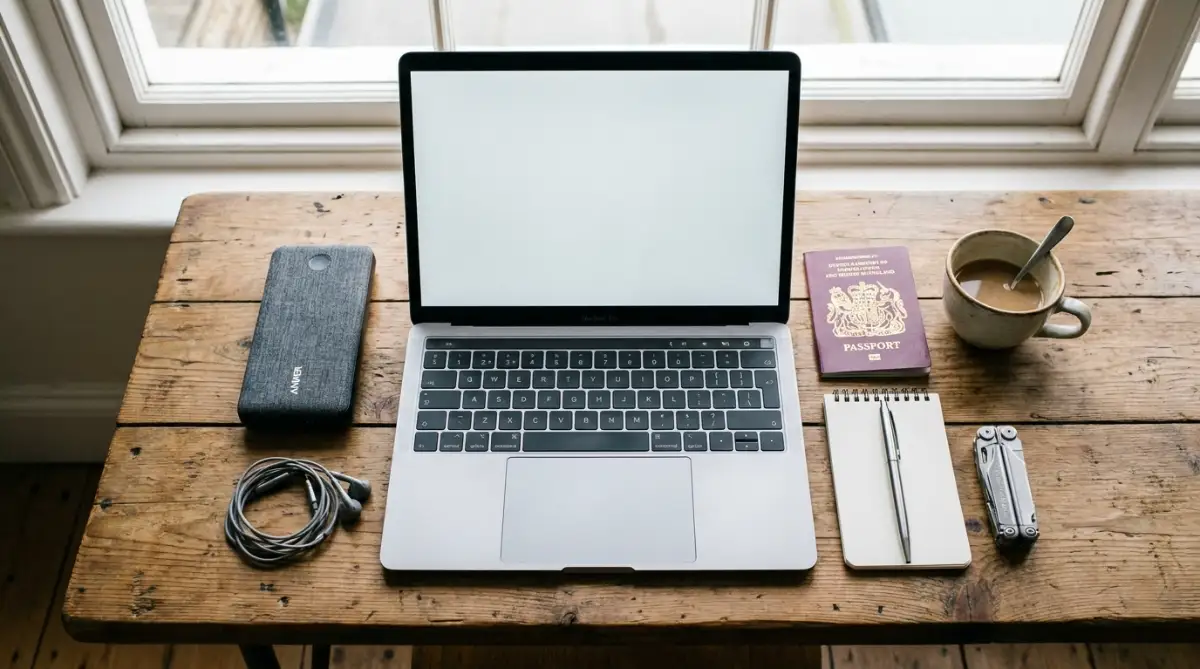
Many remote workers ruin their backs by carrying heavy monitors and massive keyboards in cheap backpacks. If you spend some time learning about work pain-free packing a healthy remote setup in a small suitcase, your physical body will thank you during stressful transit days. A lightweight laptop stand, a small ergonomic mouse, and a slim power bank are all you actually need.
Everything else is just dead weight that slows you down when you are running to catch a ferry. Keep your technology pouch easily accessible at the very top of your bag. This allows you to quickly pull out your laptop during security checks without exposing your personal clothing to the entire airport.
The Dangerous Traps That Ruin Freelance Careers
Even highly experienced travelers make catastrophic mistakes when they are operating under severe emotional pressure. When the government tells you to leave, a sense of panic easily takes over your logical brain. You start making rushed, messy decisions that directly impact your professional reputation.
I have seen countless brilliant designers and developers lose their best clients simply because they mishandled a border crisis. If you want to protect your income, you must actively study these common pitfalls. Let us walk through the absolute worst mistakes you can make and exactly how to avoid them completely.
Treating Immigration Rules Like Casual Suggestions
The single biggest mistake you can make is assuming that border guards care about your freelance deadlines. They do not care if you have a massive software launch tomorrow morning. If you overstay your welcome by even a single day, they will stamp a red rejection mark in your passport that permanently damages your travel history.
This rejection mark makes it incredibly difficult to enter other countries in the future. You are essentially burning down your entire global lifestyle because you wanted to finish a project from a comfortable hotel room. Never push your legal dates to the absolute final minute.
Always plan your departure at least five days before your official stamp expires. This generous buffer gives you plenty of time to handle unexpected canceled flights, sudden illness, or extreme weather conditions. Professionalism means respecting the legal boundaries of your host country above your own convenience.
Ignoring the Hidden Financial Blow of Sudden Moves
An emergency visa run is incredibly expensive. Last-minute flights, overpriced airport food, and emergency hotel bookings can drain your business bank account overnight. Many people panic-buy the absolute cheapest bus ticket they can find, without realizing it takes twenty hours longer than a slightly more expensive flight.
Those twenty hours stuck on a bus are hours you cannot bill your clients. You are actually losing money by trying to save a few dollars on terrible transportation. You must accurately calculate your true cost of living abroad and always maintain a dedicated emergency travel fund.
When you have a financial safety net specifically built for these moments, the panic completely disappears. You can comfortably book a fast flight, a quiet hotel room, and a reliable taxi. Spending a little extra money to protect your mental health and your client deadlines is always the smartest business investment.
Blurring the Lines Between Rest and Hustle
When you finally arrive at your temporary transit hotel, your brain will be completely fried from travel exhaustion. Yet, because you feel guilty about taking time off, you might try to answer client emails from your bed. This is a massive psychological mistake that ruins both your sleep quality and your work quality.
Your brain needs clear physical boundaries to understand when to shut down and recover. You must be extremely strict about separating sleep and work in a tiny apartment or a cramped transit hotel. Never bring your laptop into the bed with you, no matter how tired you feel.
According to detailed behavioral studies by the American Psychological Association regarding remote work boundaries, physically separating your resting space from your working space drastically reduces professional burnout. Sit at the small hotel desk to send your final emails, and then firmly close the laptop lid before you approach the bed.
Failing to Secure Sensitive Data Before Border Checks
Many countries give their customs agents the legal right to search your electronic devices without a warrant. If an angry border guard decides to look through your laptop, they will see every single sensitive client document you own. If you are carrying confidential corporate information, this is a massive breach of your professional contracts.
Before you ever step into an immigration line, you need to understand how to hide your sensitive files. You should actively practice safely wiping data from your premium gadgets or moving them to a highly secure cloud server. Remove all sensitive client communication applications from your phone temporarily.
Once you successfully cross the border and settle into your new location, you simply re-download the apps and sync your cloud folders. It takes exactly ten minutes to secure your devices, but it saves you from potential lawsuits and ruined client trust. Your professional integrity relies entirely on how well you protect other people's data.
Relying on Untested Hardware During a Crisis
Imagine sitting in a noisy cafe, finally connecting to a client video call, and your headphones suddenly die. You frantically click buttons, but you cannot figure out why your wireless earbuds won't connect to your PC. The client is waiting, the background noise is deafening, and you look completely unprepared.
You should never use brand new, untested gadgets during a high-stakes travel day. Always carry a cheap, wired pair of headphones as a permanent backup in your bag. Wired technology does not rely on Bluetooth pairing or battery life, making it the perfect fail-safe for emergency situations.
The same rule applies to your international travel adapters and charging cables. Test every single piece of equipment the night before you travel. A broken laptop charger during a twenty-four-hour border run can literally cost you your biggest monthly client.
Common Questions About Emergency Border Runs
Should I tell my clients that I am doing a visa run?
You do not need to share the stressful details of your immigration status with your clients. Simply inform them that you are traveling for professional reasons and will have modified working hours for a few days. Keeping the message positive and structured maintains their trust without causing them unnecessary worry.
How do I handle sudden client emergencies while in transit?
Always provide your clients with a strict protocol for true emergencies before you start traveling. Give them a direct phone number that actually rings on your device, but clarify that it is only for absolute disasters. Most "emergencies" can actually wait twenty-four hours if you communicate your boundaries clearly beforehand.
What if the border internet is too slow to send large files?
If you suspect you will have terrible internet during your journey, you must compress your files drastically before you leave. Use software tools to shrink video sizes and zip massive folders into smaller packages. Alternatively, upload everything to a cloud drive beforehand and only send the shareable text links while traveling.
Can I just take the day off entirely during a border run?
Yes, taking a planned day off is actually the healthiest and most professional choice you can make. It is far better to tell a client you are offline on Tuesday than to promise a delivery and completely fail. Managing their expectations aggressively is much better than delivering sloppy, rushed work from a bus station.
Your Action Plan for Unstoppable Freedom
Handling a sudden immigration emergency does not have to be a terrifying, career-ending disaster. When you strip away the emotional panic, a visa run is just another logistical puzzle waiting to be solved. You have the total power to transform this chaotic experience into a highly structured, manageable process.
By upgrading your mobile technology, building strong asynchronous communication habits, and aggressively protecting your physical energy, you become virtually bulletproof. Your clients will only see a calm, reliable professional who always delivers on time, regardless of their global location. They never need to know about the messy bus rides or the confusing border checkpoints.
I remember how helpless I felt during my very first unexpected border dash, sitting on my suitcase and wondering if this lifestyle was actually worth the stress. But once I implemented these exact backup systems, that heavy anxiety completely disappeared from my life. You have the exact same capability to build a resilient, thriving remote career, and I strongly encourage you to start preparing your safety net right now.
====================================================================
Disclaimer: This article is for informational and educational purposes only. Immigration laws and border regulations change frequently and vary heavily depending on your specific passport and destination. Always consult with official government embassies or certified immigration lawyers before making international travel decisions.