The Hidden Frustration Behind Modern Tech Jargon
Ever felt completely lost when someone casually drops words like "neural networks" or "machine learning" at a dinner party? You are not alone. Tech jargon is notoriously confusing, mostly because experts forget how to speak plain English. Let us strip away the math and look at how these systems actually work, using simple examples from your own daily life.
My head started to spin quickly, and I felt completely lost in a sea of unknown words. I just wanted a simple explanation, but every single guide seemed to be written exclusively for advanced software engineers.
I actually closed my laptop and convinced myself that this technology was just too hard for me to grasp. It made me feel incredibly left behind, especially when everyone else seemed to be talking about it so effortlessly.
But eventually, I realized something that completely changed my view on the topic. I found out that the core concepts are actually quite simple if you just remove all the heavy jargon.
It ruins your peace of mind because you feel like the future is passing you by without your permission. You might even worry that your skills will become outdated if you do not understand how these new tools actually work.
You do not need a computer science degree to understand the tools that are shaping our world. You just need someone to translate the robotic language into human experiences that actually make sense.
Let us fix that problem together today. We are going to strip away the complicated math and look at how these systems think, using examples you already know.
By the time you finish reading, you will feel completely confident talking about these topics with anyone.
In a Nutshell: What You Will Learn Today
- No Math Required: You can easily grasp AI concepts using everyday real-world logic.
- The Factory Rule: Digital brains work just like an assembly line of workers passing notes.
- Deep Learning Simply Means 'More': It is just a massive factory with more rooms to solve harder puzzles.
- The Confident Liar: Why you must always double-check answers from digital assistants.
Demystifying the Magic: How Do These Systems Actually Think?
When we hear words like artificial intelligence, our minds often jump straight to science fiction movies. We imagine robots taking over the world or massive supercomputers doing impossible math in seconds.
But the reality is much more grounded and surprisingly easy to picture in your head. To understand the basics, we just need to look at how a regular team of people works together.
Instead of thinking about cold metal and wires, imagine a large company filled with thousands of employees. Each employee has a very specific, tiny job to do when a new project comes in.

The Team of Workers Analogy
Let us pretend you are the boss of a factory that sorts different types of fruits. Your goal is to figure out if a fruit rolling down the conveyor belt is an apple or an orange.
You have a massive team of workers divided into three separate rooms. The first room is the Input Room, the middle room is the Processing Room, and the last room is the Output Room.
When a fruit rolls in, the workers in the first room only look at very basic details. One worker checks the color, another worker feels the texture, and a third worker measures the weight.
They do not make the final decision; they simply pass their notes to the workers in the middle room. This middle room is where the actual magic happens behind closed doors.
Passing the Message Along
The workers in the middle room look at the notes they received from the first room. If the note says "red" and "smooth," they might start leaning towards guessing it is an apple.
They combine all the small clues together to form a bigger picture of what the object might be. Once they are reasonably sure, they send their final guess to the last room.
The single worker in the final room looks at the best guess from the middle room and shouts, "It is an apple!" This entire process of passing simple information through a team is exactly how a basic digital brain works.
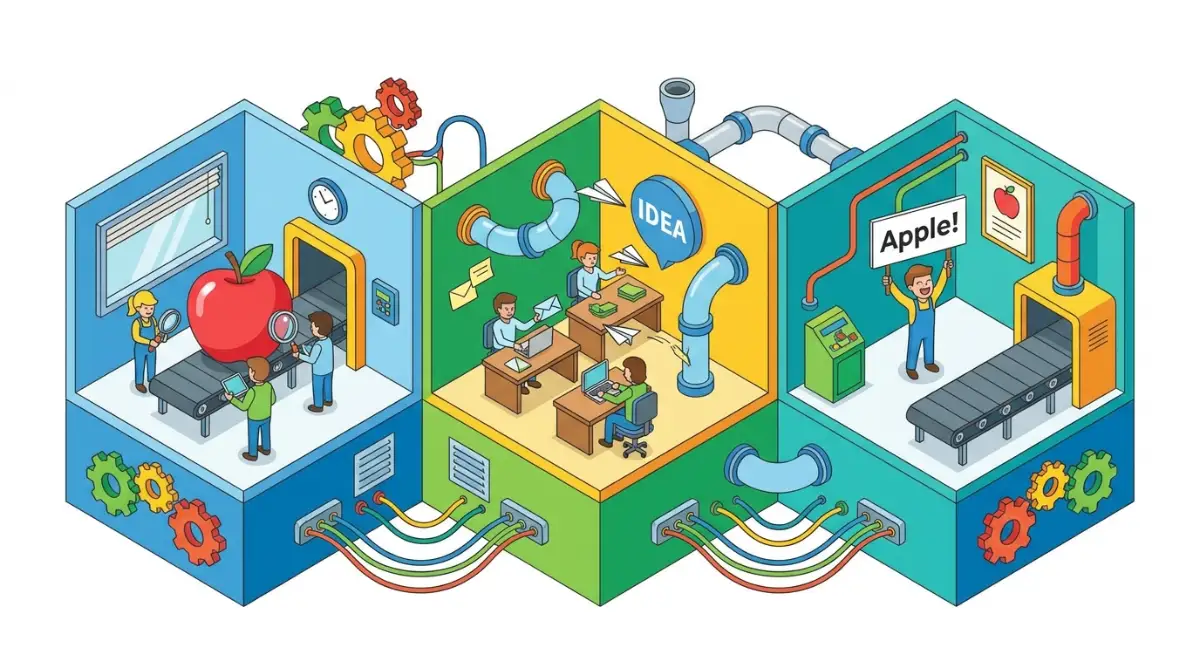 In the tech world, they call these workers "nodes" or "neurons," and the rooms are called "layers." But at the end of the day, it is just a team of workers passing notes to make a final guess.
When Things Get Complicated: Adding More Rooms
Now that we understand the basic sorting factory, we can easily understand the next big concept. Sometimes, the problems we need to solve are much harder than just looking at apples and oranges.
What if you wanted to identify a specific type of dog in a very blurry photograph? A simple three-room factory would struggle to figure that out because the details are too complex.
This is exactly where the concept of deep layers comes into play. Instead of just one middle room, imagine building a factory with dozens or even hundreds of middle rooms.
The Art Critic Breakdown
To explain this clearly, imagine a group of art critics trying to identify a mystery painting. The critics in the very first room only look at the basic lines and colors on the canvas.
They pass their thoughts to the second room, where critics look at how those lines form shapes like circles or squares. The third room takes those shapes and tries to see if they form an eye or an ear.
By the time the information reaches the twentieth room, the critics are looking at full faces and backgrounds. Each room handles a slightly more complex piece of the puzzle than the room before it.
This deep stack of middle rooms is what makes the system so incredibly smart and accurate. Because the process has so many deep layers of workers, the tech world decided to name it appropriately.
The Simple Truth About the Naming
That massive stack of processing rooms is exactly what experts mean when they say Deep Learning. The word "deep" just refers to how many middle rooms the information has to pass through.
It sounds like a magical, mysterious term, but it literally just means "a very long assembly line." When you break it down like this, the intimidation factor completely disappears.
Pro Tip: When I first started learning about this, I wasted weeks trying to memorize complex definitions from textbooks. My biggest realization was that I learned much faster when I stopped worrying about the technical terms and simply drew little pictures of factories and workers on a notepad. You will learn twice as fast if you relate everything to real-world jobs!
Finding the Right Balance
Of course, having a massive factory with hundreds of rooms comes with its own set of challenges. It takes a lot more energy, time, and resources to run a massive operation compared to a small one.
This is why companies do not use giant, deep systems for every single problem they face. If they just need to sort basic numbers, a small team of workers does the job perfectly.
They only bring out the massive, multi-room factories when they have a truly difficult puzzle to solve. Understanding this difference helps you see why different tools are used for different jobs.
Quick Guide: Which Tool Does What?
Here is a handy breakdown of how companies match the right tool to the right problem:
- Sorting Customer Names (Simple Task): Standard Spreadsheets or Traditional Coding.
- Guessing Your Spam Emails (Medium Task): Basic Machine Learning (The 3-Room Factory).
- Driving a Car on the Highway (Hard Task): Deep Learning (The 100-Room Factory).
Real-Life Scenarios: Where You Already Use This Tech
You might be thinking that all of these factory analogies sound great, but where do they actually exist? The truth is, you interact with these invisible workers dozens of times every single day.
You just do not notice them because they operate quietly in the background of your favorite apps. Let us look at some extremely common ways this technology is already making your life easier.
How Your Streaming App Knows Your Taste
Think about what happens when you open your favorite movie streaming app on a Friday night. Before you even search for anything, the screen is filled with movies you actually want to watch.
This is not a coincidence, and there is no human sitting in an office picking movies just for you. The app is using a massive team of digital workers to guess what will keep you entertained.
How to Truly Understand Your Digital Recommendations
To get a better visual idea of how these recommendation systems track your habits, check out this great breakdown below. This short clip explains the hidden logic behind your favorite streaming platforms in plain English.
The workers in the first room look at the movies you watched last week and how long you watched them. They pass that data to the middle rooms, where other workers compare your habits to millions of other people.
If people who like the same movies as you also enjoyed a brand-new comedy, the final room makes a decision. It places that new comedy right at the top of your screen, perfectly tailored to your mood.

The Face Unlock Feature on Your Phone
Another amazing example sits right in the palm of your hand every single day. When you pick up your smartphone, it instantly unlocks just by looking at your face.
This is one of the most practical examples of the deep, multi-room factory we talked about earlier. When the camera turns on, the first room of workers just looks at the light and dark pixels on your screen.
The next few rooms figure out the edges of your face, the distance between your eyes, and the shape of your nose. They do this in a fraction of a second, passing the notes incredibly fast through the deep layers.
If the final room matches the notes with the saved picture of your face, the phone unlocks. If your friend tries to look at your phone, the middle workers notice the differences and keep the phone locked securely.
A Simple Comparison: Sorting Out the Jargon
Sometimes, seeing things side by side helps clear up any lingering confusion in our minds. Let us look at a very simple breakdown of the main terms you hear thrown around.
This quick comparison will help you understand exactly how these different concepts relate to each other.
As you can see, traditional software is rigid, like baking a cake using an exact family recipe. If you forget the sugar, the program simply fails and crashes because it does not know what else to do.
The modern systems we are talking about today do not rely on strict, rigid rules to function. They learn by looking at thousands of examples until they naturally figure out the pattern on their own.
The Secret Ingredient: Why Practice Makes Perfect
We have talked a lot about how the workers make their guesses, but how do they get so accurate? If you hire a brand-new team of workers, they are going to make a lot of mistakes at first.
They might look at a picture of a blueberry and accidentally guess that it is a grape. This brings us to one of the most interesting parts of the entire process, which is how the system learns.
The Teacher and the Grading System
Imagine that there is a strict teacher standing in the final output room of our factory. Every time the workers make a guess, the teacher tells them if they were right or wrong.
If the workers guess "grape" when it is actually a "blueberry," the teacher yells, "Wrong!" The message gets sent backward through all the middle rooms, telling the workers they need to adjust their thinking.
The next time a similar fruit comes down the line, the workers pay closer attention to the exact color and size. They tweak their own internal rules slightly, hoping to get a better grade on the next try.
Feeding the Machine Enough Examples
This process of guessing, failing, and adjusting is exactly how humans learn new skills, too. Think about how a toddler learns to ride a bicycle for the very first time in their life.
They wobble, they fall down, and their brain makes small adjustments to their balance based on those mistakes. After enough falls, their brain figures out the exact pattern needed to stay completely upright.
Digital systems do the exact same thing, but they can process millions of mistakes in a matter of minutes. To get really smart, they just need to look at a massive amount of examples over and over again.
This is why companies are so hungry to collect data from everything we do online. More data simply means more practice tests for their digital workers to learn from.
Myth vs. Reality in Everyday AI
Because this technology is so new, there are a lot of silly rumors floating around the internet. Let us clear up some of the most common misunderstandings right now.
Myth: These systems actually "think" and have feelings just like human beings do.
Reality: They do not have feelings, thoughts, or desires. They are just highly advanced calculators finding patterns in numbers.
Myth: You need to be a math genius to use or understand these modern tools.
Reality: You only need math if you are building one from scratch. Using them or understanding the concepts requires zero math skills.
Myth: These programs never make mistakes because computers are always perfectly accurate.
Reality: They make mistakes all the time! If you show them bad examples, they will learn the wrong lessons and give you bad answers.
When you understand the realities instead of the myths, you take away the fear factor entirely. You start to see these programs as nothing more than helpful, incredibly fast digital assistants.
The "Black Box" Problem Explained Simply
There is one specific challenge with this technology that experts talk about constantly in the news. They call it the "Black Box" problem, and it is completely fascinating once you understand it.
Remember our factory analogy with the hundreds of closed middle rooms? Because there are so many workers passing so many notes, it becomes impossible to track every single conversation.
If the final room shouts out a completely weird guess, the factory boss might ask, "Why did you choose that answer?" The problem is, the boss cannot easily go back and figure out which specific worker made the mistake.
Losing Track of the Details
There are simply too many middle rooms and too many tiny decisions happening all at once. The system gives us an answer, but it cannot easily explain the exact logical steps it took to get there.
This is what experts mean when they say the process happens inside a black box. We can see the information going in, and we can clearly see the answer coming out.
But looking inside to understand the middle steps is a messy, confusing nightmare even for the creators. This causes big debates when these systems are used for serious things like medical advice or banking loans.
If a computer rejects your bank loan application, you definitely want to know the exact reason why. But if the bank is using a black box system, the computer might just say "No" without a clear explanation.
Building Confidence in a Changing World
We have covered a lot of ground today, completely avoiding the confusing tech jargon that holds people back. You now know that these famous algorithms are just digital factories making guesses based on patterns.
You understand that adding "deep" to the name simply means adding more layers of workers to solve harder puzzles. Most importantly, you know that this technology relies on trial and error to get better over time.
You no longer have to feel lost when people start talking about modern smart tools at the dinner table. You can confidently join the conversation, secure in the knowledge that you actually understand the core logic.
Technology is meant to serve us and make our daily lives significantly easier and more enjoyable. By breaking down these complex barriers, you are taking the very first step toward mastering the tools of tomorrow.
Remember, no one is born knowing how these digital systems operate in the real world. We all have to start somewhere, and you just took a massive leap forward in your learning journey today.
Stepping Up Your Game: Smart Ways to Master Everyday Tech
Now that you completely understand the hidden factory working behind the screen, you are ready for the next big step. You no longer just have to watch the workers; you can actually start giving them instructions.
This is where the real fun begins for everyday people like you and me. When you know how to talk to these systems properly, they turn into the ultimate digital assistants for your daily life.
The secret to getting amazing results is surprisingly simple. You just have to treat the computer exactly like a brand-new intern working on their very first day at the office.
If you give a new intern a vague instruction like "make me a plan," they will probably panic and give you something entirely useless. The digital workers inside your screen react the exact same way to poor instructions.
The Art of Giving Clear Instructions
To get the best possible results, you have to master something called prompt engineering. Do not let the fancy term scare you; it just means writing clear, highly specific instructions.
Instead of typing "give me a workout routine," try being highly detailed about your exact situation. Tell the machine, "I am a beginner who wants to exercise at home for twenty minutes a day without any equipment."
By adding those extra details, you give the workers in the middle rooms a clear boundary for their guesses. They no longer have to guess your fitness level, your location, or your available tools.
You are giving them the proper context they need to succeed. This makes a massive difference in the quality of the answers you receive back from the final room.
Setting the Right Tone and Personality
Another brilliant secret is telling the system exactly how you want it to speak to you. You can literally ask the digital factory to change its entire personality before it answers your question.
For example, if you are reading a highly technical document that makes no sense, you can ask for help. Just tell the system, "Explain this legal document to me as if I am a ten-year-old child."
The workers will instantly swap out the complicated words for simple, easy-to-understand examples. If you want to understand more about how machines learn human speech, it all comes back to recognizing these word patterns.
You can even ask the system to act like a professional chef when asking for recipes, or a friendly travel guide when planning a trip. Giving the machine a "role" is one of the most powerful habits you can build.
Keeping Your Guard Up With Personal Data
While it is incredibly fun to use these tools, you have to remember that the factory boss is always watching. Everything you type into these free online systems is usually saved and used for future practice tests.
This means you should never, ever hand over your private information to a public digital assistant. Treat the chat box like a public bulletin board in the middle of your local grocery store.
If you would not pin your social security number or bank details to that public board, do not type them into the machine. Taking a few simple steps toward keeping your information secure every single day will save you from massive headaches down the road.
This is especially important if you are using these tools while traveling or working away from your house. You must learn how to stay safe on public Wi-Fi because open networks make it incredibly easy for bad actors to intercept the notes you send to the digital factory.

The Biggest Traps Waiting for New Users
We have talked extensively about how helpful these tools can be when you use them properly. However, there are some very real dangers that trick new users every single day.
When people start treating these systems like magical problem-solvers, they easily fall into some embarrassing and sometimes costly traps. We need to walk through these mistakes so you can actively protect yourself.
The Danger of the Confident Liar
The single biggest mistake people make is believing that the machine is completely incapable of telling a lie. We are heavily conditioned to believe that computers only spit out perfect, highly calculated facts.
But remember our factory analogy from earlier today. The workers inside the middle rooms are not looking up facts in a giant encyclopedia; they are just guessing patterns based on their past training.
Sometimes, they combine the wrong notes together and come up with a wildly incorrect answer. The scary part is that they will present this wrong answer to you with absolute, unshakeable confidence.
In the tech world, they call this strange behavior a "hallucination." It happens when the system wants to please you so badly that it simply invents a totally fake answer instead of admitting it does not know.
Reality Check: Why do hallucinations happen? The computer does not have a concept of truth or lies. It simply plays a massive game of fill-in-the-blank. If it predicts that a certain fake name sounds mathematically correct in a sentence, it will print it out without hesitation. Always verify names, dates, and legal claims.
Real World Disasters From Blind Trust
We have already seen extremely public embarrassments caused by this exact problem. A few years ago, a working lawyer used a popular chat system to help him write a legal brief for a courtroom case.
The machine confidently generated a list of past court cases that completely supported the lawyer's argument. The lawyer trusted the machine blindly, copied the cases, and handed the paperwork directly to the judge.
It turned out that every single court case was entirely made up by the digital workers. The lawyer faced severe professional punishment, all because he failed to double-check the facts.
To combat this, major organizations like the National Institute of Standards and Technology are actively developing strict safety frameworks to help people manage these exact risks. You simply cannot afford to be a lazy boss when reviewing the factory's final output.
The Illusion of True Understanding
Another major trap is slowly starting to treat the system like it actually understands your feelings. Because the machine uses the word "I" and says "I am sorry to hear that," we naturally project human emotions onto it.
You must heavily remind yourself that there is absolutely nobody home behind the screen. The machine does not care if you had a bad day, and it certainly does not feel empathy for your problems.
It is simply predicting the next most logical word based on human conversation patterns it read online. When you forget this reality, you risk trusting a cold calculator with sensitive emotional decisions it is completely unqualified to handle.
Breaking Your Own Creative Muscles
If you rely on a digital assistant to write every email, plan every dinner, and solve every tiny problem, you face another hidden risk. You will slowly start to lose your own creative problem-solving skills.
Think of your brain like a muscle that needs constant exercise to stay sharp and highly focused. If you outsource all your heavy lifting to a digital factory, your own mental muscles will inevitably become weak.
Many business owners are rushing to automate their entire workflow without realizing the long-term consequences. There are heavily documented hidden dangers of adding AI tools to your daily routine if you do not maintain a healthy balance.
Use the tools to brainstorm ideas or get past a creative block, but always do the final thinking yourself. You want the machine to be your helper, not your permanent replacement.
Peeking Behind the Curtain: Who Builds These Tools?
It is incredibly easy to assume that only massive, billion-dollar companies control this kind of technology. While the biggest tech giants do have a major head start, they are not the only ones building these systems.
There is a massive global community of regular developers who build digital factories completely for free. They share their building plans openly on the internet so that anyone can download them and learn how they work.
The Power of Community Collaboration
This openly shared concept is the main reason technology moves forward so unbelievably fast today. When thousands of people work together to fix mistakes, the tools improve overnight.
If you are curious about how this community-driven approach actually functions, you can read up on the basics of how free software is built. It shows that you do not need to be a massive corporation to contribute to the future.
In fact, some of the most reliable safety tools and helpful apps are created by independent hobbyists. They want to make sure the power stays in the hands of everyday people, rather than being locked behind expensive corporate subscriptions.
To keep track of how the general public actually feels about these shifts, organizations like the Pew Research Center constantly run highly detailed surveys. The general consensus shows that when people understand the tools, their daily anxiety drops significantly.
A Simple Mental Checklist for Daily Use
Before you open up a new app or try out a smart feature, run through a quick mental checklist. Having a routine helps you stay safe, focused, and entirely in control of your digital experience.
First, ask yourself if the task actually requires a complex machine. If you just need to do basic math or set a timer, a traditional calculator or clock app is still your best friend.
Second, double-check your instructions to make sure they are highly specific and clear. Did you give the workers enough context, or are you forcing them to make blind guesses?
Third, take a quick moment to scrub any personal or sensitive details from your request. Remove your exact address, your financial numbers, and any private work documents before hitting the send button.
Finally, heavily review the final output with a skeptical eye before you actually use it. Read every sentence carefully and verify any important facts using a regular search engine just to be safe.
If you stick to this simple checklist, you will completely avoid ninety percent of the problems that frustrate new users.
Moving Forward with Total Confidence
We covered an incredible amount of ground today, and you should feel incredibly proud of your progress. You started out feeling frustrated by heavy jargon, and now you have a clear picture of how these digital factories actually operate.
You know that there is no magic happening behind the screen, just a large team of digital workers passing notes through multiple rooms. You understand that "deep learning" just means a longer assembly line for harder problems.
Most importantly, you now possess the practical knowledge to use these systems safely and effectively. You know how to spot a confident lie, and you know exactly how to protect your most sensitive data.
The future of technology is not something you have to hide from or fear anymore. It is simply a new set of tools waiting for you to pick them up and put them to good use.
Researchers at institutions like Stanford University's Human-Centered AI group are working hard to ensure these tools remain safe for the public. But your personal safety and success ultimately come down to your own daily habits and education.
My biggest piece of advice is to just start playing around with these tools in a low-stakes environment today. I completely lost my fear the moment I asked a digital assistant to write a silly bedtime story for my niece, and I saw how simple the process really was. Do not wait for the perfect moment; jump in, make some mistakes, and watch your confidence grow instantly!
Quick Answers to Your Biggest Tech Questions
Will these smart systems eventually replace human jobs?
While these tools will definitely change how we work, they are heavily designed to be assistants, not complete replacements. The people who learn to use these tools effectively will simply replace the people who refuse to adapt.
Why do some smart apps cost money while others are free?
Running massive digital factories takes an incredible amount of electricity and highly expensive computer servers. Free tools usually limit how many complex questions you can ask, while paid versions give you full, unlimited access to the deepest middle rooms.
Can a machine actually learn to be creative or make real art?
The machine does not have true imagination or genuine creative thoughts. When it generates art or poetry, it is just mathematically mixing millions of human examples it studied during its training phase.
How do I know if an article or picture was made by a computer?
It is getting harder to tell, but you can usually look for strange, unnatural details. In text, look for repetitive phrasing or perfectly generic answers, and in images, carefully check the background details for melted shapes or missing logic.
Is it entirely safe for my kids to use these homework helpers?
They can be helpful for brainstorming, but kids should be heavily supervised to ensure they are not taking shortcuts. You want to make sure they are actually learning the concepts, rather than just copying fake, hallucinated answers from a highly confident machine.
Disclaimer: The information provided in this article is strictly for educational and informational purposes only. It does not constitute professional tech advice, data security consulting, or legal guidance. Technology moves incredibly fast, and while we strive to keep our information highly accurate, you should always conduct your own research before applying new digital tools to your personal or professional life. Always read the privacy policies of any software you use.